Showing posts with label biography. Show all posts

Tuesday, December 31, 2019

Books of 2019

This morning, AA said to me by text, "Aren't you going to blog about your Books of 2019?" And so here I am doing it, while he's on an airplane heading back home so we can celebrate New Year's Eve just in time with a glass of prosecco. Normally I write this post soon after the annual 100 Notable Books from The New York Times comes out, but we were away at that time and . . . well, that thing called daily life just kept delaying things. Over the last few years, though, I've discovered that not all of the books on the list are among my favorites once I actually read them. Case in point: last year, Tana French's The Witch Elm and Lisa Halliday's Asymmetry were on their list, and I was eager to read them, but to be frank I didn't find either book to be "best" reads. In my opinion, French's book was too dense with excessive details for that type of book (mystery/thriller), so by the time you started getting into the actual mystery, the suspense wasn't there for me. Halliday's book, in turn, was creative as a writing experiment (two novellas that seem to have nothing to do with one another, then somehow become linked in a coda-story), so it wasn't as if I didn't like the book, but it just wasn't what I would consider to be a favorite. All that said, I had commented last year about looking forward to reading Michelle Obama's autobiography, and that was great--inspiring even! I guess I'm biased, but what made it such an enjoyable read was that it felt like she was talking to you the entire time, telling you not just about her life but the lessons she learned from her experiences.

The image you see above is undoubtedly my favorite novel that I read this year. Colson Whitehead's new book was published in 2019 and I bought and read it immediately. I loved The Underground Railroad, as painful as that book was to read, so while The Nickel Boys wasn't "magically realistic" as components of his previous book was, the pain and anguish, and the lessons we have to learn still about America's history of racism and abuse of power, were remarkably strong with completely different types of stories. Whitehead has this uncanny ability in these two books to create a narrative voice that allows you to feel the pain of his characters, but still keep yourself at a distance so you can process it objectively. I see him as an heir to Toni Morrison in some ways. I have no doubt that these two books will be models of a new American literature for generations to come, much the same way Harper Lee's To Kill a Mockingbird has been. That was a book I also finally read earlier this year for the first time. I discovered the Icelandic author Sjón this year with his fairy-tale-with-a-twist The Blue Fox, and I thoroughly enjoyed, both as a mystery and a meta-novel, Anthony Horowitz's clever The Word Is Murder. I should add that a year ago when I did my last books post, I was worried that Persuasion wasn't going to end well, but I'm pleased to say that it was in fact probably my favorite Jane Austen novel of them all. I read somewhere that if you loved Pride and Prejudice as a young person, Persuasion is the book you read as a mature adult to find satisfaction in her writing. It is so true.

In the world of non-fiction, I enjoyed and learned a lot from Richard Holmes's group biography The Age of Wonder, on the history of science and Romanticism around the years 1800. I read the collection of essays Beyond the Face, providing new interpretations on portraiture in the history of art of the United States and beyond, and published a book review of it which you can read here as well as my blog post here where I add more about the artist Carrie Mae Weems. I also read Anthea Callen's new art history/anatomy book Looking at Men, and published an extended book review essay in Nineteenth-Century Art Worldwide, which you can read here. Right now, my bedtime read is Robert K. Massie's biography of Catherine the Great, and my subway reading is Joseph Conrad's Heart of Darkness, which I read back in college (almost 30 years ago!), but decided to revisit all these years later.

It seemed like a good idea to actually share the full list of the 30 books I've read this year. This is the order in which I finished them, and I've included the publication year in brackets, and my star rankings (5-stars is highest!) to help anyone along if they decide they want to read these. Here's to 2020 and more books to read!


  • Persuasion by Jane Austen [1818] (*****)
  • To Kill a Mockingbird by Harper Lee [1960] (*****)
  • The Age of Wonder: How the Romantic Generation Discovered the Beauty and Terror of Science by Richard Holmes [2008] (*****)
  • Beyond the Face: New Perspectives on Portraiture by Wendy Wick Reaves, ed. [2018] (****)
  • Arctic Chill by Arnaldur Indridason, trans. B. Scudder & V. Cribb [2005] (****)
  • The Blue Fox by Sjón, trans. V. Cribb [2004] (*****)
  • Rogues’ Gallery: The Rise (and Occasional Fall) of Art Dealers, the Hidden Players in the History of Art by Philip Hook [2017] (***)
  • The Assassination of Margaret Thatcher: Stories by Hilary Mantel [2014] (***)
  • The Body in Three Dimensions by Tom Flynn [1998] (***)
  • Troubling Love by Elena Ferrante, trans. Ann Goldstein [1999] (****)
  • Looking at Men: Art, Anatomy and the Modern Male Body [2018] (***)
  • Becoming by Michelle Obama [2018] (*****)
  • The Death of Mrs. Westaway by Ruth Ware [2018] (***)
  • The Body in Pieces: The Fragment as a Metaphor of Modernity by Linda Nochlin [1994] (****)
  • Serpents in Eden: Countryside Crimes by Martin Edwards, ed. [2016] (****)
  • Model and Supermodel: The Artist's Model in British Art and Culture by J. Desmarais, M. Postle & W. Vaughan, eds. [2006] (****)
  • Bloomsbury at Home by Pamela Todd [1999] (****)
  • Asymmetry by Lisa Halliday [2018] (****)
  • Duncan Grant and the Bloomsbury Group by Douglas Blair Turnbaugh [1987] (***)
  • The Child’s Child by Barbara Vine [2012] (***)
  • The Nickel Boys by Colson Whitehead [2019] (*****)
  • The Sparsholt Affair by Alan Hollinghurst [2017] (****)
  • Harm Done by Ruth Rendell [1999] (****)
  • Bacchante and Infant Faun: Tradition, Controversy, and Legacy by Thayer Tolles [2019] (****)
  • 30 Favorites Celebrating 30 Years by Stacia Lewandowski & Zaplin Lampert Gallery [2017] (***)
  • The Stonewall Reader by Jason Baumann, ed. [2019] (***)
  • Teaching in the Art Museum: Interpretation as Experience by Rika Burnham & Elliott Kai-Kee [2011] (****)
  • Losing Helen: An Essay by Carol Becker [2016] (*****)
  • The Witch Elm by Tana French [2018] (***)
  • The Word Is Murder by Anthony Horowitz [2018] (*****) 

Sunday, December 16, 2018

Books of 2018

The annual New York Times 100 Notable Books of 2018 came out a few weeks ago, and I was pleasantly surprised to discover that there were two books on the list this year that I already had an interest in: The Sparsholt Affair by Alan Hollinghurst (which I bought but haven't read yet) and Warlight by Michael Ondaatje (which I did actually read and found interesting, like a literary, Corot-like veiled-mist tale). Among the novels on this new list that intrigue me and are now on my Amazon wish list are The Witch Elm by Tana French, Asymmetry by Lisa Halliday, and The Overstory by Richard Powers. One major book not on their list because it came out afterward--and which, of course, is now on my "to read" list!--is Michelle Obama's Becoming. AA is reading it, as is my friend MT, and both are totally absorbed.

The book cover you see above reflects what I would say is the best novel I read this year, The Handmaid's Tale [1986]. Even though I have not seen the new series, I decided to step into the infamous dystopian world created by Margaret Atwood over 30 years ago, and I was enthralled. The book is fantastic and frightening; it feels so real and plausible, particularly in light of how things are going these days politically. Even better, it's beautifully written, slow even at times, the protagonist paying attention to details and inner feelings and memories in a way that is haunting to read. Atwood announced recently she is writing a long-awaited sequel, about which I'm uncertain how I feel. Part of me is curious like others to know where Offred actually went and what happened to her, but another part of me worries the sequel will be too influenced by popular culture today and won't live up to the author's own masterful exploration into this disturbing futuristic, misogynistic world. Speaking of misogyny, last year about this time I was reading Madame Bovary and I still think it was a beautifully written novel and highly recommend it to people all the time. It even topped my list of the the best novels I read between 2014 and 2017! Other great novels that I read this year included: Julian Barnes's existentially obsessive biographical novel Flaubert's Parrot [1984]; Penelope Fitzgerald's community of miserable, hateful people in The Bookshop [1978]; the sad Everything I Never Told You [2014] by Celeste Ng, which was on the NYT 2014 list; and Ruth Rendell's foray into racism and murder with Simisola [1994]. I also read this year the mid-century classic Lolita [1955] by Vladimir Nabakov, and I absolutely hated this book, not even so much for the nauseating storyline but because the writing itself drove me nuts.

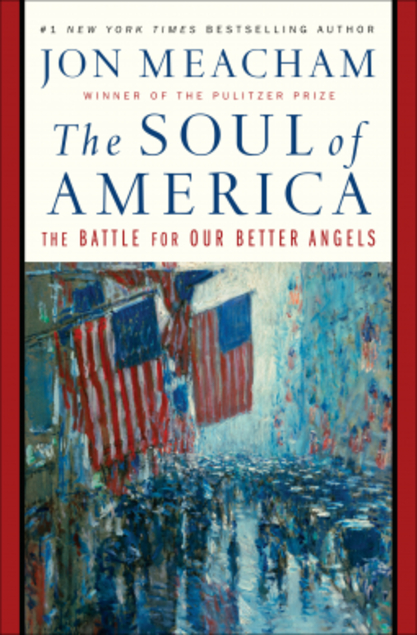
Since I wrote last year's post on Books of 2017, I have read 32 books. I finally took the time to read Sculpture: Processes and Principles [1977] by Rudolf Wittkower, with which I had familiarity but had not read in its entirety before now. It really is a fantastic overview about techniques in stone carving and modeling for anyone interested in knowing more about the great European sculptors of the past. Bridging the gap between art and biography, two of my favorites this year were Art for the Nation: The Eastlakes and the Victorian Art World [2011] by Susanna Avery-Quash and Julie Sheldon, and self-described "tranny potter" Grayson Perry's memoirs, co-written with Wendy Jones, Portrait of the Artist as a Young Girl [2006]. Another great biographical account was Richard Blanco's memoir For All of Us, One Today: An Inaugural Poet's Journey [2013], which I read after we visited the excellent exhibition of his poetry with photographs by Jacob Hessler in Ogunquit, Maine. In the realm of American history, I read Jon Meacham's new book The Soul of America: The Battle for Our Better Angels [2018], the cover of which you see here. This book was such a fascinating overview of highlights in American history from the colonial period through the 1960s, showing how so many of our great leaders, including Lincoln and FDR, enacted social change because of the influence of the people, social activists and civil rights leaders, the true "soul of America." The book is a great testament and response to the politics of today.

Right now, I'm currently reading two books. On the literary fiction side, I am finally reading Jane Austen's Persuasion, published posthumously two centuries ago. I am nearing the end and I am worried it won't have a happy ending! I'm also reading Richard Holmes's fantastic collective biography The Age of Wonder: The Romantic Generation and the Discovery of the Beauty and Terror of Science [2010], reminding us that science was not the separate discipline we perceive it to be today, but part of the exploration of the natural world along with art, literature, and music in the decades before and after 1800. This book has made for some relaxing bedtime reading, before turning in and dreaming each night...

Saturday, December 15, 2018

The Passing of Caryl Ambrose


It's never easy to lose someone who is a close family member. About ten days before we celebrated Uncle Eddy's 90th birthday, our cousin Caryl M. Ambrose passed away at the age of 74 on Thanksgiving after suffering for many months with a terminal illness. I took the picture you see here a couple of years ago, with Caryl seated on the left with her sister Marilyn and Uncle Eddy, all of us taking in the sun after having lunch on the waterfront in Dunedin, FL. We all take some comfort knowing that Caryl is no longer in pain anymore, but because she always exuded an incredible strength of character, independent spirit, zest for what is right in the world, and an unending love for her family, her passing is challenging to process. Caryl was my second cousin. While her grandfather and my grandmother (Nana) were brother and sister, they were at opposite ends of a family timeline, almost twenty years apart in age, so that in fact my Nana and Caryl's father, Uncle Tommy, were close in age. Caryl was always interested in learning more about family history and loved when I would tell her about any new discoveries I had made in the Ambrose-and-Bagge English side of our family history. She was a Bronx-born girl, like so many in our family, and lived most of her life in NYC where she ran a travel consultant firm, then retired early and went to Florida with Marilyn, and had a whole new second life there as a nurse. Here is her obituary that her sister and brother wrote:

"Caryl's final safari was to heaven on 11/22/18 at the age of 74. Her life was a tale of two cities-New York and Tampa Bay. Her company, the African Transfer, specialized in safaris to Kenya, Tanzania and Botswana. She then went on to another career as a nurse where she lovingly rescued many needy folks and furry creatures. She leaves behind her sister Marilyn, brother Dennis (Laura) and his family in Illinois – Nephews TJ & Glenn. Niece Ashley, great nephews Aiden and Anthony … and her rescue cat Chris … as well as numerous, wonderful kissing cuzzins and many lifelong friends."

Caryl never stopped wanting to know how everyone else around her was doing. She would write letters--actual handwritten letters, as recently as earlier this year to me--in which she remembered everything AA and I had going on, wanting to hear all about our travels (Marilyn would always add the funny side-bar comments and jokes in the letter!). Caryl was a caregiver, someone who instinctively wanted to help, to her own detriment in that she refused to let on about anything happening with her own health. Before she moved to Florida, I had always seen both Caryl and Marilyn as the savvy independent sisters, the first in NYC the second in Chicago. Caryl ran her own business, traveled worldwide, took care of some beautiful cats and dogs, and still managed to look after all of our great-uncles and other aging relatives. When my father and I planned a big trip to Italy and England back in 1991 (long before Internet search engines!), she coordinated our entire five-week trip, with flights and hotels and train tickets. I remember being completely amazed at how she was able to pull it all together so easily.

The one thing about Caryl that I will always cherish and keep close to my heart, though, was her encouragement and support of my writing. This is not something many people know. When I was a teenager, she heard that I was trying to write a novel, a family saga of sorts set in the 1800s (I was heavily influenced by John Jakes's Kent Family Chronicles at the time). Without any hesitation, she told me to give her a copy of the manuscript and she would "show it" to someone she knew "in the business." I was completely in awe that she "knew" someone and had connections like that, so I gave her a copy. The truth is, I have absolutely no idea if she actually showed it to anyone or not--even more truthfully, I hope she didn't because it was a horrible, early attempt at writing! The point is, she believed in me. She didn't assess my talents, she saw my drive and interest, and she was one of the first people in the family to encourage me to do this. That simple gesture on her part inspired me in ways that I still feel to this day in all of my efforts when I write something, whether it's an article, fiction, or even this blog. That gesture made me realize how a simple action can help support and encourage someone in ways no one can ever know. I will miss her energy, her laughter, her letters, and her love of family, but her spirit lives on in so many of us.

Tuesday, November 28, 2017

Books of 2017

The 100 Notable Books of 2017 from the New York Times came out just before Thanksgiving...rather early this year actually, especially since Thanksgiving itself was early. I usually find a couple of books on their list that pique my interest, but I have to confess that nothing really stands out for me this year. George Saunders's Lincoln in the Bardo won the Man Booker Prize, and as his first novel it has been received well, so perhaps that will go on the list. I'm not a big fan of modern sequels to literary classics, so even though Mrs. Osmond by John Banville made it on the list, I really don't want to read someone continuing the story of Isabel Archer. Last year when I blogged about the Books of 2016, I was reading Portrait of a Lady [1881]. The first half of the book moved slowly, but was interesting; the second half, however, turned into a page-turner in a way that startled me. It's a classic, just as it is, so I think I'll skip Banville's "sequel." I should add that I've discovered two new books published this year that are not on the 100 list, but have already gone on my Amazon Wish List. They are The Sparsholt Affair by Alan Hollinghurst and Amy Tan's Where the Past Begins: A Writer's Memoir.

On last year's post, I noted some of the new books I was hoping to read. and indeed I did immerse myself in three of them. Lucy Barton's My Name Is Lucy was interesting, but I've been told her novel Olive Kitteridge is better, so I'll give that a go before passing further judgement. Julia Baird's biography of Queen Victoria was well-written and a good read, but I can't say it captured me as other biographies have in the past. I did find myself questioning Victoria and Albert's relationship in a new way, which is a testament to Baird's writing though. The third book on last year's "to read" list was Colson Whitehead's The Underground Railroad. This book was fantastic. It's painful to read at times, but it creatively weaves an imaginary actual underground railroad as a metaphor for the journey of a slave on the run, trying to find her freedom. I highly recommend it, and it certainly deserved both the Pulitzer Prize and National Book Award.

In 2017 I read 33 books. Among the more noteworthy art history books I read were the following: Florine Stettheimer: Painting Poetry [2017], the catalog to accompany the exhibition at The Jewish Museum and, currently, at the Art Gallery of Ontario; The British School of Sculpture, c.1760-1832, edited by Jason Edwards and Sarah Burnage [2017], an excellent collection of essays that explore aspects of British nationalism in sculpture (and, as an aside, includes an essay by me entitled "Before Rome: John Gibson and the British School of Art"); How to Read Chinese Ceramics by Denise Leidy [2015], partly to help my curatorial eye better understand some of the Chinese art we have in the collection at Columbia University; and A Worldly Art: The Dutch Republic 1585-1718 by Mariët Westermann [1996], an easy-to-read introduction to art and material culture during the Golden Age of Dutch painting. All that said, my favorite art book read of the year was the book cover you see here: Art as Therapy by Alain de Botton & John Armstrong [2013]. This book did a great job making me--as a trained art historian and curator--rethink what art is all about, and how art by its very nature can be used as a form of psychological and emotional therapy, and conversely how examining art can teach us about the human spirit and mind. I've recommended this book to a number of people already.


Among my favorite fiction reads this year--aside from Whitehead and James, mentioned above--was the classic 1984 by George Orwell [1949], which shocked me with its frightening poignancy even today under the current Pres. Tyrant; The Sense of an Ending by Julian Barnes [2011], which I find myself still a bit unsettled by, perhaps because I'm not pleased with how the book ended; and My Cousin Rachel by Daphne Du Maurier [1951], just so I could become familiar with the book before seeing the movie (I like Rachel Weisz, but the book was better). I also read The Mayor of Casterbridge by Thomas Hardy [1886] this year, which was my first foray into Hardy. What has struck me most about this novel has been how, of all the Victorian books I have read, this one captured best how I imagine my working-class, English, Victorian ancestors actually lived their everyday lives. I look forward to reading more of Hardy, even if he is a bit dark. Right now, however, I'm reading the book you see here: Lydia Davis's 2015 translation of Gustave Flaubert's French classic Madame Bovary [1857]. So far, I'm rather enthralled by the lush, lyrical descriptions, and it helps greatly that AA and I went to Rouen and Dieppe this past Spring, so I have a sense of the region Flaubert describes. Even though this is another one of those tragedies where you know how it ends, I look forward to continuing reading this on the subway and before bed over the next week or two...

Sunday, October 29, 2017

The Passing of Linda Nochlin

Linda Nochlin, one of the great art historians who influenced more than one generation of scholars, died this past weekend at the age of 86. I first met Linda about 12-13 years ago when I was exploring graduate programs. She kindly met with me in her tiny, book-crammed office at NYU's Institute of Fine Arts, where she worked for decades before retiring a few years ago, and we chatted about Simeon and Rebecca Solomon and my interests in Pre-Raphaelite art. I wound up not going to IFA, so I never had an opportunity to take a class with her, but my adviser at the CUNY Graduate Center, Patricia Mainardi, was one of Nochlin's students, so I feel as if she was my academic-adviser-grandmother of sorts. I saw Nochlin every once and a while afterward through the years at various events, and even though she didn't remember me she always graciously reconnected with me about the Solomons when we spoke again. She was the adviser for a few friends of mine who went to the IFA and they remained close to her through the years.

It is her art-historical scholarship, however, that will live on. Nochlin's pioneering essay "Why Have There Been No Great Women Artists?" (1971) was a watershed moment that changed art history and practically initiated women's and gender studies in the arts and humanities. This evening, Mainardi posted on Facebook that her mentor's essay "was a game-changer, a paradigm-shifter, a breath of fresh air that blew through the art world like a tornado and changed everything and everyone in it. We are all her progeny." If that essay wasn't enough, Nochlin also was a specialist in 19th-century art, particularly that of Courbet, and she wrote an incredible number of social-historical essay about art that are still relevant and worth reading. Among some of my favorites are:

  • "The Imaginary Orient" in which she applied Edward Said's groundbreaking post-colonial theories about literature and history to visual art, teaching us how to really look at exotic pictures of the Middle East;
  • "Manet's Masked Ball at the Opera" in which she tackled prostitution and misogyny in Second Empire France through images of fragmented female bodies and the visual representation of sexual aggression by men;
  • "Degas and the Dreyfus Affair" in which she explored whether one can find evidence of the Impressionist artist's anti-Semitism in his art, and then forced us to consider whether we could look past his anti-Semitism and still appreciate Edgar Degas as a great artist (I've always called this "Michael Jackson syndrome"--can you still like his music if you are disgusted by his actions toward children?--and was inspired to think of this by her article);
  • and "Morisot's Wet Nurse" in which she examined Berthe Morisot's painting of her nurse breastfeeding the painter's infant daughter, considering everything from subject to facture in an attempt to explore the challenges of women having children and careers.

I have gone back to Nochlin's scholarship time and time again because of its insightfulness, but also because of its erudition. She never had to rely on abstruse literary and cultural theory to make her point. She always returned the reader back to the work of art. Some scholars may have gone on to challenge some of her suppositions through the years (that is part of the job, anyway), but everyone who has studied art history since the 1980s has had to contend and acknowledge her contributions to the field and recognize how her work changed things.

Nochlin will be best remembered for "Why Have There Been No Great Women Artists?" Her conclusion ultimately was that because institutions and thus individuals prohibited women from studying properly as men had, it inhibited their ability to become the artistic geniuses their fellow male artists often became. At the end of her essay, Nochlin charged scholars to learn from this mistake of the past and change things for the future. Her words seem prescient for all forms of scholarship that consider minorities and otherness, although at the time she was inspiring women.
What is important is that women face up to the reality of their history and of their present situation, without making excuses or puffing mediocrity. Disadvantages may indeed be an excuse; it is not, however, an intellectual position. Rather, using as a vantage point their situation as underdogs in the realm of grandeur, and outsiders in that of ideology, women can reveal institutional and intellectual weaknesses in general, and, at the same time that they destroy false consciousness, take part in the creation of institutions in which clear thought--and true greatness--are challenges open to anyone, man or woman, courageous enough to take the necessary risk, the leap into the unknown.
You can read more about Nochlin's life and work here, here, and here.
(Photo of Linda Nochlin by Adam Husted.)

Saturday, February 11, 2017

Gibson and the Watson Taylor Family

A few months ago I had blogged about some John Gibson-related sculpture publications, exhibition, and symposium. The exhibition at the Royal Academy was excellent. It's unfortunate the show was only in two small rooms (we wanted to see more!), but the designers did a wonderful job with the layout (left: one installation view I took), and colleagues Annette Wickham and Anna Frasca-Rath did a nice job with the labels, publication, and overall curatorial selection. The symposium was held in mid-December. The first day was a trek on the actual Gibson Trail. We started at Tate Britain where Greg Sullivan and Anna led discussions, respectively, about a portrait bust and a sculpture by Gibson. We then trekked along the Thames to Pimlico Gardens where I led the discussion about the William Huskisson monument. From there we had a spot of lunch, went to Westminster Abbey for a chat about Gibson's Robert Peel monument, and then went to the Victoria & Albert Museum where Holly Trusted spoke about Pandora and the Copeland miniature of Narcissus. The next day a number of us gave more formal papers. Anna spoke about Gibson's studio practice, I spoke about Harriet Hosmer and the training she received in his studio during the 1850s. We also heard talks about Gibson's working friendships with the 6th Duke of Devonshire, Bertel Thorvaldsen, and Sir Charles Eastlake, ending with Timothy Stevens (former Director of the Walker Art Gallery, now part of National Museums Liverpool) providing an overview of his thoughts about Gibson after many years of engagement with his works. It was a fantastic opportunity for all the Gibsonites and 19th-century sculpture scholars to get together and I appreciated greatly being invited to participate by the RA.

One of the publications I had mentioned in that previous post actually just came out a few weeks ago. It is an essay about Gibson's early career in Liverpool and London before he went to Rome in 1817. The book is a significant collection of what promises to be some quite interesting essays grouped under the title of The British School of Sculpture c.1760-1832, edited by Jason Edwards and Sarah Burnage. I have to say, this was one of the longest publication schedules I've ever been through. We started working on this back in 2010 and it took until 2017 for it to be released. I was a little worried about how dated my essay would seem at this point, but after a quick reread when the book arrived, it seems like it holds up well, although it is extremely dense in its historical details. One component of my essay deals with the Watson Taylor family, who in 1816-17 commissioned six portrait busts from Gibson: Mr. and Mrs., and their four children (there was later a fifth child whose bust was carved by Edward Hodges Baily). In my essay I reproduced only one of the busts (right), which is in the collection of the V&A. This is the son John Walter Watson Taylor. In a footnote I identified the locations of the busts of the father and mother, but noted that the whereabouts of the other children were unknown. But that information has now changed a bit, so I thought I would use this blog post to "reunite" the family through their portrait busts. Alas, the bust of son Simon is still unaccounted for (as is the Baily bust), but the other two have turned up.


Last year, these busts of Isabella and George Jerome turned up in the Christie's auction sale of the collection of artist Claudio Bravo (July 13, 2016, lot 45). Gibson wrote in his memoirs that the baby's bust was "a little thing with no shape at all" (Eastlake 1870, 41), which seems apparent from the round head of the child. Although these two busts were not in great shape at auction, they sold for £2500, more than double the high end estimate (purchaser currently unknown). This connection to Christie's is rather interesting because it also dates back 200 years. James Christie, son of the founder of the auction house, was responsible for introducing Gibson to George Watson Taylor in 1816, who readily commissioned these busts of his family even though Gibson was not yet well-known in London. The sculptor even accompanied the family to the Isle of Wight where they were visiting Lord Spencer's villa, and it was there that he spent some of the time modeling the busts. He completed the children's busts in marble in 1816 and exhibited those of the two older boys at the 1817 Royal Academy exhibition. He finished the busts of the parents in marble in Rome over the next couple of years, exhibiting Mrs. Watson Taylor's bust (left) at the RA in 1819. This bust presumably is still in a private collection, as it was last seen on the market at a Sotheby's auction of November 2-3, 1989 (lot 104), but it did not sell.

At right is the father, George Watson Taylor (1771-1841), M.P. (Member of Parliament) for various locales from 1816-32. He was born George Watson, the son of a Scottish entrepreneur with an estate in Jamaica. In 1810, he married the woman above, Anne Taylor, the daughter of a baronet whose brother was a wealthy sugar planter, also in Jamaica. On the death of Anne’s brother Sir Simon Taylor in 1815, the baronetcy expired and Anne (now Mrs. Watson) inherited the family fortune. Her husband then changed their family name from Watson to Watson Taylor and assumed financial control of their estate, buying properties and furnishing them to great expense. By 1832, Watson Taylor was forced by bankruptcy to sell his estate and belongings, including all of these busts by Gibson, as well as two sculptures of Paris and a nymph that he also had commissioned from him. Mr. Watson Taylor's bust, seen here, is currently owned by Osuna Art & Antiques in Kensington, Maryland. My essay goes into more details about Watson Taylor's friendship with Gibson, including how he tried to entice him not to go to Rome at all, but Gibson was determined to do so. And the art world thereafter was grateful he made that decision. Perhaps one day the other children will turn up, but for now it is interesting to see this family partially united two centuries after the busts were commissioned and made.

(My thanks to Osuna Art & Antiques and Douglas Lewis, who provided me with Lewis's unpublished essay that, along with other original research, helped me in the writing of parts of my essay published in this book.)

Monday, December 26, 2016

Books of 2016

I'm a little late writing this annual post. Although the 100 Notable Books of 2016 came out from in New York Times a few weeks ago, I've been incredibly busy (including a London trip), so I've only now had a chance to catch up on my blogging about this and other things. Running through their annual list, there are a few novels that definitely caught my eye. I've heard a number of positive things about The Underground Railroad by Colson Whitehead and it has also made it onto the NYT top 5 books of the year list, so that is going onto my Amazon Wish List. From the 100 list I've also added the 2016 novels The Life-Writer by David Constantine, Nutshell by Ian McEwan, and Elizabeth Strout's My Name Is Lucy Barton. I have never read anything by these authors before, so I'm not sure if these will be good "firsts" for me to read or not, but these all seem like things I would want to read. In non-fiction I've added Simon Schama's The Face of Britain: A History of the Nation Through Its Portraits (which was associated with a 2015-16 exhibition at the National Portrait Gallery, London, which unfortunately I missed), and Richard Tomb's The English and Their History. As if my Anglophilia weren't obvious enough, I should mention at this point that after the 100 list came out, there was a review for Julia Baird's new biography of Queen Victoria, which I immediately put on my list. Imagine my pleasant surprise with I received it as a Christmas gift from my godchildren, the AEOBs (THANK YOU!!!).

Every year around Thanksgiving I read a major work of literature. Last year, as I was writing about the Books of 2015, I was reading Anna Karenina, which was an incredible book. I think what surprised me most about that novel was that the story of Levin and Kitty actually felt more engaging than that of Anna and Vronsky, not just because of their love story but also because of the social reforms and anxieties Levin goes through to understand his purpose in life. This year I'm reading the book you see above: Henry James's Portrait of a Lady [1881]. So far it's interesting, but it's no Anna Karenina or Middlemarch.

This past year I read 37 books. My longer commute to & from work each day since I moved to Jersey City has definitely given me more time to read on the subway (assuming I actually can get the book out of my bag and read, as sometimes the trains are just too crowded). Among the noteworthy art history books that I read this year, the following stand out: Landscape and Western Art by Malcolm Andrews [1999], a good introductory survey to the history and stylistic developments of landscape painting; Susan Sontag's On Photography [1977], which admittedly now seems a bit dated but still has some interesting ideas; and a few of the short, focused-topic art books published by the National Gallery in London, such as A Closer Look: Techniques of Painting by Jo Kirby [2011], which are excellent overviews with great detail images. In the art-biography realm, I read a few noteworthy things this year, including the book you see here on Romaine Brooks by Cassandra Langer [2015], an excellent story of the lesbian modernist painter, and a journalistic-style biography of Anthony Blunt by Miranda Carter [2001], a man who was Head of the Courtauld Institute and Keeper of the Royal Collection, had tea with the Queen Mother one day, then was exchanging government secrets as a Soviet spy another day, and later in the evening having sex with a tradesman lover, all while writing his latest book on Poussin--quite a life story!

Wrapping up highlights of fiction reads this year, in addition to Anna Karenina my favorite novels included: Kate Atkinson's A God in Ruins [2015], her sequel to Life After Life which I loved, although this time the story is about Teddy and not his sister Ursula, and it takes some interesting turns as the story(ies) unfold; The Girl on the Train by Paula Hawkins [2015], which was a great page-turner (note: I have not yet seen the movie); and the autistic-mystery story The Curious Incident of the Dog in the Night-Time by Mark Haddon [2003], that was admittedly tedious after a while but captured so well the mindset of the boy's state of mind--I even made AA read it, and he agreed with me. I also did read this year All the Light We Cannot See by Anthony Doerr [2014], which was on the 2014 list; while the story and writing were quite good, I really could not stand the two-page chapters, which I felt broke up the overarching storyline too much and felt choppy then overall.

Finally, I cannot close this post without mentioning that I read (for the third time) Virginia Woolf's A Room of One's Own [1929]. This is a great, classic essay not just about being a woman in history and literature, but about how a writer, any writer, needs a room of one's own to read, to think...to write.  I am fortunate that I do have a room of my own to do this very thing, but ironically this evening I am writing this post at the dining room table, where a candle is lit beside my laptop, illuminating my peripheral vision with its tall flame and infiltrating my nostrils with its sweet scent of winter spice. On the other side of me is the dishwasher running, the sound of the rushing water soothing me as I write this post. Perhaps the Room of One's Own sometimes can just be the space which you make for yourself, in which to find the peace of mind you need in order to write.

Thursday, December 31, 2015

The Passing of Peter Letterese


During the night, my Uncle Peter Letterese passed away in a hospital in St. Petersburg, Florida. He has been suffering on and off for years from the effects of leukemia, but it never stopped him from enjoying a glass of wine or listening to an aria by Pavarotti. He was 93 years old, so we certainly can take comfort in knowing he had a long, fulfilling life. However, his passing is hard for the family, because he was such a vital part of our lives for decades. His granddaughter, my cousin MTB, has now lost the second half of the duo who did so much to raise and support her through the years, having lost her Nana, my Aunt Florence (my mother's older sister) in 2009. I blogged about her passing at that time. Uncle Pete was admittedly never the same after Aunt Florence died; she was the love of his life. In recent years he spoke honestly about how he wanted to be with her again. By a strange coincidence, New Year's Eve--today--was their 45th wedding anniversary. But he did the best he could all these years. The picture you see above is a shot of Aunt Florence, Uncle Peter, MTB, and her son, ten years ago at a family dinner.

Uncle Pete was a boxer. Not everyone knows that. He gave that up ages ago, though, and eventually worked as an X-ray technician in hospitals in the Bronx and St. Petersburg. A few years ago I uncovered the photo you see here in an issue of The New York Times. On June 18, 1949, he was the X-ray technician on duty who treated French boxer Marcel Cerdan for a torn shoulder muscle, and was photographed with Cerdan by an unidentified Associated Press photographer. The juxtaposition of his lives as a boxer and technician came together on that day.

When Aunt Florence and Uncle Peter finally retired for good in the late 1980s, they moved permanently back to their home in St. Petersburg, and soon joined up with the Italian-American Society of St. Petersburg, taking language lessons and tarantella dancing lessons. They were responsible for getting my parents and me involved in this too. (Yes, I admit it, I used to dance the tarantella and other dances with the group all over Florida!) Uncle Pete went to Italy once with my father, so he met the whole Italian side of family. When I was growing up I remember my aunt and uncle always coming out to our house on Saturday mornings, bringing pastry boxes with rolls and doughnuts. They always bought me a NYC classic: a black-and-white cookie. When my cousins and I were all kids, he was the Uncle who every summer picked us all up and threw us into the pool, doing it again and again, encouraged by our squeals of joy, and in spite Aunt Florence always yelling at him, "Peter, be careful!" As I grew older, it was Uncle Pete who helped educate me about wine. I went to more than one wine tasting with him over the years. He was also the person who first got me interested in opera. Once, he was given free tickets on a night that Aunt Florence couldn't go, so he asked if I wanted to go. My parents drove me into the City to meet him at Lincoln Center. That was my first live opera experience: Rigoletto at the Metropolitan Opera, in box seats, at the age of twelve. It was an amazing experience. (We even sat next to Mia Farrow and Woody Allen--long before the Soon Yi scandal.)

Uncle Pete always had a big heart for everyone and he did truly enjoy life. He simply adored his granddaughter MTB and we know he appreciated greatly all her help over the past few years as things got harder for him. If Aunt Florence taught us how to be disciplined, organized, smart, and strong, Uncle Peter taught us how to have fun, enjoy good things in life, and never to take anything too seriously, because there were always choices and options. When I think of the great phrases that the elders in my life gave me, Uncle Peter gave me two. The first was: "The hardest part of making a decision is making the decision. After that, it all rolls into place." The second was: "And what's the worst thing that could happen if you discover you made a mistake? You change it." Very wise words from our own family wine expert. Salute, Uncle Peter!

Wednesday, September 16, 2015

Elizabethan II Period?

Last week, Queen Elizabeth II became the longest-reigning monarch in the history of the United Kingdom, beating the previous record-holder, her great-great-grandmother Queen Victoria. (Who holds the previous second, now third? Victoria's grandfather, King George III, who reigned from 1760-1820, although the last 10 years he was technically incapacitated and his son ruled as Regent.) After being on the throne now for 63 years and 224 days (as of today, but who's counting?), one wonder if someone should give her reign an official name. After all, cultural historians refer to the Victorian period and the Georgian period, so why not the Elizabethan? Partly because there already was an Elizabethan period when Queen Elizabeth I ruled from 1558-1603 (think Shakespeare). But, in truth, there is much more of a consciousness about the limitation of power and influence Elizabeth II has had on world culture when compared to her predecessors. Nevertheless, she is a stalwart to a sense of traditionalism and nationalism that has made her a historical icon. I think the picture seen here of the Duke of Edinburgh and her together, from when she came to the throne and most recently, was a charming image. (I thought it came from the Guardian newspaper, but now I can't find it again.) If you want to see more of how HRH has changed over time, then you must check out this online photo gallery showing her picture every year from her accession to the throne in 1953 up to now. You must admit, the woman really has the most amazing hats and she knows how to wear them. But that turban in 1975 is just fabulous!

Sunday, November 23, 2014

Fanny Eaton: The "Other" Pre-Raphaelite Model

Art historians and lovers of the Pre-Raphaelite painters and their works know well the names and lives of many of the female "stunners" (as they called them) who modeled for them. These include names like Lizzie Siddall, Jane Morris, Annie Miller, Keomi, Maria Zambaco, and so on. But another model about whom little historically has been known, yet who frequently appears in Pre-Raphaelite art from the late 1850s through the late 1860s, is Fanny Eaton (1835-1924). Born in Jamaica the daughter of a former slave, Eaton is a fascinating study in the art and social politics of Victorian Britain. Her mixed-race identity allowed her to be an exotic in the theatrical sense, enabling her to be depicted in different cultural roles in a number of their paintings. The image you see above is by Joanna M. Boyce Wells (1831-1861). It is a portrait study of Eaton dated 1861 that was meant to be a larger work of her depicted as a sibyl, had the artist not died suddenly (image: Yale Center for British Art). The image below shows Eaton as an Indian ayah in Rebecca Solomon's A Young Teacher, also 1861 (private collection), about which I have blogged before (see my post here).

I am pleased to announce that my article about Eaton, discussing her life and her role as a model, has been published in the Summer 2014 issue of the PRS Review, and the response so far from has been quite positive, leading to the discovery in private collections of a few heretofore unknown drawings depicting Eaton as a model, and a number of "retweets" and "favorites" on Twitter. I have now uploaded a PDF version in the Academic Commons of Columbia University Libraries, so it can be downloaded and read for free by all (available here). I owe Brian Eaton, great-grandson of the model, my gratitude for sharing with me his family research material and for supporting my article on his great-grandmother.

My interest in Eaton stems from her role as a model for Simeon Solomon, most notably his painting The Mother of Moses, 1860, about which I spoke at the Pre-Raphaelitism: Past, Present and Future conference at Oxford University in September 2013 (see blog posts here and here). Biographer and curator Jan Marsh previously had written about Eaton in her Black Victorians exhibition catalogue, and has added a few updates on her blog as well (here and here), the latter highlighting a newly discovered drawing of Eaton by the little-known artist Walter Fryer Stocks. I am hopeful that my article will continue to help increase the identification of Eaton in the works of these and other artists, but more importantly will add to the important dialogue about the role of blacks, slavery, and cultural diverse during the global 19th-century world.

Sunday, August 17, 2014

Restoration of Simeon Solomon's Grave

Just over a month ago, a number of friends and colleagues associated with the artist Simeon Solomon attended the rededication ceremony of his grave at Willesden Jewish Cemetery in London. I was unable to attend, in part because of the exorbitant prices to fly to London, but also because I was in Chicago at the time. As I had noted previously on this blog, Solomon's grave site long had fallen to ruin, a testament to his own reputation declining after his arrest for homosexual crimes and his subsequent death as an impoverished artist. Mr. Frank Vigon receives all the credit for taking the lead in the restoration of Solomon's grave site. My friend and colleague (and fellow Solomaniac!) Carolyn Conroy has written a short report about the ceremony and provided a number of photos, which you can read and see here on her Simeon Solomon Research Archive (which she has just this weekend updated with a new look). The photo you see here shows sculptor Joss Nankoo working on the new stone, which includes a replica of Solomon's painting The Sleepers and the One who Watcheth. It is our hope that this rededication will be another step forward in reclaiming Solomon's reputation as an important painter among the Pre-Raphaelites and in Jewish and gay/lesbian art history. I look forward to seeing his grave site on my next visit to London.

Sunday, August 10, 2014

Lessons from Papà

Today was my father's memorial service in St. Petersburg, Florida. It was a beautiful service. Numerous people from the Italian-American Society of St. Petersburg were there, as were members of my family, all in celebration of my father's life. The minister, Tom Lentz, knew my father from the Society, so it was a joy to have someone lead the service who actually knew my father. My "right-hand person," Rose Marcelin, gave a lovely talk remembering the positive and fun parts of my father's life that touched so many people. We played the "Ave Maria" (Bach/Gounod, sung by Andrea Bocelli), as we had at my mother's service eight years ago, and we also played "Miserere" sung by Russell Watson and Zucchero, a song that my father used to sing and loved not only because of its beautiful harmony but because my mother loved the song so much. The message in that song is clear and appropriate for today: although sometimes we go through terrible things, we salute life for all the beauty it holds. We ended with a small group of dancers from the Society performing "La Molisana," a lovely slow dance that was one of my father's favorites when he performed with the group.

The DVD of images from my father's life included many touching moments, but also a few funny ones. I acknowledged the important role that the Society played in my father's life, and the Fountains of Boca Ciega Bay where they helped make his last few years so rewarding and respectful. I also tribute to his dear friend Karin Cline, who was his constant companion the past few years, and to Rose and my cousin Denise for their support and help through the years and at the very end. I've given my memorial talk the title "Lessons from Papà," and I have transcribed the text below. I wasn't sure I would be able to make it through the entire talk, but I'm glad that I did, as I wanted to convey to those present these memories and celebrate my special moments of his life.

Before the memorial service started, I’m sure many of you were watching the DVD of my father’s life. The images tell us a clear story—he truly lived a full life and he took pride in his family, his friends, and things that gave him great joy, like playing the drums and dancing. He also enjoyed himself on stage and performed in drag. I'm proud to say my father did drag! And he was good! For a number of years, my father taught Italian language classes for the Italian-American Society, and although we have no images of him teaching in that DVD, many of us know first-hand how much he enjoyed doing this. He did not have a degree to teach.  In fact, my father’s official education ended during World War II when the Americans bombed his high school in Milan. But even without an official education, his exuberance made him a natural in leading a classroom. Thinking about his role as a teacher, I realized that as my life has unfolded it is my father who was one of my great teachers. So I thought I would share with you some lessons in life I learned from Papà.

When I was 8 years old, I remember struggling to understand why the seasons changed. My father picked up a red apple, removed the stem, and reinserted it at a slight angle. He then began to rotate the apple along the stem’s angle, and moved his hand in a circle in the air. That was how I came to understand how the earth rotates on its axis and how the planet moves around the sun. It was also the first time it ever occurred to me that this man, my father, was rather clever.

When I used to practice the piano, he would teach me about rhythm and tempo, acting as my own personal metronome by clapping his hands to a consistent beat. It used to drive me crazy! But over time I realized how playing his drums wasn't just about making sounds. By playing the drums, he was the foundation of rhythm that made every song sound great.

My father taught me that history was not just facts about the past. He did this by telling stories. He would recount strange tales of growing up under Mussolini, of avoiding bombings, of eating marble dust in bread or marmalade again and again, and of watching Mussolini hung upside-down with his girlfriend after the War. He taught me that history is about an experienced life.

My father taught me about determination and working toward one’s goals. He emigrated to a new country without speaking the language and forged a better life for himself and for his family, in pursuit of the American dream. And he always encouraged me to find my own path and to live my own life, but to always know that he was there for me when I needed him.

One day my father told me about his life before my mother, Chris, and me, that he had been married before and had two daughters. I learned that day about honesty and integrity, but also about fallibility, watching in my father’s eyes a hidden awareness that even though he had tried to do the best he could for his daughters in Italy, he knew he had let them down by not being in their lives the same way he was in ours.

But he also showed me the power of true, unconditional parental love when, during my own personal identity crisis 21 years ago, a time when I even contemplated suicide rather than disappoint him, my father came to me and said, quite simply, “We love you, no matter what, and we are here for you. We will always love you.”

My father showed me through his relationship with my mother the power of passionate love, how it can be romantic, combustible, thrilling, violent, exciting, and extremely painful. But then he showed me the true essence of love when my mother’s sickness got worse and worse. He fed her, he carried her, he cleaned her, he held her. And toward the end, when he could do no more physically, he visited her every single day just to say hello and to hold her hand. After she died, he told me that he had loved her in those last few years more then all the intensely passionate years beforehand.

Everyone here will likely agree that my father was a happy man, someone who always wanted to throw another party, to play music, and to dance. He was not perfect, but he was a decent, hard-working man who wanted only the best in life for everyone. 

My father understood that life is a journey, an opportunity to contribute to the universe with all the gifts, talents, and love that we possess. It is that personal sense of enjoyment and experience, that thing that is not just life but living, that is the greatest lesson from my father that I will keep in my heart above all others. I salute you, Papà, and I say "Mille grazie!"

Sunday, July 27, 2014

The Passing of Alfredo Ferrari

Although my father has been ill for quite some time, I have to confess I was unprepared for the news that he had had such a sharp decline about two weeks ago. He passed away on Friday, July 18. Fortunately, I was able to get to Florida and spend his last two days with him. Although it was a great challenge to watch him slowly fade, it was, in truth, an honor and privilege to hold his hand as he passed away. After suffering from the effects of Alzheimer's disease for more than five years, and following up on the long suffering my mother endured as well from early onset Alzheimer's disease, my father is now at rest and no longer in pain. Although my mother's death took place eight years ago, it seems strangely poetic that her death occurred on July 13, five days before my father's did. His memorial service will be held on Sunday, August 10, at Memorial Park Funeral Home in St. Petersburg, FL. I've written his obituary and you can leave comments with the online guestbook by clicking here. But at some point that will come down, so I'm reproducing what I've written here as well.

Alfredo Ferrari, 82, passed away on Friday, July 18, 2014. He was born in Milan, Italy on September 6, 1931, the third son of Giuseppe Ferrari and Adelaide Cogliati, and grew up in Fascist Italy under Mussolini during World War II. He worked for the film and photography company Agfa-Gevaert in Italy, and later emigrated to the United States, living in the Bronx, New York, and continuing to work for Agfa as a warehouse manager in New Jersey. He also was a drummer in the New York-based band Bits-n-Pieces, and later in life played with other musical groups as well. He moved to St. Petersburg, Florida upon retiring in 1989, and became very active in the Italian-American Society of St. Petersburg, performing with the Tarantella Dancers and teaching Italian language and culture. He is predeceased by his wife Kathleen Pape Ferrari, who died in 2006. He is survived by his daughters AnnaMaria Ferrari Polo and Anita Ferrari and their mother, all of Italy, his son Roberto C. Ferrari of New York City, his foster son Christopher Carattini of New Jersey, his sister Rosanna Ferrari Clementi and nieces, also of Italy, as well as grandchildren and a great-grandchild. In lieu of flowers, please consider making a donation to the Alzheimer's Association, Florida Gulf Coast Chapter,http://www.alz.org/flgulfcoast/.

Thursday, April 17, 2014

Solomon's Arrest in Paris


Exactly 140 years ago in Paris, on Friday, April 18, 1874, the 33-year-old Anglo-Jewish artist Simeon Solomon was sentenced to 3 months in prison for "mutually indulging in obscene contact in public" with 17-year-old Henri Lefranc (aka Raphael-Maximillien Dumont), both having been arrested in a public urinal at the Place de la Bourse on March 4. One often doesn't think to commemorate an event such as this, particularly since it isn't as well-known as Solomon's previous arrest for the same crime in London the year beforehand. Both arrests attest to the secrecy and danger male lovers faced at a time when same-sex passion was a criminal act. Credit goes to historian William Peniston for first uncovering the documentation of this arrest, and my colleague Carolyn Conroy has expanded on Peniston's research. It's actually rather surprising that biographers and art history has chosen to forget about the Parisian arrest. His friend and collector Robbie Ross (himself later buried with Oscar Wilde) wrote about Solomon in his obituary that he: "used to boast that he had been in prison in every country in Europe; but besides London there is no evidence that he was arrested elsewhere than in Paris, where he was detained three months." Solomon's artistic productivity in 1874 was blunted by this time in prison; nevertheless, he produced that year this beautiful drawing you see above, Until the Day Break and the Shadows Flee Away, a quote from the Song of Solomon 2:17 (King James Version). The image you see here is a Frederick Hollyer platinum print photograph of the drawing from the collection of the Birmingham Museums & Art Gallery.

For more information:
Carolyn Conroy, "'He Hath Mingled with the Ungodly': The Life of Simeon Solomon after 1873 with a Survey of the Extant Work" (Ph.D. Diss., University of York, 2009).

William A. Peniston, Pederasts and Others: Urban Culture and Sexual Identity in Nineteenth-Century Paris (New York: Harrington Park Press, 2004).

Robert Ross, "A Note on Simeon Solomon," Westminster Gazette (August 24, 1905).

Friday, February 7, 2014

Review: The Hare with Amber Eyes


I just finished reading a superb book some of you may know: The Hare with Amber Eyes by the ceramics artist Edmund de Waal. It was highly recommended by a former student of mine who was of retired age, and I'm so glad she recommended it. The book is the story of the author's family's ownership of 264 netsuke, including the work you see here, a beautiful ivory hare with eyes inlaid with amber buffalo horn. For those who don't know what netsuke are, they are finely carved and polished Japanese figurines and sculptural objects no bigger than the size of your hand. Often carved in ivory or boxwood, they were originally made as toggles to hold the string that attached a purse/satchel to the Japanese kimono and obi. (You can download for free the Met Museum's excellent collection catalogue of netsuke here.) By the late 1800s, they had become collector's items not only in the West through the influence of japonisme but also in Japan as a form of its cultural past. De Waal's story recounts how his ancestors first acquired the netsuke from a dealer in Paris in the 1870s, and then continues the story of the netsuke as they passed on to relatives in Vienna during the World Wars, then post-War Tokyo, and modern-day London. But the story is not just about these netsuke. It's a cultural biography of his Jewish ancestors, the Ephrussi family from Russia, how they made their fortune and settled throughout Europe, and how they engaged with the art and literature of their day. It's not all high life society, however. The author also tells with pathos the trials his family endured in a world of anti-Semitism and Nazism, and how his family lost everything because of Hitler and the persecution of Jews at the time.

This book is one of those rare stories that beautifully links art and culture with personal experience. De Waal asks questions such as how people from the past felt about life and art, and how they felt to hold these beautifully carved netsuke generation after generation, hand-to-hand, a symbol of a family saga that reaches backward to the unknown makers of these figures, and forward to the author's own children. His personal experience as a craftsman and artist make his telling of the story even more poignant. To quote de Waal: "How things are made, how they are handled and what happens to them has been central to my life for over thirty years. ... How objects embody memory--or more particularly, whether objects can hold memories--is a real question for me. This book is my journey to the places in which this collection lived. It is my secret history of touch." To learn more about Edmund de Waal, his writing, and his exquisite minimalist ceramics and installation pieces, go to his website at http://www.edmunddewaal.com/.