Showing posts with label non-fiction. Show all posts

Tuesday, December 31, 2019

Books of 2019

This morning, AA said to me by text, "Aren't you going to blog about your Books of 2019?" And so here I am doing it, while he's on an airplane heading back home so we can celebrate New Year's Eve just in time with a glass of prosecco. Normally I write this post soon after the annual 100 Notable Books from The New York Times comes out, but we were away at that time and . . . well, that thing called daily life just kept delaying things. Over the last few years, though, I've discovered that not all of the books on the list are among my favorites once I actually read them. Case in point: last year, Tana French's The Witch Elm and Lisa Halliday's Asymmetry were on their list, and I was eager to read them, but to be frank I didn't find either book to be "best" reads. In my opinion, French's book was too dense with excessive details for that type of book (mystery/thriller), so by the time you started getting into the actual mystery, the suspense wasn't there for me. Halliday's book, in turn, was creative as a writing experiment (two novellas that seem to have nothing to do with one another, then somehow become linked in a coda-story), so it wasn't as if I didn't like the book, but it just wasn't what I would consider to be a favorite. All that said, I had commented last year about looking forward to reading Michelle Obama's autobiography, and that was great--inspiring even! I guess I'm biased, but what made it such an enjoyable read was that it felt like she was talking to you the entire time, telling you not just about her life but the lessons she learned from her experiences.

The image you see above is undoubtedly my favorite novel that I read this year. Colson Whitehead's new book was published in 2019 and I bought and read it immediately. I loved The Underground Railroad, as painful as that book was to read, so while The Nickel Boys wasn't "magically realistic" as components of his previous book was, the pain and anguish, and the lessons we have to learn still about America's history of racism and abuse of power, were remarkably strong with completely different types of stories. Whitehead has this uncanny ability in these two books to create a narrative voice that allows you to feel the pain of his characters, but still keep yourself at a distance so you can process it objectively. I see him as an heir to Toni Morrison in some ways. I have no doubt that these two books will be models of a new American literature for generations to come, much the same way Harper Lee's To Kill a Mockingbird has been. That was a book I also finally read earlier this year for the first time. I discovered the Icelandic author Sjón this year with his fairy-tale-with-a-twist The Blue Fox, and I thoroughly enjoyed, both as a mystery and a meta-novel, Anthony Horowitz's clever The Word Is Murder. I should add that a year ago when I did my last books post, I was worried that Persuasion wasn't going to end well, but I'm pleased to say that it was in fact probably my favorite Jane Austen novel of them all. I read somewhere that if you loved Pride and Prejudice as a young person, Persuasion is the book you read as a mature adult to find satisfaction in her writing. It is so true.

In the world of non-fiction, I enjoyed and learned a lot from Richard Holmes's group biography The Age of Wonder, on the history of science and Romanticism around the years 1800. I read the collection of essays Beyond the Face, providing new interpretations on portraiture in the history of art of the United States and beyond, and published a book review of it which you can read here as well as my blog post here where I add more about the artist Carrie Mae Weems. I also read Anthea Callen's new art history/anatomy book Looking at Men, and published an extended book review essay in Nineteenth-Century Art Worldwide, which you can read here. Right now, my bedtime read is Robert K. Massie's biography of Catherine the Great, and my subway reading is Joseph Conrad's Heart of Darkness, which I read back in college (almost 30 years ago!), but decided to revisit all these years later.

It seemed like a good idea to actually share the full list of the 30 books I've read this year. This is the order in which I finished them, and I've included the publication year in brackets, and my star rankings (5-stars is highest!) to help anyone along if they decide they want to read these. Here's to 2020 and more books to read!


  • Persuasion by Jane Austen [1818] (*****)
  • To Kill a Mockingbird by Harper Lee [1960] (*****)
  • The Age of Wonder: How the Romantic Generation Discovered the Beauty and Terror of Science by Richard Holmes [2008] (*****)
  • Beyond the Face: New Perspectives on Portraiture by Wendy Wick Reaves, ed. [2018] (****)
  • Arctic Chill by Arnaldur Indridason, trans. B. Scudder & V. Cribb [2005] (****)
  • The Blue Fox by Sjón, trans. V. Cribb [2004] (*****)
  • Rogues’ Gallery: The Rise (and Occasional Fall) of Art Dealers, the Hidden Players in the History of Art by Philip Hook [2017] (***)
  • The Assassination of Margaret Thatcher: Stories by Hilary Mantel [2014] (***)
  • The Body in Three Dimensions by Tom Flynn [1998] (***)
  • Troubling Love by Elena Ferrante, trans. Ann Goldstein [1999] (****)
  • Looking at Men: Art, Anatomy and the Modern Male Body [2018] (***)
  • Becoming by Michelle Obama [2018] (*****)
  • The Death of Mrs. Westaway by Ruth Ware [2018] (***)
  • The Body in Pieces: The Fragment as a Metaphor of Modernity by Linda Nochlin [1994] (****)
  • Serpents in Eden: Countryside Crimes by Martin Edwards, ed. [2016] (****)
  • Model and Supermodel: The Artist's Model in British Art and Culture by J. Desmarais, M. Postle & W. Vaughan, eds. [2006] (****)
  • Bloomsbury at Home by Pamela Todd [1999] (****)
  • Asymmetry by Lisa Halliday [2018] (****)
  • Duncan Grant and the Bloomsbury Group by Douglas Blair Turnbaugh [1987] (***)
  • The Child’s Child by Barbara Vine [2012] (***)
  • The Nickel Boys by Colson Whitehead [2019] (*****)
  • The Sparsholt Affair by Alan Hollinghurst [2017] (****)
  • Harm Done by Ruth Rendell [1999] (****)
  • Bacchante and Infant Faun: Tradition, Controversy, and Legacy by Thayer Tolles [2019] (****)
  • 30 Favorites Celebrating 30 Years by Stacia Lewandowski & Zaplin Lampert Gallery [2017] (***)
  • The Stonewall Reader by Jason Baumann, ed. [2019] (***)
  • Teaching in the Art Museum: Interpretation as Experience by Rika Burnham & Elliott Kai-Kee [2011] (****)
  • Losing Helen: An Essay by Carol Becker [2016] (*****)
  • The Witch Elm by Tana French [2018] (***)
  • The Word Is Murder by Anthony Horowitz [2018] (*****) 

Sunday, December 16, 2018

Books of 2018

The annual New York Times 100 Notable Books of 2018 came out a few weeks ago, and I was pleasantly surprised to discover that there were two books on the list this year that I already had an interest in: The Sparsholt Affair by Alan Hollinghurst (which I bought but haven't read yet) and Warlight by Michael Ondaatje (which I did actually read and found interesting, like a literary, Corot-like veiled-mist tale). Among the novels on this new list that intrigue me and are now on my Amazon wish list are The Witch Elm by Tana French, Asymmetry by Lisa Halliday, and The Overstory by Richard Powers. One major book not on their list because it came out afterward--and which, of course, is now on my "to read" list!--is Michelle Obama's Becoming. AA is reading it, as is my friend MT, and both are totally absorbed.

The book cover you see above reflects what I would say is the best novel I read this year, The Handmaid's Tale [1986]. Even though I have not seen the new series, I decided to step into the infamous dystopian world created by Margaret Atwood over 30 years ago, and I was enthralled. The book is fantastic and frightening; it feels so real and plausible, particularly in light of how things are going these days politically. Even better, it's beautifully written, slow even at times, the protagonist paying attention to details and inner feelings and memories in a way that is haunting to read. Atwood announced recently she is writing a long-awaited sequel, about which I'm uncertain how I feel. Part of me is curious like others to know where Offred actually went and what happened to her, but another part of me worries the sequel will be too influenced by popular culture today and won't live up to the author's own masterful exploration into this disturbing futuristic, misogynistic world. Speaking of misogyny, last year about this time I was reading Madame Bovary and I still think it was a beautifully written novel and highly recommend it to people all the time. It even topped my list of the the best novels I read between 2014 and 2017! Other great novels that I read this year included: Julian Barnes's existentially obsessive biographical novel Flaubert's Parrot [1984]; Penelope Fitzgerald's community of miserable, hateful people in The Bookshop [1978]; the sad Everything I Never Told You [2014] by Celeste Ng, which was on the NYT 2014 list; and Ruth Rendell's foray into racism and murder with Simisola [1994]. I also read this year the mid-century classic Lolita [1955] by Vladimir Nabakov, and I absolutely hated this book, not even so much for the nauseating storyline but because the writing itself drove me nuts.

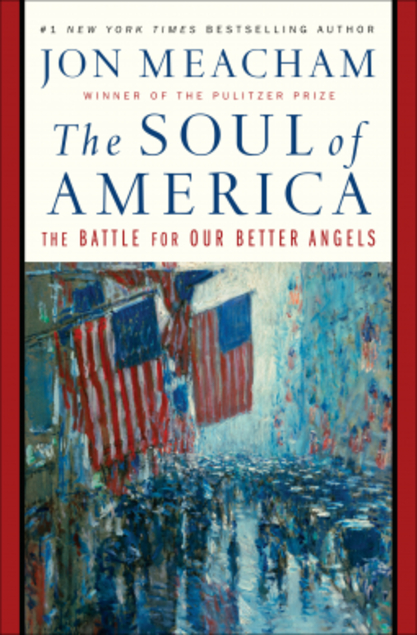
Since I wrote last year's post on Books of 2017, I have read 32 books. I finally took the time to read Sculpture: Processes and Principles [1977] by Rudolf Wittkower, with which I had familiarity but had not read in its entirety before now. It really is a fantastic overview about techniques in stone carving and modeling for anyone interested in knowing more about the great European sculptors of the past. Bridging the gap between art and biography, two of my favorites this year were Art for the Nation: The Eastlakes and the Victorian Art World [2011] by Susanna Avery-Quash and Julie Sheldon, and self-described "tranny potter" Grayson Perry's memoirs, co-written with Wendy Jones, Portrait of the Artist as a Young Girl [2006]. Another great biographical account was Richard Blanco's memoir For All of Us, One Today: An Inaugural Poet's Journey [2013], which I read after we visited the excellent exhibition of his poetry with photographs by Jacob Hessler in Ogunquit, Maine. In the realm of American history, I read Jon Meacham's new book The Soul of America: The Battle for Our Better Angels [2018], the cover of which you see here. This book was such a fascinating overview of highlights in American history from the colonial period through the 1960s, showing how so many of our great leaders, including Lincoln and FDR, enacted social change because of the influence of the people, social activists and civil rights leaders, the true "soul of America." The book is a great testament and response to the politics of today.

Right now, I'm currently reading two books. On the literary fiction side, I am finally reading Jane Austen's Persuasion, published posthumously two centuries ago. I am nearing the end and I am worried it won't have a happy ending! I'm also reading Richard Holmes's fantastic collective biography The Age of Wonder: The Romantic Generation and the Discovery of the Beauty and Terror of Science [2010], reminding us that science was not the separate discipline we perceive it to be today, but part of the exploration of the natural world along with art, literature, and music in the decades before and after 1800. This book has made for some relaxing bedtime reading, before turning in and dreaming each night...

Tuesday, November 28, 2017

Books of 2017

The 100 Notable Books of 2017 from the New York Times came out just before Thanksgiving...rather early this year actually, especially since Thanksgiving itself was early. I usually find a couple of books on their list that pique my interest, but I have to confess that nothing really stands out for me this year. George Saunders's Lincoln in the Bardo won the Man Booker Prize, and as his first novel it has been received well, so perhaps that will go on the list. I'm not a big fan of modern sequels to literary classics, so even though Mrs. Osmond by John Banville made it on the list, I really don't want to read someone continuing the story of Isabel Archer. Last year when I blogged about the Books of 2016, I was reading Portrait of a Lady [1881]. The first half of the book moved slowly, but was interesting; the second half, however, turned into a page-turner in a way that startled me. It's a classic, just as it is, so I think I'll skip Banville's "sequel." I should add that I've discovered two new books published this year that are not on the 100 list, but have already gone on my Amazon Wish List. They are The Sparsholt Affair by Alan Hollinghurst and Amy Tan's Where the Past Begins: A Writer's Memoir.

On last year's post, I noted some of the new books I was hoping to read. and indeed I did immerse myself in three of them. Lucy Barton's My Name Is Lucy was interesting, but I've been told her novel Olive Kitteridge is better, so I'll give that a go before passing further judgement. Julia Baird's biography of Queen Victoria was well-written and a good read, but I can't say it captured me as other biographies have in the past. I did find myself questioning Victoria and Albert's relationship in a new way, which is a testament to Baird's writing though. The third book on last year's "to read" list was Colson Whitehead's The Underground Railroad. This book was fantastic. It's painful to read at times, but it creatively weaves an imaginary actual underground railroad as a metaphor for the journey of a slave on the run, trying to find her freedom. I highly recommend it, and it certainly deserved both the Pulitzer Prize and National Book Award.

In 2017 I read 33 books. Among the more noteworthy art history books I read were the following: Florine Stettheimer: Painting Poetry [2017], the catalog to accompany the exhibition at The Jewish Museum and, currently, at the Art Gallery of Ontario; The British School of Sculpture, c.1760-1832, edited by Jason Edwards and Sarah Burnage [2017], an excellent collection of essays that explore aspects of British nationalism in sculpture (and, as an aside, includes an essay by me entitled "Before Rome: John Gibson and the British School of Art"); How to Read Chinese Ceramics by Denise Leidy [2015], partly to help my curatorial eye better understand some of the Chinese art we have in the collection at Columbia University; and A Worldly Art: The Dutch Republic 1585-1718 by Mariët Westermann [1996], an easy-to-read introduction to art and material culture during the Golden Age of Dutch painting. All that said, my favorite art book read of the year was the book cover you see here: Art as Therapy by Alain de Botton & John Armstrong [2013]. This book did a great job making me--as a trained art historian and curator--rethink what art is all about, and how art by its very nature can be used as a form of psychological and emotional therapy, and conversely how examining art can teach us about the human spirit and mind. I've recommended this book to a number of people already.


Among my favorite fiction reads this year--aside from Whitehead and James, mentioned above--was the classic 1984 by George Orwell [1949], which shocked me with its frightening poignancy even today under the current Pres. Tyrant; The Sense of an Ending by Julian Barnes [2011], which I find myself still a bit unsettled by, perhaps because I'm not pleased with how the book ended; and My Cousin Rachel by Daphne Du Maurier [1951], just so I could become familiar with the book before seeing the movie (I like Rachel Weisz, but the book was better). I also read The Mayor of Casterbridge by Thomas Hardy [1886] this year, which was my first foray into Hardy. What has struck me most about this novel has been how, of all the Victorian books I have read, this one captured best how I imagine my working-class, English, Victorian ancestors actually lived their everyday lives. I look forward to reading more of Hardy, even if he is a bit dark. Right now, however, I'm reading the book you see here: Lydia Davis's 2015 translation of Gustave Flaubert's French classic Madame Bovary [1857]. So far, I'm rather enthralled by the lush, lyrical descriptions, and it helps greatly that AA and I went to Rouen and Dieppe this past Spring, so I have a sense of the region Flaubert describes. Even though this is another one of those tragedies where you know how it ends, I look forward to continuing reading this on the subway and before bed over the next week or two...

Monday, December 26, 2016

Books of 2016

I'm a little late writing this annual post. Although the 100 Notable Books of 2016 came out from in New York Times a few weeks ago, I've been incredibly busy (including a London trip), so I've only now had a chance to catch up on my blogging about this and other things. Running through their annual list, there are a few novels that definitely caught my eye. I've heard a number of positive things about The Underground Railroad by Colson Whitehead and it has also made it onto the NYT top 5 books of the year list, so that is going onto my Amazon Wish List. From the 100 list I've also added the 2016 novels The Life-Writer by David Constantine, Nutshell by Ian McEwan, and Elizabeth Strout's My Name Is Lucy Barton. I have never read anything by these authors before, so I'm not sure if these will be good "firsts" for me to read or not, but these all seem like things I would want to read. In non-fiction I've added Simon Schama's The Face of Britain: A History of the Nation Through Its Portraits (which was associated with a 2015-16 exhibition at the National Portrait Gallery, London, which unfortunately I missed), and Richard Tomb's The English and Their History. As if my Anglophilia weren't obvious enough, I should mention at this point that after the 100 list came out, there was a review for Julia Baird's new biography of Queen Victoria, which I immediately put on my list. Imagine my pleasant surprise with I received it as a Christmas gift from my godchildren, the AEOBs (THANK YOU!!!).

Every year around Thanksgiving I read a major work of literature. Last year, as I was writing about the Books of 2015, I was reading Anna Karenina, which was an incredible book. I think what surprised me most about that novel was that the story of Levin and Kitty actually felt more engaging than that of Anna and Vronsky, not just because of their love story but also because of the social reforms and anxieties Levin goes through to understand his purpose in life. This year I'm reading the book you see above: Henry James's Portrait of a Lady [1881]. So far it's interesting, but it's no Anna Karenina or Middlemarch.

This past year I read 37 books. My longer commute to & from work each day since I moved to Jersey City has definitely given me more time to read on the subway (assuming I actually can get the book out of my bag and read, as sometimes the trains are just too crowded). Among the noteworthy art history books that I read this year, the following stand out: Landscape and Western Art by Malcolm Andrews [1999], a good introductory survey to the history and stylistic developments of landscape painting; Susan Sontag's On Photography [1977], which admittedly now seems a bit dated but still has some interesting ideas; and a few of the short, focused-topic art books published by the National Gallery in London, such as A Closer Look: Techniques of Painting by Jo Kirby [2011], which are excellent overviews with great detail images. In the art-biography realm, I read a few noteworthy things this year, including the book you see here on Romaine Brooks by Cassandra Langer [2015], an excellent story of the lesbian modernist painter, and a journalistic-style biography of Anthony Blunt by Miranda Carter [2001], a man who was Head of the Courtauld Institute and Keeper of the Royal Collection, had tea with the Queen Mother one day, then was exchanging government secrets as a Soviet spy another day, and later in the evening having sex with a tradesman lover, all while writing his latest book on Poussin--quite a life story!

Wrapping up highlights of fiction reads this year, in addition to Anna Karenina my favorite novels included: Kate Atkinson's A God in Ruins [2015], her sequel to Life After Life which I loved, although this time the story is about Teddy and not his sister Ursula, and it takes some interesting turns as the story(ies) unfold; The Girl on the Train by Paula Hawkins [2015], which was a great page-turner (note: I have not yet seen the movie); and the autistic-mystery story The Curious Incident of the Dog in the Night-Time by Mark Haddon [2003], that was admittedly tedious after a while but captured so well the mindset of the boy's state of mind--I even made AA read it, and he agreed with me. I also did read this year All the Light We Cannot See by Anthony Doerr [2014], which was on the 2014 list; while the story and writing were quite good, I really could not stand the two-page chapters, which I felt broke up the overarching storyline too much and felt choppy then overall.

Finally, I cannot close this post without mentioning that I read (for the third time) Virginia Woolf's A Room of One's Own [1929]. This is a great, classic essay not just about being a woman in history and literature, but about how a writer, any writer, needs a room of one's own to read, to think...to write.  I am fortunate that I do have a room of my own to do this very thing, but ironically this evening I am writing this post at the dining room table, where a candle is lit beside my laptop, illuminating my peripheral vision with its tall flame and infiltrating my nostrils with its sweet scent of winter spice. On the other side of me is the dishwasher running, the sound of the rushing water soothing me as I write this post. Perhaps the Room of One's Own sometimes can just be the space which you make for yourself, in which to find the peace of mind you need in order to write.

Sunday, December 6, 2015

Books of 2015

The "best of" lists for 2015 have begun! bklynbiblio readers will recall that "Books of" is probably one of my favorite posts of the year (here are 2014's and 2013's posts, for instance). While my post is somewhat an assessment of The New York Times Book Review's annual 100 Notable Books, it is more for me a way to look back on the books I read over the year and share/suggest/comment on my favorites (and as you will see at the end of this post, one very much not-so-favorite). This year's NYT list, unfortunately, doesn't inspire me too much, although a few works look interesting. In non-fiction, Mary Beard's sweeping history of ancient Rome SPQR promises to be a great read, but I may have to wait a while to read that one. (I follow Beard, who is a professor of classics at Cambridge, on her blog A Don's Life.) In fiction two books seem promising: How to Be Both by Ali Smith (combined tale of a modern teenage girl and a Renaissance painter) and The Incarnations by Susan Barker (a Chinese cab driver discovers all of his past lives through a series of letters). I was surprised that Toni Morrison's new novel God Help the Child made it on the list because the review artist Kara Walker gave in April lamented the lack of literary beauty and charge that we have come to relish from Morrison's work. But since I do read Morrison (I read Love [2003] this year), that book will go on my my future reading list, I'm sure. Paula Hawkins' debut novel The Girl on the Train made it on Amazon's top list, but not the NYT list; that is definitely going on my list of books to read as well.

Over the past year since I last blogged on this topic, I have read 29 books. Around this time last year I was reading Shearer West's Portraiture [2004], an excellent overview on this subject in painting, and Agatha Christie's Curtain [1975], an excellent wrap-up mystery and the last of my many years of reading her novels in the order they were published. This year I took on two biographies in preparation for my recent conference paper I gave in Pittsburgh. One was the life of the writer/diplomat James Justinian Morier and his brothers (Ottoman and Persian Odysseys by Henry McKenzie Johnston [1998]), and the second was the translated edition of the Mirza Abul Hasan Khan's travel journal to London (A Persian at the Court of King George 1809-10 by Margaret Morris Cloake [1988]). I never thought I would find Anglo-Persian politics during the Napoleonic Wars so interesting, but it has been eye-opening to learn about it in the context of our current strained relations with Iran and other parts of the Middle East today. In a more emotional vein, I tackled Joan Didion's powerful The Year of Magical Thinking [2006], her powerful, personal struggle with death, grief, mourning, survival, and ultimately living.

One of the books I am currently reading merges my interest in biography with biography: Richard Wendorf's Sir Joshua Reynolds: The Painter in Society [1996], which so far is an interesting psychological exploration into understanding one of the greatest portrait painters of the 18th century. A great art read this year was a book by one of my favorite contemporary artists, Grayson Perry: Playing to the Gallery: Helping Contemporary Art in Its Struggle to Be Understood [2014]. The artist's frequently-hilarious cartoons accompany his lucid explanations as to how conceptual art has maligned the perception of art and how it has undermined the ideology of craft. This book is a great, entertaining read for anyone who has wondered "Why don't I understand all this contemporary art thing, and why is is so shockingly expensive?" An intriguing contrast to this--which, not surprisingly, I found less enjoyable but still insightful--was Ways of Curating by the uber-curator Hans Ulrich Obrist [2014]. Despite his insistence on how it is the work of art that should speak for itself in an exhibition, Obrist's jet-setting curatorial life (he literally travels the world overseeing exhibitions everywhere) clearly imposes his persona on the curatorial/exhibition experience, ultimately framing the perception and reception of art, no matter what he claims.

In addition to the biography of Reynolds, I have made the great foray into the literary masterpiece Anna Karenina by Leo Tolstoy [1877], the book cover for which is above. Lately, my running commentary to the frequent question "What are you doing for the holidays?" has been "I'm reading Anna Karenina." And I mean it! (Thanks goes out to my cousins the M+JBs for giving me this book as a gift last Christmas!) The best novel I read this year was Kate Atkinson's Behind the Scenes at the Museum [1995]. I discovered Atkinson last year when I read Life After Life, which had been on the 2013 NYT list, and I truly loved that book. This earlier novel won her the Whitbread Book of the Year award and recounts in witty, original prose not only the life of Ruby Lennox (from the time of her conception) but the troubled lives of her maternal ancestry and relatives from the late 1800s to just before the new millennium. I look forward to reading more of Atkinson, including her new book this year A God in Ruins, a sequel to Life After Life. A few of my other favorite fiction reads this year were: The Testament of Mary by Colm Toibin [2012], a short novel that considers the life of Christ from his mother's perspective; the young-adult novel Miss Peregrine's Home for Peculiar Children by Ransom Riggs [2011]; and The Minotaur by Barbara Vine [2005], an exploration of autism long before it was ever diagnosed for what it is today. I also read Portraits at an Exhibition by Patrick Horrigan [2015] and published a review in The Gay & Lesbian Review. And finally I will now wrap up this post by noting, with unbelievable dread, that I also read early this year The Goldfinch by Donna Tartt [2013]. This book won lots of awards including the Pulitzer, but I absolutely detested it. I've since discovered that people who read this book are in split camps: you either love it or hate it. From my perspective, the first 200 pages and the last 50 pages are the best parts of the book. The entire center of more than 300 pages was some of the most tedious, unrealistic, plot-less storytelling I have ever read. What angered me most was that this beautiful painting, that is supposed to be the focal point of the entire novel, dissipates into an invisible shadow and never reappears until it becomes a catalyst to wrap up a ridiculous plot. I can understand why some people loved this book because of its attempt at contemporary realism, but personally I could not wait to finish it. Sorry, Ms. Tartt. I doubt I will ever read another of your books.

Saturday, December 6, 2014

Books of 2014

Once Thanksgiving rolls around, I find myself anxiously awaiting the latest "100 Notable Books of" article from the editors of The New York Times Book Review, and the 2014 edition was released online yesterday. I find it interesting to compare it to similar lists, such as those issued by Amazon and the Huffington Post. Two interesting fiction titles stand out and they have now gone on my "to read" list: Everything I Never Told You by Celeste Ng, and All the Light We Cannot See by Anthony Doerr, the latter of these two also appearing in the NYT's list for the top 5 novels of the year. As I've noted in my recurring posts on this topic, I rarely have read anything on the list once it's published, but I'm pleasantly surprised to say that I did read as soon as it came out Sarah Waters's new novel The Paying Guests, which made it on the list for this year. Taking place in early 1920s suburban London, it is a lesbian love story, but packed with fascinating social history and a surprising twist involving murder. There are a few things on the non-fiction side of the NYT list that intrigue me, but nothing I feel the need to run out and purchase. Hermione Lee's biography of the novelist/biographer Penelope Fitzgerald, however, has me wondering why I have never read anything by her before (her meaning Fitzgerald).

Regular bklynbiblio readers know that I use this annual list to recount my own reading over the course of the year. (See, randomly, posts for 2013 and 2009, or even my recent post on "Top 10 Read Novels: 2010-2013.") This year I've read to date 19 books. One of the strange events in my reading life this year was purchasing a Kindle, so I've embarked on reading a couple of books that way. I'm not sold on it yet, though. I like holding books, and find that tangibility helps make reading for me something active rather than passive. Art books are also still nowhere in the realm of easy reading on electronic devices because of the legal and technical limitations in reproducing works of art in color. I was pleased to have read a few good art books this year, however. I loved Edmund de Waal's Hare with Amber Eyes about his family's netsuke collection (see my review here), and my recent visit to Munich inspired me to buy and read the book you see here, about one of my favorite modernists, Franz Marc, who found the spiritual in painting animals, was a founder of the Blaue Reiter group, and died tragically at a young age fighting for Germany during World War I. Currently I am reading two art books, both part of the Oxford art history series. One is Portraiture by Shearer West, an overview on the history and different ways of looking at portraiture, with the chapter I am in now on gender and portraiture promising to be one of the more interesting. The second is Matthew Craske's Art in Europe 1700-1830, a socio-economic history of art at the time, which I am slowly moving through. 

One year ago, when I posted about the 2013 list, I was reading Amy Tan's The Valley of Amazement, which had been on the NYT list that year. It was quite a heart-wrenching tale and definitely among her better books. I had the opportunity to hear her speak and meet her at a book signing at the Asia Society, which was a treat. I told her that her book The Hundred Secret Senses was among my favorites, and she said, "Oh, I guess I should reread that!" Also from the NYT 2013 list, I read this year David Leavitt's The Two Hotel Francforts, which was interesting but not great, and Kate Atkinson's Life After Life, which was an incredibly clever book that I truly enjoyed. Atkinson's story is about an Englishwoman named Ursula who is born in 1911 and proceeds to die as an infant, then is reborn in a new version of that same life. She continues to be reborn and make decisions that alter things for her and others around her as the chapters unfold. It was a fascinating take on the idea of whether one would choose the same paths in life if given the opportunity to do it all over again. Elsewhere in fiction, I continued my discovery of Barbara Pym by reading her novel A Quartet in Autumn, about the invisibility of seniors in the modern world. I also read Jane Austen's Emma this year, which I have to confess was not as engaging as I had hoped, possibly because I'm still blindsided by George Eliot's Middlemarch read last year. Another favorite novel I read this year was The Book Thief by Markus Zusak. Although written for young adults, it was a profound take on loss and grief, and hatred and love. The narrator is Death, and it tells the story of a young girl who endures much during Germany in World War II, but also discovers the power of reading and writing as a way of helping herself and others. The film version is well-done too, but the book has greater pathos. Of course I sneak in during the year a couple of mysteries by Ruth Rendell, and I am currently reading, in addition to the two art history books above, Agatha Christie's final Hercule Poirot murder mystery Curtain. This is the end of a long saga for me in which I have been reading all of Christie's mysteries in the order they were published, so perhaps I will say more about that in another post.

Friday, November 29, 2013

Books of 2013

I've become rather fond of this time of the year...the crispness of late autumn weather is in the air...turkey, stuffing, and pumpkin pie are about to be served...and the first "best of" lists of the year come out, most notably the "100 Notable Books of 2013" by The New York Times, as selected by the editors of the NYT Book Review. bklynbiblio readers may recall that I've been using this annual list to recap some of my own particular reads over the course of the year (e.g. 2012 back to 2008). As in the past, their list is divided into 50 fiction/poetry and 50 non-fiction books. And as I've also written in the past, I rarely if ever find myself reading anything on the list the same year that it's published. Surprisingly, though, this year I can make a "notable" exception! I was excited to pick up Amy Tan's latest novel, The Valley of Amazement, on the day it was released a few weeks ago, and even more delighted that it made the NYT list for this year. It's the book I'm reading right now too, so it's a convergence of my interests coming together rather nicely, I must say. The novel recounts the passing decades of an American courtesan and her mixed-race daughter living in Shanghai in the early 1900s. My taste for Tan's books have varied. I liked The Joy Luck Club and I rave to this day about The Hundred Secret Senses, but her others haven't been as engaging, in my opinion. However, this one so far is capturing my attention very quickly.

There isn't much on the NYT list in non-fiction that is of interest to me this year, although I do like the idea of a biography by Jill Lepore (Book of Ages) about Benjamin Franklin's sister Jane, a mother of 12 who kept on a lifetime correspondence with her famous colonial brother. On the fiction side of things, I already had on my wish list a few of the novels that have made it onto the NYT list (I guess I have good taste?!): The Goldfinch by Donna Tartt (art-related coming-of-age book), The Luminaries by Eleanor Catton (19th-century New Zealand; this also won the prestigious Booker Prize), and David Leavitt's The Two Hotel Francforts (gay love affair between two married men in 1940s Lisbon).

Compared to the last couple of years, my number of books read since last year's post on this topic is down from 29 to 20. I will claim it's because I've had a leaner year due to my dissertation, move, and new job. In the world of art history, I read Elizabeth Prettejohn's The Modernity of Ancient Sculpture (2012), an interesting theoretical take on how classicism has been misappropriated as anti-modern and why that needs to change (I have a review on the book coming out soon). I've also read a few exhibition catalogs on the life and art of Florine Stettheimer (1871-1944), the New York-based modernist painter whose work is still little known outside America. This is more related to my work life at Columbia now; I'll be posting about Stettheimer in the months to come.

My fiction reads over the past year began during last year's post when I was reading Richard Mason's History of a Pleasure Seeker (2011), which was interesting and a fast read, but not as enthralling as I had hoped. I also read Toni Morrison's Home (2012) while I was in San Francisco this summer; that book had been on the NYT 2012 list. I can't say it was among my favorites she's written, but Morrison is more about the way she writes then the storyline at times. Among my other fiction reads were A. S. Byatt's A Biographer's Tale (2001), F. Scott Fitzgerald's This Side of Paradise (1920), John Knowles' A Separate Peace (1959), and a few mysteries by Ruth Rendell and Agatha Christie. However, the two great fiction reads for me this year was a collection of short stories by Anton Chekhov (1890s)--truly a brilliant short-story writer--and George Eliot's masterpiece Middlemarch (serialized 1871-72; book 1874). I cannot believe I had not read Eliot's novel beforehand, and my friend MT insisted on changing that when she gave me the book as a thank-you gift. I can't say Eliot's book was as entertaining of a Victorian novel as, say, Anthony Trollope's The Way We Live Now (1875), but Eliot's novel is one of the most through-oriented I've ever read. It secretly masks as a feminist novel but concentrates on the roles men and women expect one another to play in society. Even more challenging, it questions the measurement of success, through monetary means, corruption, or intellectual prowess, and makes you sympathize with even the characters you're not particularly fond of. And then, just when you think it might never happen because of its crucial emphasis on the mind, a romantic twist that you hoped for is finally achieved, and you suddenly realize that the greatest moments in life sometimes are the ones that are the least important to the world at large. Middlemarch has one of the most beautifully written, poignant endings; the last two paragraphs simply made me cry. The book is a masterpiece because it explores the mind, the heart, and the soul, and forces you to confront for yourself which of these are most important to you, the reader, after all.

Friday, November 30, 2012

Books of 2012

The annual release of the "100 Notable Books of 2012" by The New York Times always gives me an opportunity to blog about books and reading, something as a writer I probably should do more often. Followers of bklynbiblio may recall my past posts about this list in 2008, 2009, 2010, and 2011, all written right around this time of the year. Not surprisingly, as in the past, I haven't had a chance to read anything on this year's list, but keeping track of these lists is useful in helping pick up some works that I can put on my "future read" list and see how they hold up over time. The NYT list once again is divided between non-fiction and fiction/short stories/poetry. Of the fiction titles, only 2 also appear on Amazon's top 10 Best Books of the Year, which is the lowest number so far since I began comparing the two. It seems the gap between what's popular and what's respected is widening. That said, Hilary Mantel's Tudor-themed historical novel about Anne Boleyn and the Tudor court, Bring Up the Bodies, is on both lists, even appearing at #1 on Amazon's, so that may be worth checking out. From the NYT list in fiction, I know I will eventually read Toni Morrison's Home, as I do admire her writing about the African-American experience (Beloved was brilliant). In non-fiction, however, I've already had on my "to read" list Shooting Victoria: Madness, Mayhem, and the Rebirth of the British Monarchy by Paul Thomas Murphy, an account of the numerous attempts on the life of Queen Victoria over her 64-year reign, so I'm pleased to know that appears on the list.

Since last year's post on this topic, I've read 29 books (which, interestingly, was the same as last year). Among my noteworthy art historical reads were: Linda Bolton's take on the 19th-century modernist Edouard Manet, part of the History and Techniques of the Great Masters series (1989); Kate Culkin's biography of Harriet Hosmer, the 19th-century American lesbian sculptor (2012); and--rather surprisingly--Netsuke: Masterpieces from the Metropolitan Museum of Art (1982) by Barbra Teri Okada, an exhibition catalogue on the ivory- and wood-carved Japanese figurines that originally served the practical purpose of keeping an inro (purse) attached to an obi (sash) of a kimono. This last book was related to having taught an introductory course on Asian art this semester. I also read Karen Armstrong's Islam: A Short History (2009 edition). A former nun, she has written about a number of world religions with what seems like an open mind. In this book, her last chapter on religious fundamentalism in an age of terrorism is superb. Everyone should be required to read it.

A year ago, I was in New Haven on a fellowship at the Yale Center for British Art, reading for pleasure The Night Watch by Sarah Waters (2006). Sadly, it is my least-favorite of her novels. This year I did finally read The Girl Who Kicked the Hornet's Nest by Stieg Larsson (2009, English edition), which was on the NYT 2010 list, and I agree that it was the best of the books in the trilogy (the misogyny prevalent in the first two books is completely rewritten here). One of my other favorite novels of the year was Jane and Prudence by Barbara Pym (1953), a novelist whose English tea cozy characters have greater depth than you'd ever imagine. A few other noteworthy novels I read this year were James Joyce's Dubliners (1914; short stories), Edith Wharton's Age of Innocence (1920), Agatha Christie's Nemesis (1971), and Julie Otsuka's The Buddha in the Attic (2011, on the NYT 2011 list). I am at present slowly reading 2 novels: The Pickwick Papers, the first novel by Charles Dickens (1837), which I started a long time ago but never finished; and History of a Pleasure Seeker by Richard Mason (2012), an ambiguous tale of a young man that starts in 1907 Amsterdam. With a painting by Surrealist René Magritte as the cover image, the book must be good!

Friday, November 25, 2011

Books of 2011

It’s that time again! The annual “best” lists have begun. They seem to be happening earlier and earlier each year, including The New York Times’s 100 Notable Books of 2011, which was published today on their website. As I’ve noted in the past, I rarely read these books as they’re published, but their potential sustainability appeals to me. After all, a good book (song, movie, etc.) needs to transcend its momentary popularity. If you read it years later and you can still feel its impact, then the author has proven him/herself. The NYT list is divided into fiction/short-stories (no poems this year) and non-fiction, although they haven’t yet published their usual explanation for how they came up with their list. Only 5 of the titles on Amazon’s Top 10 Fiction & Literature Books of  2011 made it onto the NYT list, which once again seems strange to me. In any case, based on the NYT recommendations, I’m adding to my wish list the novels The Buddha in the Attic by Julie Otsuka (sounds like a Japanese twist on The Joy Luck Club) and Alan Hollinghurst’s The Stranger’s Child (must catch up on his earlier books too). In biography I’m going for Catherine the Great: Portrait of a Woman by Robert K. Massie. I’m also tempted by Steven Naifeh and Gregory White Smith’s Van Gogh: The Life, but another Vincent van Gogh biography? (Try Judy Sund’s Van Gogh [2002], which people I've told about always seem to love.) Of course, you can’t always trust lists like these, as I discovered this past year. In 2010 the NYT had Tom Rachman’s The Imperfectionists (stories about people working at an English-language newspaper in Rome) on their list, but I read it and I wasn’t nearly as thrilled by it as they seemed to be (I’m convinced there’s some journalististic nepotism at work here).

Since last year’s post on this topic, I’ve read 29 books. This is down a bit from the 44 of last year, but 2010 was an exceptionally intense year studying for my PhD Oral Exam. Among my noteworthy art historical reads were Alex Potts’s Flesh and the Ideal: Winckelmann and the Origins of Art History (1994) and Henry Fuseli by Martin Myrone (2001). One of my favorite non-fiction books was The Suspicions of Mr. Whicher: Or, The Murder at Road Hill House by Kate Summerscale (2008), an 1860s true-crime murder mystery which every mystery buff should read. I also couldn’t resist reading Betty White’s memoir If You Ask Me (And of Course You Won’t) (2011). Between her comedic sense of living and her devotion to the proper care of animals, how could you not love Betty White?

Last year at this time I was reading Howards End (1910) by E.M. Forster. The Schlegel sisters are divine, but it was even more fascinating how Forster was able to anthropomorphize the homes themselves so that even they became characters in the novel. I was sitting in a coffee shop reading one afternoon and a non-descript gray-haired woman saw me and squealed in delight because it was one of her favorite books and I had now saved her from the despair of thinking no one ever read Forster anymore. Among some of the other novels I read, Alice Sebold’s The Lovely Bones (2002) was thought-provoking and worth reading, but The Elegance of the Hedgehog by Muriel Barbery (English ed. 2008) was an incredibly smart, witty, tour de force of a novel (thank you, PR, for the gift). Shermania has more than one blog post about this book, so that should tell you how good it is. My big fiction discovery this year was British novelist Barbara Pym (thanks to TC giving a paper at the Barbara Pym Society earlier this year). Excellent Women (1952) will have you chuckling aloud as you pour a cup of tea and join the witty, thirtysomething spinster Mildred Lathbury through another seemingly boring day with her fellow church ladies and her high-strung neighbors. Another must-read. Since I’ve been here in New Haven, I’m reading The Night Watch (2006) by Sarah Waters. It’s a World War II-themed story and includes both a lesbian and gay male couple, both living under the radar since it was illegal then. Curiously, the story moves backwards through time, which should prove interesting, although I have to confess right now it’s moving a bit slowly. Waters is great storyteller though, as bklynbiblio readers will recall me saying not too long ago.

Sunday, November 28, 2010

Books of 2010

The New York Times has published online its annual list of the 100 Notable Books of 2010, with the print version coming out next Sunday. I find this to be one of the more interesting “best of” lists each year, although like in past years I never seem to have read any of the books on the list. I rarely read new books right away though, and I’ve determined I prefer it this way because it allows for me to better assess a book beyond the hoopla of its initial release and to see how it stands over time. There have been exceptions of course, like when I read Harry Potter and the Deathly Hallows the weekend it was released. The NYT list has been divided into fiction/poetry and non-fiction. Their criteria for selection is always interesting. This year they deny it’s done arithmetically, but instead have relied on “judgment, instinct and feel. The final result, for all its variety, implies a kind of logic, if not in our method, then in ‘the culture.’” I have no idea what that means, but at least they’re willing to be castigated for their choices, and people are already leaving comments of distress because they left out their top book. I was surprised to discover that only the 3rd book in Stieg Larsson’s trilogy ever made it onto the NYT past lists. Having read his Girl with the Dragon Tattoo and Girl Who Played with Fire this past year (both of which are good, but deal with some intense psychological misogyny and are graphically violent), I know I will be reading The Girl Who Kicked the Hornet’s Nest. From their list, I’ve now added a few novels to my Amazon Wish List, such as the art historical mystery Angelology by Danielle Trussoni and The Long Song by Andrea Levy about the end of slavery in Jamaica in the 1830s. I thought it would be interesting to crosscheck this list with Amazon’s Top 10 Books or 2010: Literature & Fiction. Their Editors’ Picks section has 6 titles also on the NYT list, but only 5 books from their Customers Favorites list made it onto the NYT list. It makes you wonder who becomes the true arbiter of literary taste: the reviewer, the distributor, or the buyer?

Last year at this time I was reading Jane Austen’s Mansfield Park, which wasn’t nearly as good as Pride and Prejudice. Including that title, I’ve read 44 books, making 2010 a surprisingly literate year. A number of those books were part of the intensive studying I was doing for my Oral Exams this past spring though. One of the best art historical texts I read was Emulation: David, Drouais, and Girodet in the Art of Revolutionary France (rev. ed. 2006) by Thomas Crow, a book I tell people is a page-turner you’re hard-pressed to put down. Although not officially published yet, Carolyn Conroy’s well-researched and fascinating doctoral dissertation “He Hath Mingled with the Ungodly”: The Life of Simeon Solomon After 1873, with a Survey of the Extant Works (2010) made for fantastic reading. Other noteworthy art history reads this year included T.J. Clark’s The Painting of Modern Life: Paris in the Art of Manet and His Followers (1984), Elizabeth Prettejohn’s Beauty and Art (2005), and Judy Sund’s Van Gogh (2002).

Ever a lover of a good novel though, I read 18 works of fiction this year. bklynbiblio readers will recall my review of The Children’s Book (2009) by A. S. Byatt, and my in medias res discussion of the magnificent The Way We Live Now (1875) by Anthony Trollope. Two other notable novels I read this year were the gay-themed obsessive love story Call Me by Your Name (2007) by André Aciman (which I so wanted to hate for personal reasons, but have to admit was superb), and The Alchemist (1988) by Paulo Coelho (a lovely allegory that inspired people before the millennium, but now post-9/11 is perhaps a little less inspiring, although I do want to read more of his work). At present though I’m currently devouring Howards End (1910) by E. M. Forster, one of my favorite novelists. Forster knew how to use fiction to draw attention to the divides in social class, race, and gender/sexual relations during a post-Victorian age when Britain’s imperialism and power was on the decline. He probably would be a forgotten writer today if it weren’t for the brilliant Merchant-Ivory films adapted from his novels. I’m not sure yet what books will come afterwards, but all recommendations are welcome!

Saturday, December 5, 2009

Books of 2009

The New York Times has posted its annual list of books: "100 Notable Books of 2009." The first 50 are fiction/poetry, the second 50 are non-fiction. As I noted last year when I wrote about this, the list comes from all the books that were reviewed by the newspaper. They've posted on the website the following disclaimer: "It was not easy picking the winners, and we doubtless made mistakes. To the authors who made the list: congratulations. To the equally deserving ones who did not: our apologies." Interestingly, there are 12 collections of short stories on the list this year, which they call a "heartening development" in this form of storytelling. I must agree.
Whereas last year I had not read a single book on the list, at least this year I can say that I read one, The Little Stranger by Sarah Waters (2009). Here is their summary: "In Waters’s novel of postwar [i.e. World War II] anxiety, members of a decaying upper-crust English family start to come to sticky ends in their creepy mansion." Waters is one of my favorite authors, and this book was quite good. It wasn't as much of a scary thriller as the book jacket implied, but it did have its supernatural moments. The author's amazing ability to create believable characters is definitely among her strong points. I can still vividly see Caroline Ayres reclining on a couch reading, her legs tucked underneath her with the slightest trace of unshaven leg hair just barely peeking out from the long wool skirt she wears. Waters writes with an amazing eye for detail.

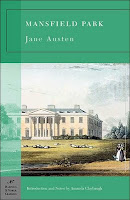
If we include my last read of 2008 [Elizabeth Kostova's The Historian, about which I posted a review], I read 35 books this year as of today. Following up on Waters's book, I then read her absolutely amazing novel Fingersmith (2002). It draws on all of Waters's trademarks: Victorian culture, lesbianism, and mysteries. It is unlike anything you will have ever read before, and you will not be able to put it down. One of my other favorite fiction reads this year was Edith Wharton's The House of Mirth (1905) [about which I posted a review], which still occasionally haunts me some mornings, financially speaking, if I stop to buy a $4 cappuccino at Dean & Deluca. Other notable fiction reads this year included Roderick Hudson by Henry James (1875), A Mercy by Toni Morrison (2008) [which was on the NYT's 2008 list], the mystery One Across, Two Down by Ruth Rendell (1971), and The Bonesetter's Daughter by Amy Tan (2001). The following were among the more interesting of the art historical books I read this year: 19th-Century Sculpture by H.W. Janson (1985), The Aesthetic Movement by Lionel Lambourne (1996), and Antoine's Alphabet by Jed Perl (2008), about which I may be writing a review soon. If you're wondering about the book cover you see here, it's for Mansfield Park by Jane Austen (1814), which I'm reading right now, along with the exhibition catalogue for Watteau, Music, and Theater (2009) and The Spirituality of Imperfection: Storytelling and the Search for Meaning by Ernest Kurtz & Katherine Ketcham (1992), but those will have to go on next year's list.

Saturday, December 6, 2008

Books of 2008

The New York Times has posted its annual list of the "100 Notable Books of 2008." This list comes out at the beginning of each December and thus encompasses things from the previous December. Divided into 1/2 fiction & poetry and 1/2 non-fiction, it is based on the reviews of books that appeared in the newspaper over the course of the year. Sadly, I haven't read a single thing on the list this year. Usually I can claim to have read at least a couple of titles, but no such luck this year. As has been noted on this blog before by me, I usually come late to things like books and films, just because that's the way my life usually goes. But to demonstrate that I have been a busy reader, over the past 12 months I have read 31 books, and in the spirit of "best of the year" traditions, I thought I would share some of the books that I read (with their year of original publication in parentheses).

In terms of fiction, my favorite novels were the literary classic Mrs. Dalloway by Virginia Woolf (1925) and the psychological mystery A Dark-Adapted Eye by Barbara Vine (1986). Other notable fiction reads for the year were Where Angels Fear to Tread by E.M. Forster (1905), Lust, Caution by Eileen Chang (1979, translated into English 2007), The Book of Salt by Monique Truong (2003), and Grief by Andrew Holleran (2006). As for non-fiction, the subjects vary and although much from this group was research for conference presentations and coursework, others were for my own pleasure. Two of my favorites were biographies: Georgiana, Duchess of Devonshire by Amanda Foreman (1998) [see my review on this blog], and Michelangelo by Howard Hibbard (1974). Other notable non-fiction reads include the history books Longitude by Dava Sobel (1995) and The Ottoman Empire, 1700-1922 by Donald Quataert (2000), the art historical text Classical Art: From Greece to Rome by Mary Beard and John Henderson (2001), and of course the memoirs of David Sedaris, When You Are Engulfed in Flames (2008) [see my review on this blog]. And if you're wondering about the image reproduced here, that is the cover of the latest novel I am reading, the vampire-themed novel The Historian by Elizabeth Kostova (2005), but that will have to go on next year's list.