Showing posts with label museums. Show all posts

Saturday, March 16, 2019

Review: Beyond the Face (and Carrie Mae Weems)

Earlier this month, ARLIS/NA Reviews published my short review on the new book Beyond the Face: New Perspectives on Portraiture, which was published in 2018 by the Smithsonian Institution, National Portrait Gallery, as part of its 50th anniversary celebration. Edited by curator emerita Wendy Wick Reaves, the book includes her introduction and sixteen essays by junior and established scholars on aspects of American portraiture. You can read my review here. The book truly does offer new insights into thinking about American portraiture, historical and modern/contemporary, with a particular emphasis on non-white artists and representations thereof. The essays on photography were among the most interesting, and I mentioned in the review that one scholar's take on a photograph by Carrie Mae Weems was brilliant. I thought I would engage with that a little more here.

Nikki A. Greene's essay, "Habla LAMADRE: Maria Magdalena Campos-Pons, Carrie Mae Weems, and Black Feminist Performance," focused on these two women artists, but more importantly engaged with the way that women of color have been excluded historically as makers of art from the great museum collections and exhibition programs. Weems's 2014 exhibition at the Guggenheim Museum was unprecedented, as she was the first African-American woman to have a show there. I remember the exhibition well; it was incredibly moving and powerful. Weems's photographs from her Museums series position the artist as a Ruckenfigur, displaying her body shrouded in black to the viewer as she stands outside the great cultural institutions and museums worldwide as an outsider. In her essay, Greene writes of the image you see here, Guggenheim Bilbao, 2006, as follows:
Weems journeyed to northern Spain ... to encounter the seduction of the sweeping, undulating, titanium walls of the Guggenheim Museum Bilbao, designed by Frank Gehry and completed in 1997. In the photograph Guggenheim Bilbao, Weems stands as a dark silhouette in her black, long-sleeved dress with her back to the viewer .... Weems stretches her arms outward to rest her hands on a white railing that heightens the chasm between her and the museum as water gently ripples below her. The framing of this photograph plays on the building's ship-like forms, with stern-like triangular peaks making Weems appear as if she is viewing the museum across a body of water from her own ship. Weems's serenity in the face of the immensity of the museum's presence grounds the viewer, encouraging a pause as the two ships purportedly confront each other. This moment of recognition of each other's position in space acknowledges their unreachability. (pp. 294-95)
What Greene also intimates with this ship-like allusion is the history of the transatlantic slave trade and the ongoing legacy of slavery as a hindrance to people of color, in this instance in an art world dominated by white privilege and the 1%. Greene's reading of this image is wonderfully intuitive.

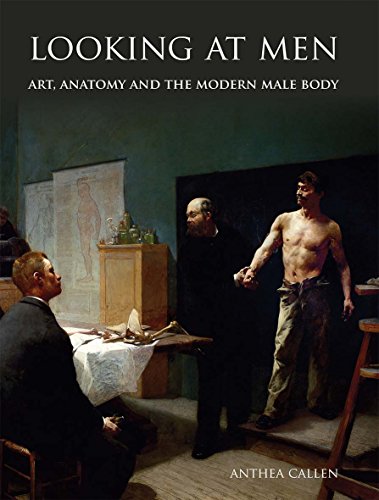
The next book I'm scheduled to review for a publication is this: Looking at Men: Art, Anatomy and the Modern Male Body by Anthea Callen (2018). The book focuses on the nineteenth century. It should prove an interesting read, incorporating issues of science and medicine along with artistic practice, framed by the development of heterosexual, homosocial, and homosexual identities over the course of the century. Or so I hope!

Sunday, October 7, 2018

Art Libraries at the Rijksmuseum


I was quite honored to be among the guest speakers for the recent 8th International Conference of Art Libraries, held at the Rijksemuseum in Amsterdam (facade of the building seen here). The conference itself had some very interesting papers and it helped inspire a few ideas in my head, which is always a good thing. I was surprised that so many people from the U.S. were presenting, but most of the audience members came from throughout Europe. Two speakers even presented about art libraries in Japan, which quickly reminded me that we need to stop thinking so Euro-centrically about all these things. 

My co-presenter (Melanie Wacker, also at Columbia; photo at left of us taken by Ann Lindell) and I gave a talk entitled "From Curatorial Files to Linked Open Data: Cataloging the Art Collection at Columbia University," discussing background on the art collection my department oversees and how our management of metadata and cataloging moved from traditional paper files to a metadata schema that we were then able to convert to MARC so as to be published in the Columbia Libraries online catalog, to convert for use in the soon-to-be-launched Digital Art Properties collection, and then used as the basis for a linked open data project that was a grant to test art for use in BIBFRAME, the future XML-based form of cataloging established by the Library of Congress that eventually will replace MARC. I realize much of what I just wrote there may seem like gibberish to anyone but IT specialists and librarians, but the point is that up until recently no one could search anything in the Columbia art collection, whereas now the art collection is now not just discoverable but available in digital format (highlights anyway) and is being used to establish new models of excellence for ways of cataloging art by libraries in the future. It's been a team effort that we are all proud of.

It was quite humbling to be presenting at the Rijksmuseum, one of the grandest collections of art in the world. This was my second visit there, the first time two years ago when AA and I traveled to Amsterdam. On this trip we also made a visit to The Hague where we visited the Maurithuis and I truly fell in love with Vermeer's Girl with a Pearl Earring, one of those examples of art where you have to see it in person to truly admire its majesty in terms of lighting, brushstroke, and overall composition. She is more modern in her appearance than I ever realized. We also visited Delft, Vermeer's home, which was an absolutely charming city. I also had an opportunity to visit the Hermitage Amsterdam and see the Neoclassicism exhibition with works from St. Petersburg; the Canova sculptures were just exquisite. I'm in London right now writing this, with a few other things to do here before heading home in a couple of days.

Wednesday, June 20, 2018

Gibson and Portraiture Essay


Back in 2016 I had blogged about the new exhibition at the Royal Academy on the sculptures and drawings of John Gibson (1790-1866). Toward the end of the exhibition's run, there was a study day held at Tate Britain, and I was honored to be invited as one of the speakers for this event. We also did a local London version of the Gibson Trail and examined closely a selection of his figures and busts in the UK capital. About two months afterward, our host for that day, M. G. Sullivan, announced that some of us had been invited to submit articles associated with that study day in Tate Papers, the peer-reviewed, free online journal published by the museum. Sullivan and I decided to collaborate and co-author an article on Gibson's portraits, basing a portion of the essay on the bust of William Bewick that is in the Tate's collection. Our essay--and three others--have now been released (click here), and I must say that I am pleased to see this one in print.

Our essay is the first to focus on his portraits, and I think we managed to convey well how, despite Gibson's general distaste for portraits, he still made quite a number. We tapped into his extant account books to record prices and heretofore unknown commissions, and examined a number of these works chronologically and culturally. The image you see above is a detail from the back of the bust of an unidentified woman, dated to the 1820s, by Gibson; the work is in the collection of the Yale Center for British Art and is a rather magnificent bust, particularly in the carving of the sweeping hairdo. The title of our essay is "'Men thinking, and women tranquil': John Gibson's Portraiture Practice." I'm looking forward to reading the other essays on Gibson's studio practice by Anna Frasca-Rath and his association with the Duke of Devonshire by Alison Yarrington (a subject I've written about as well, from a queer context, but Yarrington is the world expert on Devonshire's sculpture gallery). I read the other day Susanna Avery-Quash's essay on Gibson's friendship with Sir Charles Eastlake, which was excellent. So take a look, and if you feel inclined, enjoy the reading!

DC Heading to the Bronx


My friend and colleague Deborah Cullen, who for the past 6 years has been Director and Chief Curator of the Wallach Art Gallery at Columbia University, has just been named the Executive Director of the Bronx Museum of the Arts. ARTNEWS has written up a great piece on her new role, as has The New York Times. I've never actually been to this museum, I'm sorry to say, but over the past few years it has raised its profile and I am eager to visit because of some of the exhibitions on at present and opening soon. (My family, on my mother's side, is all of Bronx extraction, but I wonder if any of them had ever been to this museum before?) She lives in the Bronx with her husband, sculptor Arnaldo Morales, so it likely means a lot to the museum that she has been a resident in that NYC borough for quite some time now.

Deb and I are both alum of the Graduate Center, City University of New York, although she graduated about a decade before me so we only just met when I started at Columbia about a year after her. She is a major art critic and curator of the art of contemporary African-American, Caribbean, and Latinx artists; prior to role at Columbia, she worked at El Museo del Barrio. At Columbia, she successfully transitioned the Wallach Gallery to its gorgeous new space, a white-cube windowed gallery in the Lenfest Center for the Arts on 129th St. The inaugural show "Uptown" that she curated there, the first of what she has called a triennial, focused on NYC artists who work north of 99th St., so essentially the Harlem and Washington Heights area. The show was fantastic. She and I have served on each other's respective planning committees for the gallery and the permanent collection at Columbia, and she and I have worked together to secure some amazing new art work by contemporary artists in the permanent collection. John Pinderhughes, a fantastic Harlem-based photographer, was among those artists, and he took the photo of Deb you see at the top of this post. I'm thrilled for Deb as she moves onto this new position, but I will definitely miss working with her. Here's a selfie of us in Seattle in May 2014 when we attended together the annual conference of the Association of Academic Museums and Galleries.

Friday, January 5, 2018

Happy 2018!


Happy New Year!! Well, yes, we are a bit late for the official, annual HNY message on bklynbiblio (here, here, and here, for instance), but this year we were doing something quite different and extraordinary, and we were traveling on January 1st as a result, so no chance to blog. We went to Ciudad de Mexico! The picture above is AA, his cousin GD, and me...after a few tequilas...ringing in the new year at the balcony bar of our hotel overlooking the Zócalo plaza and the main cathedral. We had a wonderful night, met some new people, ate a delicious multi-course dinner, and danced a bit too.

We had arrived on the previous Friday (after an exhausting red-eye flight), and after an early check-in and breakfast, headed to the Frida Kahlo House with timed tickets we purchased online (good thing too, as they had run out of tickets for the day as soon as we got there). The house-museum is a bit hagiographic, but considering it is meant to give you the sense of who Kahlo was, it does its job relatively well. You do come away sympathizing with her pain and anguish--seeing the wheelchair she used, the corsets and back-braces she wore, and the bed she lay in staring at the mirror on top while painting self-portraits--but I can't say you come away with a greater appreciation for her as an artist. The picture you see here is a photo I took in the exhibition room where some of her indigenous-style clothing was on display. Across from the vitrines were photographs of Kahlo taken by her father in some of these dresses, including this of the artist at age 25. I was pleasantly surprised by the unplanned mirror-effect of how her clothing appeared around her face. What struck me most about the numerous photographs of Kahlo on display was how much, in recent memory, Salma Hayek has come to dominate our impression of what Kahlo looks like and how she acted. It was refreshing to remove that veneer and actually see the "real Kahlo," albeit through her father's photographic eye.

We went for a stroll afterward in Coyoacán, where on a random street I found this beautiful sanctuary for Our Lady of Guadalupe. Other highlights of the weekend included a fantastic dinner at the San Angel Inn (NOT the one at Epcot Center at Disney World!), and a visit to the university art museum at UNAM (National Autonomous University of Mexico), where we saw an interest, compact exhibition about Yves Klein (and some brain-numbing exhibitions by conceptual contemporary artists...the same thing also when we visited Museo Jumex...). GD also took us to the fascinating Museo de El Carmen, a former Carmelite convent where you can see some of their cells, view colonial Catholic paintings and polychrome sculptures of saints, and visit the sepulcher where unknown individuals from the nineteenth century had been buried, but whose mummified bodies are now viewable in class-covered caskets. That particular bit of the weekend may seem an odd way to ring in the new year, but perhaps it was a personal, poetic experience we needed that reminded us about the cycle of life and the ongoing march of time. Or perhaps it was just creepy-fascinating. I'm still trying to decide.

Happy 2018!!

Sunday, January 29, 2017

MWA XLVI: Dalou's Wisdom

The Ackland Art Museum at the University of North Carolina at Chapel Hill has come into the news lately because of the incredibly generous gift of benefactors Sheldon and Leena Peck, who have given the institution a gift worth $25m, including $8m in endowed funds and a collection of 134 Dutch and Flemish drawings, including 7 by Rembrandt. This is "once-in-a-lifetime" philanthropy that successfully raises the profile of this institution beyond its current popular status as an important university art museum. The art work is not yet on display, but DE and I visited anyway for the first time, since we were in that area for a conference. 

Wandering through the galleries, I saw the bronze statuette you see here. It struck me as being something one might normally pass by with hardly a glance, but it made me stop and examine it closely, so powerful was its composition and allegorical message. The sculpture is entitled Wisdom Supporting Liberty. 

In our current administration with anti-immigration and discrimination policies at work, this work of art struck me as having a powerful message that is as relevant today as ever. The strength of education, knowledge, and experience will always sustain and reinforce liberty, democracy, and freedom, not matter how it is attacked.

The sculptor is the French artist Jules Dalou (1838-1902). The work was modeled in 1889 and this cast was made after 1905. Because the three-dimensionality of the dark bronze statuette is difficult to see in photographic images, I've included the b/w image above from the museum's online collection, and my own color images taken with my iPhone from different angles.

Saturday, July 23, 2016

Portal 11

Portal 11: Carinthia, Austria/Philadelphia (16 July 2016)
(For other works in my Portals series, click here.)

This door [made of walnut with various wood inlays, with iron lock and hinges] is from the central, ceremonial entranceway to the Stiegerhof room ..., a reception chamber from the second floor of a Renaissance manor house. The top panel of the door bears the name and coat of arms of Wolfgang Paul, the owner who had the house renovated, and the date 1589 (presumably the year the decoration of the room was completed). The bottom panel bears the name and coat of arms of Urban Holzwurm, the master woodworker and builder who was probably responsible for the renovation of the house as well as the creation of this door. The side of the door seen here was the most elaborately decorated one in the room and would have been visible only to people who were inside the room when the door was closed.

-- from wall label text (1929-56-1), Philadelphia Museum of Art

Sunday, January 3, 2016

Art Exhibitions of 2015


The end of each calendar year brings out all the art critics to write about the best art exhibitions they experienced that year. Because we live in the NYC area, with an incredibly rich cultural scene, we are fortunate that there is so much to see. Here, for instance, is the link to Holland Cotter and Roberta Smith's article on the best in the art world in 2015, which is quite comprehensive if thematic in its arrangement. Conscious of geography and its limitations to lists, I like that Hyperallergic does separate reviews for NYC and other parts of the world in their annual rankings, to create a more level playing field, it would seem. As for me, since I don't have the luxury, liberty, or time to see every exhibition in NYC, let alone in the world, I can only base my list on what I have been fortunate to see. This year I did see a lot, including a number of new museums and collections for the first time, listed at the end of this post. Below is my annual summary of what I felt were the best shows I saw this year (here is last year's post). And, for the record, I should note that I have not yet seen Picasso Sculpture at MOMA, partly because going to see an exhibition there is a total nightmare. Fortunately, it closes in about a month from now, so I still have time.

I still am surprised that no one I have encountered, read, or spoken to, ever saw what I consider to have been one of the best shows of 2015. Entitled Body and Soul: Munich Rococo from Asam to Günther, this exhibition (installation view above) brought together over 160 sculptures in polychrome wood, terracotta, silver, and stucco, as well as drawings and paintings and prints by a number of largely unknown sculptors based in Bavaria during the 1700s (hence the eponymous Asam brothers, Cosmas Damian and Egid Quirin Asam, working early in the century, to Ignaz Günther at the end). This exhibition was installed at the Kunsthalle in Munich, a space for rotating special exhibitions. The installations of many of these works was simply stunning. The exhibition was ecclesiastic in its focus (Bavaria, unlike the rest of Germany, historically remained Catholic), so one saw mostly angels and saints in the show. Normally installed in churches, cathedrals, and chapels, these works typically are part of elaborate, intricate architectural settings and interior spaces. Removing them and putting them on exhibition in this way, however, gave the viewer the opportunity to appreciate them as individualized works of art, with an emphasis on the sculptural quality of these figures, i.e. their materiality and craftsmanship, and occasionally their hyperrealistic theatricality. At the same time, removing them from their usually-ornate environments, the viewer appreciated how their contorted, exaggerated forms make them seem proto-surreal and modern. The image you see above was just one of the many rooms in which the stunning display of larger-than-life figures impressed viewers. It is unfortunate that this exhibition did not get more attention internationally. Despite the national focus, I suspect it is because it was largely religious in nature, and religion does not usually do so well with audiences today.

Two other sculpture shows that are high on my list derive from the ancient and contemporary art worlds. In Florence I saw at the Palazzo Strozzi the exhibition Power and Pathos: Bronze Sculpture of the Hellenistic World, which showcased intricate and often naturalistic works of art crafted from the period between Alexander the Great's death in 323 BCE and the foundation of the Roman Empire in 31 BCE (image left: Victorious Athlete, 300-100 BCE, bronze and copper, Getty). Drawn from collections worldwide, many of the objects were presented with interesting didactic panels that provided a broad context from how the bronze figures were made to their socio-economic and political uses. The exhibition was co-organized with The J. Paul Getty Center, and is currently still on show at present at the National Gallery in Washington, DC until March.

In contrast to this ancient survey, the exhibition of works by Doris Salcedo at the Guggenheim here in NYC was absolutely worth visiting. I was first introduced to Salcedo a few years ago when she did the infamous "crack" Shibboleth in the floor of the Tate Modern Turbine Hall, which had some interest but seemed to rely too much on the conceptual for my taste. This year, however, the exhibition of a selection of her work clearly revealed her focus on her heritage growing up in Colombia during turbulent years in its history. Her works address violence, racism, and misogyny, but they also fool the mind with their use of unusual materials and the juxtaposition of hard and soft media that confuses the mind. The installation view seen here shows a series of historical wooden pieces of furniture that have had concrete poured into them. Making them useless as furniture, they take on a new function as archaeological monoliths that question ideas about the domestic sphere. An installation piece that changes with each space, these incredibly heavy objects challenge one's ideas about what constitutes space itself, then, and in the spirit of sculpture-as-objects the viewer is forced to engage with them in a way that blocks your entry and exit. Their monumentality and gravitas were provocative and almost tangible. The two criticisms I had about this exhibition, however, was that it was spread out through the galleries at the Guggenheim in a way that I found disconcerting and fractured. Secondly, it was absurd of the designers not to make the wall texts and panels bilingual. In this day and age in America, curators and designers have a responsibility to create Spanish texts in addition to English texts whenever they exhibit a Latino/a artist. (Brooklyn Museum successfully did this with their Francisco Oller exhibition, but alas I was not as thrilled about that show overall.)

Shirin Neshat: Facing History was on exhibition at the Hirshhorn Museum in Washington, DC, when AA and I visited there in June. Like with Salcedo, I had seen a few of Neshat's photographs and one film in the past, and was intrigued by her work, but this retrospective was amazing. I would go so far as to say it is #2 on my list of the best exhibitions I saw this year. Born in Iran in 1957, Neshat left in 1975, and her art work since then has addressed the turbulent politics of Islam and Iran's relationship with the West. She has staged historical recreations of important political events, uses multiple cameras to personify the divided worlds of men and women, and hand-manipulates exquisite black-and-white and color photographs with Persian texts, all in to draw attention to the crises we face in our ongoing political battles between Iran and the West to this day. Neshat is one of those artists whose work continues to have more relevance with each passing year as jihadists in the Near East continue to strike fear in the hearts of everyone--Christian, Muslim, Jew, Buddhist, everyone--in the world. The image you see here is a manipulated photograph from her 1993 series I Am Its Secret (Women of Allah) [Photo: Plauto © Shirin Neshat].

On my list, I would next say that #3 is Archibald Motley: Jazz Age Modernist. On display at the new Whitney Museum of American Art, this show was an absolute delight. African-American of mixed-race heritage, Motley (1891-1981) was trained academically, but was influenced by modernist trends after World War I. His portraits of blacks, whites, and mixed-race people emphasize the wide array of complexions and social standings that exist in our world. He celebrated the advancements and opportunities that jazz gave to blacks in America and Paris, and clearly loved music and dance. The painting you see here, Tongues (Holy Rollers), 1929, is an exploration of the spirituality endemic in some black communities, but you also can see in the movement of their bodies that this is a dance, a paean to life-as-spirituality, and how jazz is influencing even how one can think about religion. This exhibition taught me about an American artist whose work I had little exposure to before now, and showed me beautiful paintings that made me go through the exhibition more than once to absorb all the colors, forms, compositions, and sensations. It made me appreciate yet again how incredibly fascinating the 1920s were in American art, a statement I have been making ever since I saw the incredible show Youth and Beauty: Art of the American Twenties at Brooklyn Museum in 2011. To wrap up this section, I should add that the Whitney Museum also deservedly gets kudos for the new Renzo Piano building in the Meatpacking District. They have done an amazing job of integrating public and private space, outdoor and indoor space, in one building, and in so doing have unexpectedly also created a charming new community in a neighborhood that culturally was on the rise but now has taken off.

To wrap up this post here are a few other honorable mentions from exhibitions I saw this year:

  • I was delighted I had the opportunity to see Flaming June by Frederic, Lord Leighton, at The Frick (image right). This painting is one of those great pictures from posters and postcards that first inspired people to look anew at Victorian painting (even I had a poster of it!). Seeing this picture in person reminded me that Leighton is painterly and has a lush brushstroke, even though images make him seem to be a slick, linear classicist. Viewers love this painting for its sensual depiction of the young woman in her diaphanous draperies, and it does not disappoint in person. I also liked how the Frick installed the picture by two of their ladies by J. A. M. Whistler, cleverly demonstrating how the two were part of the Aesthetic Movement, which emphasized beauty in art without subject or moral meaning, but painted so differently.
  • At the Metropolitan Museum of Art this year, one of their big successes has been Kongo: Power and Majesty, which I saw not too long ago. It is indeed an excellent installation and does a good job of not only showcasing beautiful examples of African art in numerous media, but also engaging well with issues such as slavery and post-colonialism with the Portuguese trade of this area from the 1600s to the 1900s. 
  • Another great Met Museum exhibition was Sargent: Portraits of Artists and Friends, not because it was a wonderful installation, but because everyone just loves gazing at and revelling in John Singer Sargent's bravura of a brushstroke. 
  • In contrast, Navigating the West: George Caleb Bingham and the River was not necessarily a beautiful exhibition, but it was very interesting learning more about this 19th-century painter based in Missouri drawn from scientific analysis of his paintings and looking more closely at his contemporary sources. 

I will close this post by noting that I was fortunate to visit a few museums for the first time this year. These were, in no particular order: the Nelson-Atkins in Kansas City; the Barnes Foundation and the Pennsylvania Academy of Fine Arts in Philadelphia; the Galleria Nazionale dell'Arte Moderna in Rome (amazing unknown 19th-century art); the Guildhall Art Gallery in London (Victorian pictures galore!); and Dia:Beacon in upstate New York (whole new appreciation for Sol LeWitt's wall murals). I also had a great research trip to Boston and visited for the first time the Isabella Stewart Gardner Museum and the reconstituted Harvard Art Museums, and revisited for the first time in almost twenty years the Museum of Fine Arts, Boston. Amazing art, collections, installations, and exhibitions in these places...2015 was quite a great year.

Tuesday, December 29, 2015

Art Details: 1 to 5

About a year and a half ago, I started taking detail shots using my iPhone (now 6, then 4S) of paintings and sculptures in museums that I found particularly fascinating. Although I am an advocate of always seeing art in person to fully appreciate it, admittedly it is not always possible to do that. Thus, images can help supplement the live experience of art to some extent. Art details in particular arguably give us an opportunity to hone in on a work of art, to examine aspects of it so as to attempt to see deeper into the artist's intent or vision. Admittedly, these details also give the photographer (in this case me) an opportunity to be creative in interpreting these masterful works of art. After all, in seeing these, you are experiencing my detail, my interpretation, of these paintings and sculptures. Beauty, indeed, is in the eye of the beholder. I typically post these on my Instagram account, which you can see by clicking here. (Warning: fun, personal images are there too.) Below these 5 images, I've provided some metadata about each. Enjoy!


Image Credits: All photographs taken by bklynbiblio/Roberto C. Ferrari. Top to bottom:

  1. Albrecht Durer, The Paumgartner Altarpiece: The Birth of Christ, 1498-1504, oil on panel, Alte Pinakothek, Munich.
  2. Auguste Rodin, The Three Shades, originally designed for The Gates of Hell before 1886, 20th-century cast, bronze, Rodin Museum, Philadelphia.
  3. Dante Gabriel Rossetti, La Ghirlandata, 1873, oil on canvas, Guildhall Art Gallery, London.
  4. Paul-Albert Bartholomé, Congiunti al di là, 1891-99, marble, Galleria Nazionale dell'Arte Moderna, Rome.
  5. Sarah Miriam Peale, Still Life with Watermelon, 1822, oil on canvas, Harvard Art Museums, Boston.

Cities of 2015

Last year I wrote a blog post highlighting all the travel I did in 2014, but this time I am just doing a recap of the cities I visited over the course of the year. I realize on some level this may seem like I'm bragging about my travels, but this blog has involved me writing about my travels since the very beginning, so consider this an encapsulated list rather than an extended post on places I have been. One reason I decided to do this is because 2015 has turned out to be rather exceptional in terms of travel, with more than half of these cities related to my job and career (conferences, talks, courier trips, etc.). The rest was vacation or family visits. The picture you see here is of AA and me on the wall of San Gimignano with the rolling hills of Tuscany behind us. God, what a beautiful day it was and what a beautiful memory it is. Even though I have visited almost all of these cities before (some many times), three were first-time visits (Monteriggione, Beacon, and Kansas City). When I visit these cities, I always strive to visit museums or galleries to see exhibitions or permanent collections, all as part of expanding my knowledge-base on artists, art works, movements, styles, and the materiality of art. I frequently like to go back to museums I've seen before to see old favorites and what may have changed. Every one of these trips, then, becomes a learning experience. But perhaps the most important reason why I am posting this list is because I realize how fortunate I am to have had the opportunity to visit these places and to engage with cultures, no matter how similar or different they are from my own. For me, life is about experiences and encounters, and travel helps make that happen. Here is the list, in the order in which I visited them.
  • Munich, Germany
  • St. Petersburg/Palm Harbor, Florida (March visit)
  • Philadelphia, Pennsylvania (April visit)
  • Cattolica, Italy
  • Venice, Italy
  • Rome, Italy
  • Florence, Italy
  • San Gimignano/Siena/Monteriggione (day trip through Tuscany)
  • Milan, Italy
  • St. Petersburg/Palm Harbor, Florida (May visit)
  • Liverpool, England
  • Southport, England
  • London, England
  • Oxford, England
  • Washington, DC
  • Provincetown, Massachusetts
  • St. Petersburg/Palm Harbor, Florida (August visit)
  • San Francisco, California
  • Beacon, New York
  • Pittsburgh, Pennsylvania
  • Boston, Massachusetts
  • Philadelphia, Pennsylvania (November visit)
  • Kansas City, Missouri

Sunday, October 4, 2015

MWA XXXV: Van Dyck's Greyhound

I have made a point to frequently blog about our canine friends whenever possible, particularly in art, so it seems only appropriate to make the latest Monthly Work of Art a dog-themed portrait in celebration of #WorldAnimalDay. (I suspect this day intentionally coincides with the Feast of St. Francis, but deemphasizes the Catholic association.) The work you see here is Anthony van Dyck's portrait of James Stuart (1612-1655), Duke of Richmond and Lennox, a stellar painting at The Metropolitan Museum of Art. This magnificent portrait represents a cousin of King Charles I, and as their catalog entry notes it likely was painted in 1633-34 because he wears the regalia of the Order of the Garter, which he received in 1633. Van Dyck is one of the most famous and arguably best portraitists in Western European art. The Frick Collection here in NYC will have an exhibition of his portraits opening in March, that I very much am looking forward to seeing. But for World Animal Day, it seems worth noting not so much the dashingly handsome human subject in this picture, but the beautiful greyhound who gazes up at his master lovingly with devoted eyes as the Duke caresses his head.

The dog's body is painted differently so as to distinguish him from the rich silk garments on the Duke and the billowing the drapery behind them. This gives the dog his own characteristics, but he also comes to represent along with these props the Duke's wealth and power. It's remarkable how van Dyck uses the dog's natural body position, with his front paws lower in the foreground, thus creating spatial depth and perspective and projecting the Duke forward into the viewer's space. His dog symbolizes fidelity, but the gestures between dog and owner also suggest the Duke's strength of character and his mastery over the beast.

Having played and petted my greyhound nephews, first George and now Winnie, on visits to see their mother SVH in Jacksonville, I can attest to the unusual weight of their large heads as it lays against your hip...and that adoring gaze! Their sinewy legs seem impossible to support their lanky, muscular bodies, but in fact these are incredibly balanced, nimble, and of course unbelievably fast dogs. It is a testament to van Dyck's skill that he was able to represent the dog so naturalistically, and one can see here his dynamic preparatory study for the greyhound, a work now in the collection of the British Museum. The artist used a series of strokes to develop and enhance the complicated muscles and contours of the greyhound's body. His attention to these details help make the beautiful dog an important presence in the Duke's portrait.

If you want to learn more about greyhounds and their imagery in art, you can watch Gary Tinterow's entertaining "Connections" video from The Met. Tinterow was then head of the Nineteenth-Century, Modern, and Contemporary Art department, but he is now Director of the Museum of Fine Arts in Houston. Having raised greyhounds himself, he has a personal interest as well in paintings such as this one by van Dyck.

Sunday, September 20, 2015

The Art of Frames


Last Wednesday I had the opportunity to attend a unique workshop on frames, sponsored by the Appraisers Association. The morning session was held at the studio of Eli Wilner & Co., a company that specializes in restoration work on historical frames and reproduction historical frames. In this first picture I took, one of the studio workers showed us a frame made by American architect and designer Stanford White (1853-1906), and he explained the difference between the sections that were carved in wood and the other parts that were made from compo (or composition), a plaster-like substance that uses molds to make decorative components. You can see the sample molds as blue strips in the lower right. The second picture below is a detail of a frame being hand-carved by one of the skilled wood carvers. These days they use computers to generate the patterns on paper, which are then applied to the wood, enabling the carver to understand what sections are carved out and what is left behind. We also learned more about the process of gilding frames, and I participated in the opportunity to apply gold leaf to a wooden frame. You use a special application brush that lifts the gold leaf almost magnetically and then you gently apply it to the water-brushed surface of the frame. After it dries it is buffed to make it shine. I'm actually abbreviating the process. Technically, there is wood, then gesso, then liquid clay or bole, on top of which the gold leaf is applied. Needless to say, I was amazed at how much more complex the making of a frame actually is. During the afternoon session we had a fascinating "frame history lesson" with Suzanne Smeaton, a specialist in the history and valuation of American frames.

Because of this workshop, I have to say I think I can now look for some general signs of carving or compo, what the color of bole coming through the gilding may mean, and what the difference between a miter joint and a miter joint with a spline is. Before I went to this workshop, I knew zilch about frames, except what I liked, and it has so inspired me to learn more that I'm actually reading Timothy Newbery's Frames and Framings in the Ashmolean Museum (2002). Although the whole day was geared toward appraisers, as the market for historical frames has increased, it was very interesting to go as a curator because I feel it is important for me to consider at times the frames along with the historical paintings in the collection at Columbia University. Without proper documentation and provenance, it is very difficult to know if a particular frame is the genuine one for a painting, but at least I think I can now do a basic survey to determine if a frame is at least historically close to the time period of the work of art itself. Putting this new skill into practice is going to take a lot of time, of course, so I am not making any claims to be an expert, but I do hope I can at least now do some quick, general assessments over time.

Taking this further into aesthetics, I am now also finding myself interested in actually looking closer at frames in museums. For instance, if you look at the glorious frame above, which is from the Robert Lehman Collection at The Metropolitan Museum of Art, you can see that it is gilded and carved wood. The tombstone information for this frame also states that it is made of oak, from France, and dates from ca. 1690. During the reign of Louis XIV, French frames reached an apogee in design and style, as did all fine and decorative arts under the influence of the "Sun King." The gilding on this frame would have enhanced the presentation of the art work, particularly in candlelight, giving the work a beautiful glow. This is an ogee frame, meaning that, seen from a cross-section, it has an S-curve that rises from the outer portion and slopes inward toward the picture. The effect of this would have been to draw one's attention into the picture plane, enhancing the intended three-dimensional effect of whatever painting would have been in there at the time. The detail you see here of the lower left corner shows well the remarkable skill in the wood carving, although obviously there is some noteworthy wear and tear considering its age.

Aside from the materiality and history of frames, it did occur to me, over the course of the day, how frames are both painterly and sculptural objects. Because they are so closely attached (literally) to paintings (or photographs, drawings, etc.), we perceive them as part of the two-dimensional art world. But, in fact, the way they are carved or molded follows very closely the methods that are followed in a sculptor's studio. Frames thus are related to fine art, but they are also decorative objects. Their intent is to harmonize a painting with an interior space. These days we are accustomed to seeing framed painting on museum walls, but the long history of easel paintings reminds us that these works were intended for the home, and thus the frame was needed to enhance or decorate the interior space. Frames also change over time based on the taste of an owner. Hence, more modern-looking frames occasionally have been added to historical pictures to make them more appropriate to styles like mid-century modernism. The trend these days, of course, is to return paintings to period frames whenever possible, and places like Eli Wilner keep in stock thousands of actual historical frames from the past for exactly that purpose. But frames are complex creations. They have an in-between status, being two-dimensional and three-dimensional, painterly and sculptural, fine and decorative, all at the same time. Indeed, thinking about them from this perspective makes us realize they are fascinating artistic objects worthy of their own further study and examination. Consider that the next time you walk into a museum and look at your favorite painting by Rembrandt or Van Gogh. You be surprised to discover how its frame impacts the work you see before you.

UPDATE 10/4/15: No sooner had I published this blog post, when Hyperallergic published this article/review by Allison Meier about French frames from the 17th and 18th centuries. Warning readers/viewers to "prepare to be blinded by the gilding that encircles each work like an overwrought halo," Meier reviews the free exhibition currently being held on this topic at the Getty Villa in Los Angeles. It looks like an interesting exhibition, but alas I won't be able to get to it before it closes in January.

Sunday, April 12, 2015

Birthday No. 45


Following up on last year's memorable birthday, I thought I would share some highlights of birthday no. 45, which took place on Friday evening. My birthday celebration actually began last weekend, when AA & I took an overnight trip to Philadelphia, which was nice and relaxing. We have, of course, been there a few other times before, but this time I booked tickets for our first visit to the Barnes Foundation, the art museum established by private collector Albert Barnes, with its heavy emphasis on late 19th- and early 20th-century French modernist art. The Paul Cézanne still life you see here, from 1892-94, is just one of the many beautiful paintings by this artist in the collection. In contrast, Barnes clearly also liked Renoir and as a result there are way too many really bad Renoirs there too. I was surprised, however, by the number of paintings by Modigliani and Prendergast, that were all quite good. The reason why one goes to the Barnes, however, is to see his extraordinary installations, mandated by his bequest to be remained as such, for future learning experiences. His eye was based on formal elements: line, color, composition, etc. Subject was irrelevant. As a result, Barnes liked to hang things based on balance and harmonic influences, so one sees arrangements that often seem bizarre with mixed small and large paintings hung crowded together, and with metal ornamental objects like door hinges and scissors hung to balance the linear structure of the paintings. There is a method to the madness, and the more one learns about Barnes and his vision of looking at art, one realizes what a fascinating museum it truly is. The foundation itself did a rather controversial thing in moving the museum from his home in Merion, PA to downtown Philadelphia near the Rodin Museum and the Philadelphia Museum of Art (PMA), but their new building, which opened in 2012 and was designed by Tod Williams and Billie Tsien, is an example of gorgeous, organic architecture, and the rooms have been retained in their original installations. This is definitely worth a visit if one has never been. We also visited the Rodin Museum, which has the largest collection of works by Auguste Rodin outside of Europe, and we also strolled through a few galleries at the PMA too. We also enjoyed strolling through historical neighborhoods like Society Hill, with its delightfully charming 18th-century colonial homes, and the downtown areas near Rittenhouse Square.

My actual birthday was this past Friday, so I took the day off from work. I was suffering from bad hayfever, but fought through it to get my haircut, then eat a delicious lunch with my artist-friend MT. I received in the mail a gift from the PR-AMs: a beautifully illustrated book by Cynthia Mills entitled Beyond Grief: Sculpture and Wonder in the Gilded Age Cemetery. That evening AA & I first met up with my friend JHC and her adorable son D for a glass of wine and charcuterie. Then we had a stylishly hipster dinner of tapas & dim sum at Ma Peche in midtown. My birthday gift? A new iPhone 6! (Oh, how I love that man of mine!) I'm still just getting the hang of it, so I doubt I will write a technology review as I've done in the past, but the phone is fantastic. On Saturday, our friend AR arrived from Zurich, and last night the boys (AR, DM, JM, DC, AA and moi) got together for drinks at Therapy and then dinner at Maria Pia in Hell's Kitchen (veal saltimbocca...molto buono). All these festivities will continue some more on Tuesday when KB arrives to stay at my apartment, and we have a group post-birthday dinner with a few other friends.

But wait...it gets better. In a few days I leave for Italia. I'm going to see family for a few days, reconnecting with them after my father's passing. Then AA is flying over with the DPG-JBs, and I am meeting them in Rome. After we visit the Eternal City, we head to Florence, and then a final day in Milan before heading home. It's going to be such a great vacation. I can't believe I haven't been to Italy since June 2009 (about which I blogged here). The image you see here was taken by me back then as well, and shows a view of the Ponte Sant'Angelo with sculptures by GianLorenzo Bernini, taken from the Castel Sant'Angelo in Rome.

As festive as all of this is, I think the most important part of aging and celebrating each passing year is the reflection on our lives, all of our accomplishments, and all the lessons we continue to learn each day. In thanking everyone on Facebook for their wonderful birthday wishes, I wrote the following message, and I hope it has some poignancy for anyone who reads it here as well: "Thanks, everyone, for the wonderful birthday wishes!! Having now reached the 45th anniversary of my birth, I'm starting to accept all those things, good + bad, that accompany the beginning of my 'middle-aged' years (note that I said beginning!!). Gray hair + a few extra pounds aren't that traumatic, I really don't sweat the small stuff like I used to, I've learned through difficult losses, but also with great love, that life IS about the ups + downs and learning how to ride those waves without falling, and--the one lesson I try to remind myself each day--there is truly nothing more important in our lives than the moments we are living right now. I look forward to more of life's lessons as I continue maturing gracefully."

Wednesday, February 4, 2015

The Passing of Walter Liedtke


The horrible news of the train crash on the Metro North railroad yesterday evening was tragic unto itself. This afternoon, however, the names of some of those who died were released and, like many others active in the art and museum world, I was startled and disturbed to discover that Walter Liedtke was among the deceased. Walter (as I and many others knew him) was a curator for 35 years at the Metropolitan Museum of Art, and an internationally renowned specialist in Dutch and Flemish paintings by famous artists such Rembrandt, Rubens, and Vermeer. I had the privilege of meeting Walter a number of times during the 7+ years I worked at the Metropolitan Museum of Art. I actually taught him (along with my colleagues) how to use PowerPoint for his art historical presentations, and he attended a few of my instructional sessions on digital imaging. Whenever he came into the Image Library, he would ask me about how my graduate work and dissertation was coming along and encouraged my pursuit of art history as a career. I doubt he would have remembered me outside of my former role at the Met; nevertheless, the news of his death has impacted me more than I expected.

When I think back over those years when I was in graduate school and working at the Met, Walter was one of the more significant curators who inspired me. His art historical scholarship was brilliant, easy to read but always insightful. His presentations were engaging. His exhibitions were thought-provoking in the most creative ways, even when they were at the simplest. He curated, for instance, the loan of a single painting from the Rijksmuseum, Vermeer's Milkmaid, and combined with it a selection of paintings, works on paper, and decorative arts from across the Met's collections, exploring not only Vermeer's genius with this painting but the hidden symbolism behind what ordinarily would be seen otherwise as merely a genre scene. (I blogged about the show at the time.) It opened my eyes to the notion that one could successfully launch an informative show that focused on a single work of art. Similarly, his exhibition of paintings by Frans Hals from the Met's collection was fascinating because he wasn't afraid to move outside his comfort zone of the 17th century and demonstrate how Hals's brushstroke influenced modernist artists such as Manet and Sargent in the 19th and 20th centuries. His work on Rembrandt was legendary, and his Vermeer and the Delft School was always championed as a masterful exhibition and catalogue, although regretfully I never saw the show. Beyond his brilliance and creativity, there was an incredible charm and wit to him that always made one smile. Indeed, I learned from his example as a person how one could balance the international accolades of recognition for scholarship with a down-to-earth persona that could put anyone at ease. The Met has a few video segments and features in which Walter appears, but I think this one video, "Living with Vermeer," does a lot to help viewers understand not only the curator as a scholar but the curator as a man, mirroring the quotidian existence one finds in the Dutch and Flemish paintings he admired and taught so many people how to enjoy. I urge you to watch the short video by clicking here.

Thursday, January 1, 2015

Travels of 2014: From Maine to Munich


I enjoy traveling. Well...to be more accurate...I enjoy all the experiences I can gather when I visit a new city or country...but getting there isn't necessarily something enjoyable. Nevertheless, it is a necessity and worth enduring for the end result. I am about to do this yet again as I return to Munich on another work-related trip. Not all travel is a vacation, as the trip to Munich was work (although, as I will comment on below, I did have the opportunity for some site-seeing). And then there are the personal family-related trips, such as the 7 I made to Florida in 2014 that were all largely associated with my father's care. As bklynbiblio readers know, he passed away in July, and although I miss him terribly, I am fortunate that I was able to be with him for his passing. We had his services in August, and it was truly a celebration of his life. On my March visit, I was very glad that AA joined me to meet the family and my father, and a year ago on my January visit I also made a short jaunt to Jacksonville to see my dear friend SVH and meet my canine nephew Winnie, a rambunctious young greyhound. October saw me back again for the SECAC conference in Sarasota, and I took a day to see the family again, and I made another quick trip back for Christmas as well. As emotionally challenging as these visits were to endure while my father was getting worse and worse, it always has been a comfort to know I have family and friends there to help create balance and give me the opportunity to also enjoy some parts of those trips.

In May I made a 60-hour trip to Seattle for the AAMG conference, about which I blogged here. My memory of Seattle from 1997 was better than I experienced this time, but that was because my colleague DCM and I weren't in the downtown area but in the university district, which was removed from the things we would have wanted to see, like Pike Place Market. Over Memorial Day weekend, AA and I joined the FF-POs for a few days in Montreal and Quebec City, which I absolutely loved. I blogged about that trip here. I still have fond memories of Quebec City and look forward to visiting again in the near future.

Over the long 4th of July weekend, AA and I went to Chicago, one of the American cities long on my list of places to visit. I loved it! And I cannot stress to readers how difficult that is for this NYer to admit to! The one thing I did hate was the pizza. Fortunately everything else outweighed that. The city is clean. The architecture is magnificent. Lake Michigan is simply amazing. (We spent 4th of July on JK's boat on the Lake and watched the fireworks from there--just awesome!) Millennium Park is tons of fun; the image you see here shows Anish Kapour's interactive sculpture with the skyline behind it. And then there was the Art Institute of Chicago, where I finally was able to see the work you see at the top of this post: Georges Seurat's Sunday on La Grande Jatte, 1884-86. I think my photograph of viewers staring at the painting demonstrates well how observers inevitably become part of the melange of social classes intermingling in the park in true pointilist fashion, as Seurat likely intended. On our last day in Chicago AA and I climbed the Willis Tower (formerly Sears Tower) and I confronted my fear of heights by climbing out onto the glass ledge. I can't say I am no longer afraid of heights...truthfully it terrified me even more...but it was important that I did it. (AA of course strolled out there like it was nothing. He is fearless. So annoying!) We also took a day trip to Milwaukee, which I wasn't so crazy about, although the Calatrava-designed wing on the art museum is spectacular, particularly overlooking Lake Michigan.

After my father's funeral, I needed to get away for a few days and have a truly relaxing trip with very little to do, so AA and I flew to Boston then drove to Maine. I had not been in Maine since about 1998 or so, and I had only visited Ogunquit at that time. We went there our first night and it was everything beautiful I remembered. Walking along the rock paths overlooking the Atlantic was just breathtaking. I love the fresh smell of sea air, the cool breeze blowing off the water, and the sound of nature's ferocity as waves crash against the rocks like the crack of a slap but with a magnificent electric sting. With each passing day we moved up the coast further and visited Portland, Cape Elizabeth with its famous lighthouse (seen here), Camden (so adorable...best clam chowder ever!), Belfast, and Lincolnville...an adorable little spot with nothing to do...exactly what I needed. I hated having to leave, because we only made it 1/3 of the way up the coast, but I do look forward to visiting again. I really loved that relaxing summer weekend in Maine.

As for Munich, I was fortunate amidst all my days of work to have some free time to hit so many of the museums. The Lenbachhaus, where the exhibition was held, is close to the Glyptothek and the Alte and Neue Pinakotheks, so I was able to see all the masterworks of ancient, Renaissance, and modern art that I was eager to see. One of the photos you see here is a zoomed-in shot of the glockenspiel, the mechanical life-sized music performers that play a few times a day in the main square, Marienplatz. Munich surprised me frequently. The old streets wind like concentric circles in a way that as soon as you assume you are walking east, suddenly you are walking southwest. I got lost so many times it was ridiculous. However, it gave me more of an opportunity to see much of the city as a result. I was also surprised at how German and Italian it was. There is Germanic architecture, but there is a surprising amount of Italianate architecture as well, and indeed I found myself able to communicate using Italian more than English with various people. The Oktoberfest was starting while I was there, so I had a chance to visit the grounds. It is basically a giant beer festival, but family friendly (and gay friendly--another surprise!). lederhosen and "beer wench" Bavarian costumes were everywhere. The pastries and pretzels were divine...(why don't we use pretzels as bread? it's ingenious!)...I devoured about 3 of these plum tarts that you see in the picture below. I definitely enjoyed Munich much more than my trip to Frankfurt last year. Rumor has it there is about a foot of snow on the ground in Munich at present, and potentially more coming this weekend....it better not ruin more chances to see the city over the weekend before work starts!

What's on the travel agenda for 2015? I have a work trip to Fort Worth coming up. I may do a pop-over to London to see a few exhibitions I'm very interested in. But the big trip I'm very much looking forward to is Italia in April. I have not been since 2009, so I am going first to visit family, and then AA is flying over with the DPG-JBs and we are going to visit Rome, Florence, and Milan. I'm even scheduled to give a talk at the Keats-Shelley House in Rome while I'm there. More details coming soon....

Saturday, December 13, 2014

Art Exhibitions of 2014

Yesterday, I had an opportunity to go to the Metropolitan Museum of Art for a few hours so I could finally see a number of exhibitions they have on at present. I confess I felt rather nostalgic walking through the galleries, remembering fondly my 7 years of having worked there, reinforced by lunch with my curatorial friend JD and coffee with my former library colleagues and friends CD & SP. The current exhibitions are all excellent. The Renaissance tapestry show of the work of Flemish artist Pieter Coecke van Aelst will blow your mind when you turn the corner and see all the gorgeous tapestries installed down a long corridor. Death Becomes Her: A Century of Mourning Attire is luxurious and fascinating for what could be a morbid topic. The room-installation of Thomas Hart Benton's 1930-31 mural America Today is amazing--you can almost hear jazz playing as the characters sway from one American scene to another. But the greatest part of my day was the exhibition on the Venetian sculptor Tullio Lombardo's Adam, seen here, fully restored. In 2002 the pedestal for the sculpture collapsed and, horrifyingly, the ca.1490-95 sculpture shattered. After 12 painstaking years of intensive study, and utilizing new technologies, the object conservators were able to restore this life-sized statue to near-perfect condition. The sculpture is an exquisite piece, clearly an influence on Michelangelo's David, and important as an early idealized male nude sculpture in Renaissance art. The videos on the website and in the gallery amaze you to see how they successfully conserved and restored the sculpture.

This year the best exhibitions for me were all on sculpture. In addition to the Adam just mentioned, the Met put on two excellent sculpture exhibitions. One was on the works of Jean-Baptiste Carpeaux (1827-1875), who reinvigorated French sculpture during the Second Empire with a Baroque-style energy that excited and scandalized people of the day. Running earlier in the year at the Met was another sculpture exhibition, The American West in Bronze, 1850-1925, an excellent show that aesthetically changed one's mind about works you once might have considered to be little more than living room kitsch. At Columbia's Wallach Art Gallery, a great sculpture show was put on about Anna Hyatt Huntington (1876-1973), about which I blogged here. Finally, at the Yale Center for British Art, the long-awaited Victorian sculpture exhibition there brought together about 130 works that changed one's mindset about what defines sculpture and how it can be made. The show also demonstrated the power of the curatorial eye with a fine selection of finely-crafted statues, reliefs, and decorative objects in an array of media. The first work one encountered in the exhibition, as seen in my photo here, exemplifies the surprises of the show. This is a Minton ceramic elephant measuring 84 inches in height, part of a pair, that was first exhibited at the 1889 Exposition Universelle. I have a review of this exhibition being published in the spring, so I will share more when it comes out, but for now, here is what I wrote about this gorgeous majolica elephant: "The elephant reveals a high degree of craftsmanship that demonstrates the successful union of man and industry, but it also has a deeper meaning. Displayed as part of a cultural parade, its empty howdah decorated in Mughal textile designs and awaiting a royal occupant, the tamed elephant represents the jewel in Queen Victoria’s crown: India and all its riches. This work in the foyer thus foreshadowed others in the galleries of Sculpture Victorious: masterpieces of human and industrial design, and socio-political symbols of the British Empire."

If I had to choose my favorite exhibition of the year, however, it would be, without a doubt, Kara Walker's sugar-sculpture installation at the Domino Sugar Factory in Williamsburg, Brooklyn: A Subtlety: or, the Marvelous Sugar Baby. Walker is one of my favorite contemporary artists, and in this work she went beyond anything she had done before. Commissioned by Creative Time as a temporary installation, before the building was scheduled to be demolished, Walker designed a massive, sugar-coated, sphinx-like creature with the body and facial features of an "Aunt Jemima" type, to remind visitors of the intricate ties between the West's love of sugar and its intertwined history of slavery. The work was powerful and had lines of people waiting to get in. A group of friends of mine all went together to see it in June, and we were mesmerized. There are numerous images online that people took, so I'm only sharing here one I took to show the scale of the sculpture in the warehouse and the diminutive nature of the people around it. As time passed, the sugar gradually changed color, and the surrounding molasses "little black Sambo" boys melted and fell apart. After you were in the warehouse a while, the smell of the sugar and molasses became so sickeningly sweet you had to leave and get fresh air. This was all part of the artist's intent, to create a temporal, multi-sensory sculptural environment. When the show closed, most of the sculpture was destroyed (what had not disintegrated on its own already), although there is at present at Sikkema Jenkins an after-show that exhibits her sketches and designs, and an arm Walker kept as her own personal souvenir. This sculptural installation was truly a tour de force of artistic achievement, for the artist and the audience.

Aside from sculpture exhibitions, one major art exhibition highlight for me was Golden Visions of Densatil: A Tibetan Buddhist Monastery at the Asia Society. This historical monastery and its Buddhist treasures was constructed in the 12th century but destroyed during China's Cultural Revolution. The installation included discovered and recovered treasures alongside historical photos, but the most amazing part of this exhibition was having the opportunity to witness the monks make a sand mandala. This was an ongoing event for 5 days with 5 monks. You would expect it to be solemn, quiet, and peaceful. On the contrary, the monks were very engaging with visitors, including taking photos with them. They often laughed too, but then quickly would return to their back-breaking, eye-straining work of constructing this mandala. The most amazing moments were when they would help one another, knowing that one had more expertise than another, and they could share in the responsibility of building this sand mandala together. Their humanity made this a very spiritual experience. You can watch a great time-lapse video of them making the sand mandala here.

Other exhibitions from this year worth noting included:
** Pre-Raphaelite Legacy at the Met Museum, a small but groundbreaking show for them to finally acknowledge the accomplishments of these Victorian artists;
** Beauty's Legacy: Gilded Age Portraits in America at The New-York Historical Society, about which I blogged here;
** At the Guggenheim Museum, the fantastic multi-media exhibition on Futurism, Italy's modernist art movement, and the riveting photographs of African-American feminist artist Carrie Mae Weems;
** Florine Stettheimer at the Lenbachhaus in Munich (although I guess technically I have only seen it "in process" and will have to wait until early January to see the final, full exhibition!);
** And my dear friend and colleague Meera Thompson at Atlantic Gallery.

I would be remiss if I forget to mention my own two small, curated exhibitions--15 Minutes: Andy Warhol's Photographic Legacy and Off the Grid: Beyond the Noise--both of which I thought were rather well done...if I may say so myself.

UPDATE (12/14/14): One of the blockbuster exhibitions of the year, that previously had opened in London and is now on here in NYC is Henri Matisse: The Cut-Outs. Everyone I know who has seen it loves the show, and it has been on my "must see" list, but I dread going to MOMA because of the crowds so I wasn't sure what to expect. Fortunately, AA and I decided to make the trek there today and it actually wasn't as bad of a crowd as I anticipated. The exhibition is very good, demonstrating well how Matisse used paper cut-outs and collage as a form of painting unto itself. It is a smart show about materiality, color, composition, and artistic technique. We also had a chance to pop into the Robert Gober exhibition. He is one of those contemporary artists I typically don't appreciate much, but this retrospective helped change my mind a bit with his theme-and-variation sculptural objects and large-scale installation spaces. It was all rather tongue-in-cheek and clever, I must say, so I do have a better appreciation for Gober now.