Showing posts with label literature. Show all posts

Tuesday, December 31, 2019

Books of 2019

This morning, AA said to me by text, "Aren't you going to blog about your Books of 2019?" And so here I am doing it, while he's on an airplane heading back home so we can celebrate New Year's Eve just in time with a glass of prosecco. Normally I write this post soon after the annual 100 Notable Books from The New York Times comes out, but we were away at that time and . . . well, that thing called daily life just kept delaying things. Over the last few years, though, I've discovered that not all of the books on the list are among my favorites once I actually read them. Case in point: last year, Tana French's The Witch Elm and Lisa Halliday's Asymmetry were on their list, and I was eager to read them, but to be frank I didn't find either book to be "best" reads. In my opinion, French's book was too dense with excessive details for that type of book (mystery/thriller), so by the time you started getting into the actual mystery, the suspense wasn't there for me. Halliday's book, in turn, was creative as a writing experiment (two novellas that seem to have nothing to do with one another, then somehow become linked in a coda-story), so it wasn't as if I didn't like the book, but it just wasn't what I would consider to be a favorite. All that said, I had commented last year about looking forward to reading Michelle Obama's autobiography, and that was great--inspiring even! I guess I'm biased, but what made it such an enjoyable read was that it felt like she was talking to you the entire time, telling you not just about her life but the lessons she learned from her experiences.

The image you see above is undoubtedly my favorite novel that I read this year. Colson Whitehead's new book was published in 2019 and I bought and read it immediately. I loved The Underground Railroad, as painful as that book was to read, so while The Nickel Boys wasn't "magically realistic" as components of his previous book was, the pain and anguish, and the lessons we have to learn still about America's history of racism and abuse of power, were remarkably strong with completely different types of stories. Whitehead has this uncanny ability in these two books to create a narrative voice that allows you to feel the pain of his characters, but still keep yourself at a distance so you can process it objectively. I see him as an heir to Toni Morrison in some ways. I have no doubt that these two books will be models of a new American literature for generations to come, much the same way Harper Lee's To Kill a Mockingbird has been. That was a book I also finally read earlier this year for the first time. I discovered the Icelandic author Sjón this year with his fairy-tale-with-a-twist The Blue Fox, and I thoroughly enjoyed, both as a mystery and a meta-novel, Anthony Horowitz's clever The Word Is Murder. I should add that a year ago when I did my last books post, I was worried that Persuasion wasn't going to end well, but I'm pleased to say that it was in fact probably my favorite Jane Austen novel of them all. I read somewhere that if you loved Pride and Prejudice as a young person, Persuasion is the book you read as a mature adult to find satisfaction in her writing. It is so true.

In the world of non-fiction, I enjoyed and learned a lot from Richard Holmes's group biography The Age of Wonder, on the history of science and Romanticism around the years 1800. I read the collection of essays Beyond the Face, providing new interpretations on portraiture in the history of art of the United States and beyond, and published a book review of it which you can read here as well as my blog post here where I add more about the artist Carrie Mae Weems. I also read Anthea Callen's new art history/anatomy book Looking at Men, and published an extended book review essay in Nineteenth-Century Art Worldwide, which you can read here. Right now, my bedtime read is Robert K. Massie's biography of Catherine the Great, and my subway reading is Joseph Conrad's Heart of Darkness, which I read back in college (almost 30 years ago!), but decided to revisit all these years later.

It seemed like a good idea to actually share the full list of the 30 books I've read this year. This is the order in which I finished them, and I've included the publication year in brackets, and my star rankings (5-stars is highest!) to help anyone along if they decide they want to read these. Here's to 2020 and more books to read!


  • Persuasion by Jane Austen [1818] (*****)
  • To Kill a Mockingbird by Harper Lee [1960] (*****)
  • The Age of Wonder: How the Romantic Generation Discovered the Beauty and Terror of Science by Richard Holmes [2008] (*****)
  • Beyond the Face: New Perspectives on Portraiture by Wendy Wick Reaves, ed. [2018] (****)
  • Arctic Chill by Arnaldur Indridason, trans. B. Scudder & V. Cribb [2005] (****)
  • The Blue Fox by Sjón, trans. V. Cribb [2004] (*****)
  • Rogues’ Gallery: The Rise (and Occasional Fall) of Art Dealers, the Hidden Players in the History of Art by Philip Hook [2017] (***)
  • The Assassination of Margaret Thatcher: Stories by Hilary Mantel [2014] (***)
  • The Body in Three Dimensions by Tom Flynn [1998] (***)
  • Troubling Love by Elena Ferrante, trans. Ann Goldstein [1999] (****)
  • Looking at Men: Art, Anatomy and the Modern Male Body [2018] (***)
  • Becoming by Michelle Obama [2018] (*****)
  • The Death of Mrs. Westaway by Ruth Ware [2018] (***)
  • The Body in Pieces: The Fragment as a Metaphor of Modernity by Linda Nochlin [1994] (****)
  • Serpents in Eden: Countryside Crimes by Martin Edwards, ed. [2016] (****)
  • Model and Supermodel: The Artist's Model in British Art and Culture by J. Desmarais, M. Postle & W. Vaughan, eds. [2006] (****)
  • Bloomsbury at Home by Pamela Todd [1999] (****)
  • Asymmetry by Lisa Halliday [2018] (****)
  • Duncan Grant and the Bloomsbury Group by Douglas Blair Turnbaugh [1987] (***)
  • The Child’s Child by Barbara Vine [2012] (***)
  • The Nickel Boys by Colson Whitehead [2019] (*****)
  • The Sparsholt Affair by Alan Hollinghurst [2017] (****)
  • Harm Done by Ruth Rendell [1999] (****)
  • Bacchante and Infant Faun: Tradition, Controversy, and Legacy by Thayer Tolles [2019] (****)
  • 30 Favorites Celebrating 30 Years by Stacia Lewandowski & Zaplin Lampert Gallery [2017] (***)
  • The Stonewall Reader by Jason Baumann, ed. [2019] (***)
  • Teaching in the Art Museum: Interpretation as Experience by Rika Burnham & Elliott Kai-Kee [2011] (****)
  • Losing Helen: An Essay by Carol Becker [2016] (*****)
  • The Witch Elm by Tana French [2018] (***)
  • The Word Is Murder by Anthony Horowitz [2018] (*****) 

Sunday, December 16, 2018

Books of 2018

The annual New York Times 100 Notable Books of 2018 came out a few weeks ago, and I was pleasantly surprised to discover that there were two books on the list this year that I already had an interest in: The Sparsholt Affair by Alan Hollinghurst (which I bought but haven't read yet) and Warlight by Michael Ondaatje (which I did actually read and found interesting, like a literary, Corot-like veiled-mist tale). Among the novels on this new list that intrigue me and are now on my Amazon wish list are The Witch Elm by Tana French, Asymmetry by Lisa Halliday, and The Overstory by Richard Powers. One major book not on their list because it came out afterward--and which, of course, is now on my "to read" list!--is Michelle Obama's Becoming. AA is reading it, as is my friend MT, and both are totally absorbed.

The book cover you see above reflects what I would say is the best novel I read this year, The Handmaid's Tale [1986]. Even though I have not seen the new series, I decided to step into the infamous dystopian world created by Margaret Atwood over 30 years ago, and I was enthralled. The book is fantastic and frightening; it feels so real and plausible, particularly in light of how things are going these days politically. Even better, it's beautifully written, slow even at times, the protagonist paying attention to details and inner feelings and memories in a way that is haunting to read. Atwood announced recently she is writing a long-awaited sequel, about which I'm uncertain how I feel. Part of me is curious like others to know where Offred actually went and what happened to her, but another part of me worries the sequel will be too influenced by popular culture today and won't live up to the author's own masterful exploration into this disturbing futuristic, misogynistic world. Speaking of misogyny, last year about this time I was reading Madame Bovary and I still think it was a beautifully written novel and highly recommend it to people all the time. It even topped my list of the the best novels I read between 2014 and 2017! Other great novels that I read this year included: Julian Barnes's existentially obsessive biographical novel Flaubert's Parrot [1984]; Penelope Fitzgerald's community of miserable, hateful people in The Bookshop [1978]; the sad Everything I Never Told You [2014] by Celeste Ng, which was on the NYT 2014 list; and Ruth Rendell's foray into racism and murder with Simisola [1994]. I also read this year the mid-century classic Lolita [1955] by Vladimir Nabakov, and I absolutely hated this book, not even so much for the nauseating storyline but because the writing itself drove me nuts.

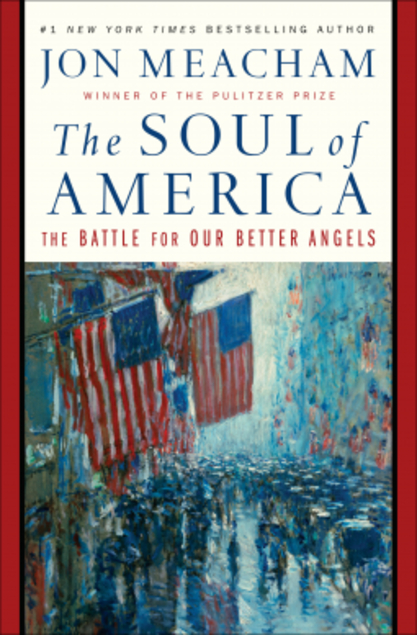
Since I wrote last year's post on Books of 2017, I have read 32 books. I finally took the time to read Sculpture: Processes and Principles [1977] by Rudolf Wittkower, with which I had familiarity but had not read in its entirety before now. It really is a fantastic overview about techniques in stone carving and modeling for anyone interested in knowing more about the great European sculptors of the past. Bridging the gap between art and biography, two of my favorites this year were Art for the Nation: The Eastlakes and the Victorian Art World [2011] by Susanna Avery-Quash and Julie Sheldon, and self-described "tranny potter" Grayson Perry's memoirs, co-written with Wendy Jones, Portrait of the Artist as a Young Girl [2006]. Another great biographical account was Richard Blanco's memoir For All of Us, One Today: An Inaugural Poet's Journey [2013], which I read after we visited the excellent exhibition of his poetry with photographs by Jacob Hessler in Ogunquit, Maine. In the realm of American history, I read Jon Meacham's new book The Soul of America: The Battle for Our Better Angels [2018], the cover of which you see here. This book was such a fascinating overview of highlights in American history from the colonial period through the 1960s, showing how so many of our great leaders, including Lincoln and FDR, enacted social change because of the influence of the people, social activists and civil rights leaders, the true "soul of America." The book is a great testament and response to the politics of today.

Right now, I'm currently reading two books. On the literary fiction side, I am finally reading Jane Austen's Persuasion, published posthumously two centuries ago. I am nearing the end and I am worried it won't have a happy ending! I'm also reading Richard Holmes's fantastic collective biography The Age of Wonder: The Romantic Generation and the Discovery of the Beauty and Terror of Science [2010], reminding us that science was not the separate discipline we perceive it to be today, but part of the exploration of the natural world along with art, literature, and music in the decades before and after 1800. This book has made for some relaxing bedtime reading, before turning in and dreaming each night...

Saturday, March 10, 2018

Top 10 Read Novels: 2014-2017

Back in September 2014, I posted highlights on the best novels I had read between the years 2010-2013. This was a “sequel” of sorts to the post I had done previously on the same topic from2005-2009. Here it is 3 1/2 years later, and I’m posting a follow-up, highlighting my favorite works of fiction that I read over the past 4 years. I’ve been meaning to write this for a few months now, but my dear friend SVH contacted me the other day about a program her library is doing, identifying favorite novels as written about by bloggers, so I’ve been inspired to catch-up on my list-making. As I noted on my previous posts, these are just the self-rated 5-star novels I read between 2014 and 2017, not that they were necessarily published during that time, although a few actually were. (And don't forget about my annual round-up of reading such as this latest post in 2017.) Here’s my 2014-2017 countdown, from 10 to 1…

10. The Girl on the Train by Paula Hawkins (2015). Anyone who commutes on trains and subways—myself included-—knows all about the experience of subtly observing other people. Others prefer the experience of looking outside the window. I do both. This book took that quotidian practice and added a twist: an affair and a murder, as witnessed by a self-professed alcoholic tragedian named Rachel. The plot clearly is indebted to Agatha Christie’s 1957 novel 4:50 from Paddington in which Mrs. McGillicuddy witnesses a murder on a train from the window of her own compartment as it passes the other one (a brilliant set-up, I might add), but Hawkins then turns this novel into a story about what it means to be a woman in a world still dominated by masculine power.
9. Emma by Jane Austen (1816). Written just over 200 years ago, Austen’s literary classic still can entertain. Emma is considered to be one of Austen’s best developed novels, and certainly the character of Emma Woodhouse is someone worth recognized as one of literature’s greatest heroines: a dedicated, kind, intelligent woman who also has ambitions, faults, and makes grave mistakes, but through these experiences finds the love she’s been unaware of having looked for all along. That said, I confess I do prefer Pride and Prejudice (1813), which I’ve read twice, and the character of Elizabeth Bennett, over Emma.
8. The Book Thief by Markus Zusak (2005). This book is supposed to be a young adult novel, but I struggle with that classification because the subject matter is a bit emotionally intense at times. When Death is your narrator, you know the story is going to be dark. Young orphaned Liesel Meminger grows up in Nazi-occupied Germany. Fascinated by books she steals them in order to learn how to read, but she also discovers through her daily actions some important, hard lessons about survival and life itself. I challenge your heart not to break near the end.
7. Life after Life by Kate Atkinson (2013). Over the past 4 years I discovered Atkinson, and I’ve since read and loved her novels Behind the Scenes at the Museum (1995), Case Histories (2004), and A God in Ruins (2015), but the first book I read by her, Life after Life, gets on this list as my favorite so far. Her writing style can seem abrupt at times, but this adds to the flow of the storyline and the quick-wittedness of some of her characters. In 1910 Ursula Todd is born and then dies; in 1910 Ursula Todd is born and survives. This is not a story about reincarnation, but simultaneous incarnations, and how the decisions we make, or are made for us, determine the lives we live.
6. The Underground Railroad by Colson Whitehead (2016). This book won the Pulitzer Prize and the National Book Award, and justifiably deserves it for its unapologetic story of American slavery and its poetic tone throughout. Whitehead’s book is a story of survival, mostly seen through the eyes of Cora, a runaway slave, but the author also adds magical realism with the creation of an actual underground railroad whose road to freedom is fraught with new experiences along the way.
5. The Mayor of Casterbridge by Thomas Hardy (1886). This is the first time I’ve ever read Hardy, and at first I wasn’t completely sure I liked it. People say he's dark, and it's true. But about halfway through the novel I realized I was reading the story of my working-class ancestors in England—not their actual lives, of course, but the essence of what their stark daily lives must have been like. No other Victorian novelist had given me that before. The story of alcoholic Michael Henchard, who in the first chapter sells his family off to the highest bidder in a drunken rage, still has the power to shock. The aftermath of that action reverberates through the novel through plot twists to the very end.
4. 1984 by George Orwell (1949). This book was so much more painful to read than I expected, not just because of what happens to protagonist Winston Smith, who dares to have independent thought, but because of the controlling life that he and others around him are forced to adopt in this dystopic classic. What has struck me about the book ever since I read it, is how the potential of what happens in the novel could actually happen today: not from socialism, however, but from capitalist corruption. Concepts like “newspeak” and “doublethink” are practically oozing out of Washington, D.C. these days, and although I would never have considered Pres. Tyrant to be Big Brother, if this level of corruption and totalitarian power that he propagates continues unchecked, that tyrannical party will eventually make our lives unlivable.
3. The Portrait of a Lady by Henry James (1881). I never thought I would say this about a novel by James, but this is actually a page-turner, but as you would imagine. Isabel Archer is another one of those great literary heroines, but I found it a struggle early on to sympathize with her because of some of her choices in life which seem immature and foolish. The first half of the book you spend the entire time getting to know her and the people around her; the second half, you can’t put it down because of how those decisions impact everyone, and how Isabel has to come to terms with the ramifications of her own choices, good or bad. 
2. Anna Karenina by Leo Tolstoy (1878), translated by Richard Pevear & Larissa Volokhonsky. “All happy families are alike; each unhappy family is unhappy in its own way.” This is one of the greatest opening lines in literature and says much about how this lengthy, but incredibly well-written, novel will play out. The mistake most have about this book is thinking the title character’s story of her illicit affair with Count Vronsky is the main storyline. In fact, there is much more going on in this book. I was found myself identifying more with the story of Levin, who tries despierately to figure out his place in life, and almost sacrifices his greatest love in the process. This book deserves to be near the top of this list, and it's only because of how the next book was written that I suspect it isn't my number 1. It took me 4 months to read and it was worth it.
1. Madame Bovary by Gustave Flaubert (1857), translated by Lydia Davis. It seems strange to me that at the top of my list are 2 infamous 19th-century novels about women having extramarital affairs. I think what drives me to rank them both so high are the stories of their passions for life and love, rather than their immorality. (I guess I am a Romantic at heart.) Earlier last year AA and I spent a few days in Rouen and Upper Normandy, France, which I think also helped me in deciding to finally turn to Flaubert for the first time and read his infamous story of Emma Bovary. This is another book where I thought I knew the storyline; I had even heard it was a boring read. Imagine my surprise when I discovered this book is one of the most beautifully lyrical I’ve ever read. The descriptions are so lush at times you feel like you’re with the characters smelling what they smell and feeling what they touch. Both Anna Karenina and Emma Bovary come to tragic ends, and the (male) authors of these novels could be accused of misogyny and taking a moral high ground in judgment of them. But it is exactly for those reasons that these books should still be read. One needs to appreciates these novels in the context of their day, but one also should discuss their messages in light of current social politics, most notably the #MeToo movement today.

Monday, January 15, 2018

Poem #3


My guilt is "slavery's chains," too long
the clang of iron falls down the years.
This brother's sold, this sister's gone,
is bitter wax, lining my ears.
My guilt made music with the tears.

My crime is "heroes, dead and gone,"
dead Vesey, Turner, Gabriel,
dead Malcolm, Marcus, Martin King.
They fought too hard, they loved too well.
My crime is I'm alive to tell.

My sin is "hanging from a tree,"
I do not scream, it makes me proud.
I take to dying like a man.
I do it to impress the crowd.
My sin lies in not screaming loud.

-- Maya Angelou, "My Guilt," from Just Give Me a Cool Drink of Water 'fore I Diiie (1971)

These days, when we seem to be reeling over and over from the racist rhetoric of our Tyrant and his sycophantic supporters, it seems more important than ever to remember someone like Dr. Martin Luther King, Jr., as well as everyone of any race, color, ethnicity, class, gender, sexual orientation, and creed, who has died in the fight for equality in this nation built on democracy, equal opportunity, and freedom.

(Here is a link to my tribute to Maya Angelou when she died in 2014.)

Tuesday, November 28, 2017

Books of 2017

The 100 Notable Books of 2017 from the New York Times came out just before Thanksgiving...rather early this year actually, especially since Thanksgiving itself was early. I usually find a couple of books on their list that pique my interest, but I have to confess that nothing really stands out for me this year. George Saunders's Lincoln in the Bardo won the Man Booker Prize, and as his first novel it has been received well, so perhaps that will go on the list. I'm not a big fan of modern sequels to literary classics, so even though Mrs. Osmond by John Banville made it on the list, I really don't want to read someone continuing the story of Isabel Archer. Last year when I blogged about the Books of 2016, I was reading Portrait of a Lady [1881]. The first half of the book moved slowly, but was interesting; the second half, however, turned into a page-turner in a way that startled me. It's a classic, just as it is, so I think I'll skip Banville's "sequel." I should add that I've discovered two new books published this year that are not on the 100 list, but have already gone on my Amazon Wish List. They are The Sparsholt Affair by Alan Hollinghurst and Amy Tan's Where the Past Begins: A Writer's Memoir.

On last year's post, I noted some of the new books I was hoping to read. and indeed I did immerse myself in three of them. Lucy Barton's My Name Is Lucy was interesting, but I've been told her novel Olive Kitteridge is better, so I'll give that a go before passing further judgement. Julia Baird's biography of Queen Victoria was well-written and a good read, but I can't say it captured me as other biographies have in the past. I did find myself questioning Victoria and Albert's relationship in a new way, which is a testament to Baird's writing though. The third book on last year's "to read" list was Colson Whitehead's The Underground Railroad. This book was fantastic. It's painful to read at times, but it creatively weaves an imaginary actual underground railroad as a metaphor for the journey of a slave on the run, trying to find her freedom. I highly recommend it, and it certainly deserved both the Pulitzer Prize and National Book Award.

In 2017 I read 33 books. Among the more noteworthy art history books I read were the following: Florine Stettheimer: Painting Poetry [2017], the catalog to accompany the exhibition at The Jewish Museum and, currently, at the Art Gallery of Ontario; The British School of Sculpture, c.1760-1832, edited by Jason Edwards and Sarah Burnage [2017], an excellent collection of essays that explore aspects of British nationalism in sculpture (and, as an aside, includes an essay by me entitled "Before Rome: John Gibson and the British School of Art"); How to Read Chinese Ceramics by Denise Leidy [2015], partly to help my curatorial eye better understand some of the Chinese art we have in the collection at Columbia University; and A Worldly Art: The Dutch Republic 1585-1718 by Mariët Westermann [1996], an easy-to-read introduction to art and material culture during the Golden Age of Dutch painting. All that said, my favorite art book read of the year was the book cover you see here: Art as Therapy by Alain de Botton & John Armstrong [2013]. This book did a great job making me--as a trained art historian and curator--rethink what art is all about, and how art by its very nature can be used as a form of psychological and emotional therapy, and conversely how examining art can teach us about the human spirit and mind. I've recommended this book to a number of people already.


Among my favorite fiction reads this year--aside from Whitehead and James, mentioned above--was the classic 1984 by George Orwell [1949], which shocked me with its frightening poignancy even today under the current Pres. Tyrant; The Sense of an Ending by Julian Barnes [2011], which I find myself still a bit unsettled by, perhaps because I'm not pleased with how the book ended; and My Cousin Rachel by Daphne Du Maurier [1951], just so I could become familiar with the book before seeing the movie (I like Rachel Weisz, but the book was better). I also read The Mayor of Casterbridge by Thomas Hardy [1886] this year, which was my first foray into Hardy. What has struck me most about this novel has been how, of all the Victorian books I have read, this one captured best how I imagine my working-class, English, Victorian ancestors actually lived their everyday lives. I look forward to reading more of Hardy, even if he is a bit dark. Right now, however, I'm reading the book you see here: Lydia Davis's 2015 translation of Gustave Flaubert's French classic Madame Bovary [1857]. So far, I'm rather enthralled by the lush, lyrical descriptions, and it helps greatly that AA and I went to Rouen and Dieppe this past Spring, so I have a sense of the region Flaubert describes. Even though this is another one of those tragedies where you know how it ends, I look forward to continuing reading this on the subway and before bed over the next week or two...

Monday, December 26, 2016

Books of 2016

I'm a little late writing this annual post. Although the 100 Notable Books of 2016 came out from in New York Times a few weeks ago, I've been incredibly busy (including a London trip), so I've only now had a chance to catch up on my blogging about this and other things. Running through their annual list, there are a few novels that definitely caught my eye. I've heard a number of positive things about The Underground Railroad by Colson Whitehead and it has also made it onto the NYT top 5 books of the year list, so that is going onto my Amazon Wish List. From the 100 list I've also added the 2016 novels The Life-Writer by David Constantine, Nutshell by Ian McEwan, and Elizabeth Strout's My Name Is Lucy Barton. I have never read anything by these authors before, so I'm not sure if these will be good "firsts" for me to read or not, but these all seem like things I would want to read. In non-fiction I've added Simon Schama's The Face of Britain: A History of the Nation Through Its Portraits (which was associated with a 2015-16 exhibition at the National Portrait Gallery, London, which unfortunately I missed), and Richard Tomb's The English and Their History. As if my Anglophilia weren't obvious enough, I should mention at this point that after the 100 list came out, there was a review for Julia Baird's new biography of Queen Victoria, which I immediately put on my list. Imagine my pleasant surprise with I received it as a Christmas gift from my godchildren, the AEOBs (THANK YOU!!!).

Every year around Thanksgiving I read a major work of literature. Last year, as I was writing about the Books of 2015, I was reading Anna Karenina, which was an incredible book. I think what surprised me most about that novel was that the story of Levin and Kitty actually felt more engaging than that of Anna and Vronsky, not just because of their love story but also because of the social reforms and anxieties Levin goes through to understand his purpose in life. This year I'm reading the book you see above: Henry James's Portrait of a Lady [1881]. So far it's interesting, but it's no Anna Karenina or Middlemarch.

This past year I read 37 books. My longer commute to & from work each day since I moved to Jersey City has definitely given me more time to read on the subway (assuming I actually can get the book out of my bag and read, as sometimes the trains are just too crowded). Among the noteworthy art history books that I read this year, the following stand out: Landscape and Western Art by Malcolm Andrews [1999], a good introductory survey to the history and stylistic developments of landscape painting; Susan Sontag's On Photography [1977], which admittedly now seems a bit dated but still has some interesting ideas; and a few of the short, focused-topic art books published by the National Gallery in London, such as A Closer Look: Techniques of Painting by Jo Kirby [2011], which are excellent overviews with great detail images. In the art-biography realm, I read a few noteworthy things this year, including the book you see here on Romaine Brooks by Cassandra Langer [2015], an excellent story of the lesbian modernist painter, and a journalistic-style biography of Anthony Blunt by Miranda Carter [2001], a man who was Head of the Courtauld Institute and Keeper of the Royal Collection, had tea with the Queen Mother one day, then was exchanging government secrets as a Soviet spy another day, and later in the evening having sex with a tradesman lover, all while writing his latest book on Poussin--quite a life story!

Wrapping up highlights of fiction reads this year, in addition to Anna Karenina my favorite novels included: Kate Atkinson's A God in Ruins [2015], her sequel to Life After Life which I loved, although this time the story is about Teddy and not his sister Ursula, and it takes some interesting turns as the story(ies) unfold; The Girl on the Train by Paula Hawkins [2015], which was a great page-turner (note: I have not yet seen the movie); and the autistic-mystery story The Curious Incident of the Dog in the Night-Time by Mark Haddon [2003], that was admittedly tedious after a while but captured so well the mindset of the boy's state of mind--I even made AA read it, and he agreed with me. I also did read this year All the Light We Cannot See by Anthony Doerr [2014], which was on the 2014 list; while the story and writing were quite good, I really could not stand the two-page chapters, which I felt broke up the overarching storyline too much and felt choppy then overall.

Finally, I cannot close this post without mentioning that I read (for the third time) Virginia Woolf's A Room of One's Own [1929]. This is a great, classic essay not just about being a woman in history and literature, but about how a writer, any writer, needs a room of one's own to read, to think...to write.  I am fortunate that I do have a room of my own to do this very thing, but ironically this evening I am writing this post at the dining room table, where a candle is lit beside my laptop, illuminating my peripheral vision with its tall flame and infiltrating my nostrils with its sweet scent of winter spice. On the other side of me is the dishwasher running, the sound of the rushing water soothing me as I write this post. Perhaps the Room of One's Own sometimes can just be the space which you make for yourself, in which to find the peace of mind you need in order to write.

Sunday, December 6, 2015

Books of 2015

The "best of" lists for 2015 have begun! bklynbiblio readers will recall that "Books of" is probably one of my favorite posts of the year (here are 2014's and 2013's posts, for instance). While my post is somewhat an assessment of The New York Times Book Review's annual 100 Notable Books, it is more for me a way to look back on the books I read over the year and share/suggest/comment on my favorites (and as you will see at the end of this post, one very much not-so-favorite). This year's NYT list, unfortunately, doesn't inspire me too much, although a few works look interesting. In non-fiction, Mary Beard's sweeping history of ancient Rome SPQR promises to be a great read, but I may have to wait a while to read that one. (I follow Beard, who is a professor of classics at Cambridge, on her blog A Don's Life.) In fiction two books seem promising: How to Be Both by Ali Smith (combined tale of a modern teenage girl and a Renaissance painter) and The Incarnations by Susan Barker (a Chinese cab driver discovers all of his past lives through a series of letters). I was surprised that Toni Morrison's new novel God Help the Child made it on the list because the review artist Kara Walker gave in April lamented the lack of literary beauty and charge that we have come to relish from Morrison's work. But since I do read Morrison (I read Love [2003] this year), that book will go on my my future reading list, I'm sure. Paula Hawkins' debut novel The Girl on the Train made it on Amazon's top list, but not the NYT list; that is definitely going on my list of books to read as well.

Over the past year since I last blogged on this topic, I have read 29 books. Around this time last year I was reading Shearer West's Portraiture [2004], an excellent overview on this subject in painting, and Agatha Christie's Curtain [1975], an excellent wrap-up mystery and the last of my many years of reading her novels in the order they were published. This year I took on two biographies in preparation for my recent conference paper I gave in Pittsburgh. One was the life of the writer/diplomat James Justinian Morier and his brothers (Ottoman and Persian Odysseys by Henry McKenzie Johnston [1998]), and the second was the translated edition of the Mirza Abul Hasan Khan's travel journal to London (A Persian at the Court of King George 1809-10 by Margaret Morris Cloake [1988]). I never thought I would find Anglo-Persian politics during the Napoleonic Wars so interesting, but it has been eye-opening to learn about it in the context of our current strained relations with Iran and other parts of the Middle East today. In a more emotional vein, I tackled Joan Didion's powerful The Year of Magical Thinking [2006], her powerful, personal struggle with death, grief, mourning, survival, and ultimately living.

One of the books I am currently reading merges my interest in biography with biography: Richard Wendorf's Sir Joshua Reynolds: The Painter in Society [1996], which so far is an interesting psychological exploration into understanding one of the greatest portrait painters of the 18th century. A great art read this year was a book by one of my favorite contemporary artists, Grayson Perry: Playing to the Gallery: Helping Contemporary Art in Its Struggle to Be Understood [2014]. The artist's frequently-hilarious cartoons accompany his lucid explanations as to how conceptual art has maligned the perception of art and how it has undermined the ideology of craft. This book is a great, entertaining read for anyone who has wondered "Why don't I understand all this contemporary art thing, and why is is so shockingly expensive?" An intriguing contrast to this--which, not surprisingly, I found less enjoyable but still insightful--was Ways of Curating by the uber-curator Hans Ulrich Obrist [2014]. Despite his insistence on how it is the work of art that should speak for itself in an exhibition, Obrist's jet-setting curatorial life (he literally travels the world overseeing exhibitions everywhere) clearly imposes his persona on the curatorial/exhibition experience, ultimately framing the perception and reception of art, no matter what he claims.

In addition to the biography of Reynolds, I have made the great foray into the literary masterpiece Anna Karenina by Leo Tolstoy [1877], the book cover for which is above. Lately, my running commentary to the frequent question "What are you doing for the holidays?" has been "I'm reading Anna Karenina." And I mean it! (Thanks goes out to my cousins the M+JBs for giving me this book as a gift last Christmas!) The best novel I read this year was Kate Atkinson's Behind the Scenes at the Museum [1995]. I discovered Atkinson last year when I read Life After Life, which had been on the 2013 NYT list, and I truly loved that book. This earlier novel won her the Whitbread Book of the Year award and recounts in witty, original prose not only the life of Ruby Lennox (from the time of her conception) but the troubled lives of her maternal ancestry and relatives from the late 1800s to just before the new millennium. I look forward to reading more of Atkinson, including her new book this year A God in Ruins, a sequel to Life After Life. A few of my other favorite fiction reads this year were: The Testament of Mary by Colm Toibin [2012], a short novel that considers the life of Christ from his mother's perspective; the young-adult novel Miss Peregrine's Home for Peculiar Children by Ransom Riggs [2011]; and The Minotaur by Barbara Vine [2005], an exploration of autism long before it was ever diagnosed for what it is today. I also read Portraits at an Exhibition by Patrick Horrigan [2015] and published a review in The Gay & Lesbian Review. And finally I will now wrap up this post by noting, with unbelievable dread, that I also read early this year The Goldfinch by Donna Tartt [2013]. This book won lots of awards including the Pulitzer, but I absolutely detested it. I've since discovered that people who read this book are in split camps: you either love it or hate it. From my perspective, the first 200 pages and the last 50 pages are the best parts of the book. The entire center of more than 300 pages was some of the most tedious, unrealistic, plot-less storytelling I have ever read. What angered me most was that this beautiful painting, that is supposed to be the focal point of the entire novel, dissipates into an invisible shadow and never reappears until it becomes a catalyst to wrap up a ridiculous plot. I can understand why some people loved this book because of its attempt at contemporary realism, but personally I could not wait to finish it. Sorry, Ms. Tartt. I doubt I will ever read another of your books.

Saturday, December 6, 2014

Books of 2014

Once Thanksgiving rolls around, I find myself anxiously awaiting the latest "100 Notable Books of" article from the editors of The New York Times Book Review, and the 2014 edition was released online yesterday. I find it interesting to compare it to similar lists, such as those issued by Amazon and the Huffington Post. Two interesting fiction titles stand out and they have now gone on my "to read" list: Everything I Never Told You by Celeste Ng, and All the Light We Cannot See by Anthony Doerr, the latter of these two also appearing in the NYT's list for the top 5 novels of the year. As I've noted in my recurring posts on this topic, I rarely have read anything on the list once it's published, but I'm pleasantly surprised to say that I did read as soon as it came out Sarah Waters's new novel The Paying Guests, which made it on the list for this year. Taking place in early 1920s suburban London, it is a lesbian love story, but packed with fascinating social history and a surprising twist involving murder. There are a few things on the non-fiction side of the NYT list that intrigue me, but nothing I feel the need to run out and purchase. Hermione Lee's biography of the novelist/biographer Penelope Fitzgerald, however, has me wondering why I have never read anything by her before (her meaning Fitzgerald).

Regular bklynbiblio readers know that I use this annual list to recount my own reading over the course of the year. (See, randomly, posts for 2013 and 2009, or even my recent post on "Top 10 Read Novels: 2010-2013.") This year I've read to date 19 books. One of the strange events in my reading life this year was purchasing a Kindle, so I've embarked on reading a couple of books that way. I'm not sold on it yet, though. I like holding books, and find that tangibility helps make reading for me something active rather than passive. Art books are also still nowhere in the realm of easy reading on electronic devices because of the legal and technical limitations in reproducing works of art in color. I was pleased to have read a few good art books this year, however. I loved Edmund de Waal's Hare with Amber Eyes about his family's netsuke collection (see my review here), and my recent visit to Munich inspired me to buy and read the book you see here, about one of my favorite modernists, Franz Marc, who found the spiritual in painting animals, was a founder of the Blaue Reiter group, and died tragically at a young age fighting for Germany during World War I. Currently I am reading two art books, both part of the Oxford art history series. One is Portraiture by Shearer West, an overview on the history and different ways of looking at portraiture, with the chapter I am in now on gender and portraiture promising to be one of the more interesting. The second is Matthew Craske's Art in Europe 1700-1830, a socio-economic history of art at the time, which I am slowly moving through. 

One year ago, when I posted about the 2013 list, I was reading Amy Tan's The Valley of Amazement, which had been on the NYT list that year. It was quite a heart-wrenching tale and definitely among her better books. I had the opportunity to hear her speak and meet her at a book signing at the Asia Society, which was a treat. I told her that her book The Hundred Secret Senses was among my favorites, and she said, "Oh, I guess I should reread that!" Also from the NYT 2013 list, I read this year David Leavitt's The Two Hotel Francforts, which was interesting but not great, and Kate Atkinson's Life After Life, which was an incredibly clever book that I truly enjoyed. Atkinson's story is about an Englishwoman named Ursula who is born in 1911 and proceeds to die as an infant, then is reborn in a new version of that same life. She continues to be reborn and make decisions that alter things for her and others around her as the chapters unfold. It was a fascinating take on the idea of whether one would choose the same paths in life if given the opportunity to do it all over again. Elsewhere in fiction, I continued my discovery of Barbara Pym by reading her novel A Quartet in Autumn, about the invisibility of seniors in the modern world. I also read Jane Austen's Emma this year, which I have to confess was not as engaging as I had hoped, possibly because I'm still blindsided by George Eliot's Middlemarch read last year. Another favorite novel I read this year was The Book Thief by Markus Zusak. Although written for young adults, it was a profound take on loss and grief, and hatred and love. The narrator is Death, and it tells the story of a young girl who endures much during Germany in World War II, but also discovers the power of reading and writing as a way of helping herself and others. The film version is well-done too, but the book has greater pathos. Of course I sneak in during the year a couple of mysteries by Ruth Rendell, and I am currently reading, in addition to the two art history books above, Agatha Christie's final Hercule Poirot murder mystery Curtain. This is the end of a long saga for me in which I have been reading all of Christie's mysteries in the order they were published, so perhaps I will say more about that in another post.

Tuesday, September 30, 2014

Top 10 Read Novels: 2010-2013

Regular readers of bklynbiblio know that near the end of each calendar year, I do a "Books of" post highlighting some of my favorite reads of the year. In addition to those posts, just over 3 years ago, I blogged about my Top 10 Read Novels that I had read between the years 2005 and 2009. (Yes, I am actually that neurotic, in that I not only keep track of every book I've read, but I also rate and rank them!) Since posting that in 2011, I have been gathering a few more favorites, so I thought I would write an update, highlighting my Top 10 Read Novels from 2010 to 2013. As with the last list, it's important to realize that I'm not claiming this is my list of all-time-favorite novels, or that the books on this list were published between these years. This is my 5-star ranked list of novels I read between these years. Counting down from 10 to 1...

10. Jane and Prudence by Barbara Pym (1953). Pym was my great author discovery, thanks to TC in TN, although I read this book in 2012 after having read Excellent Women (see below) in 2011. Yes, I have enjoyed Pym's books so much her name appears twice on this list. Few authors have been able to make me laugh aloud with their sardonic observations of everyday life. Here, friends Jane and Prudence, in post-WWII Britain, try to figure out what they truly want out of life and men, living between town and country, all leading to a charming ending.
9. The Girl Who Kicked the Hornet's Nest by Stieg Larsson (2009, English ed.). This third book in the trilogy that began with The Girl with the Dragon Tattoo brings it all home in a way that not only resolves a lot of loose ends, but restored this reader's faith in what seemed to be the author's/narrator's blatant misogyny. The women rule the show in this book.
8. The Lovely Bones by Alice Sebold (2002). This is the story of young Susie Salmon, who has been murdered. She narrates her story from the afterlife, struggling to let her family know she's still watching over them, but also trying to help them realize who it is that killed her. There is a spiritual message here, but it's not traditionally religious, and it's surprisingly very human in the end. A touching, beautifully-composed book.
7. A Russian Affair by Anton Chekhov (1896-99). This little book is a collection of a few of the Russian author's short stories, all focusing on love, grouped together by Penguin Books as part of its "Great Loves" series. These stories amazed me with their near-perfection in short form. I'm intentionally waiting a while so I can read them and relish them again, as if it were the first time. "The Lady with the Dog" in particular will leave you swooning as much as the characters do.
6. The Children's Book by A. S. Byatt (2009). Byatt still holds a special place for me as the author of my all-time favorite novel, Possession. Here she tackles twenty+ years in the lives of a group children who grow up from the 1890s to World War I. You can read my review of the book here.
5. Excellent Women by Barbara Pym (1952). This was the first Pym novel I read, and it is (so far) the best. She will have you chuckling aloud as you pour out another cup of tea, and join thirtysomething Mildred Lathbury through another seemingly boring day with her fellow church ladies and her high-strung neighbors. You will be amazed at how much adventure can come from doing nothing. I can see Pym's influence on some of my other favorite British authors, including Byatt and Ruth Rendell.
4. Howards End by E. M. Forster (1910). Of course, I saw the Merchant-Ivory film with Emma Thompson and Anthony Hopkins a long time ago. But having read almost all of Forster's other novels, I finally settled down for what is considered one of his best, and it did not disappoint. The Schlegel sisters are divine characters, but what amazed me most was how the individual houses all were anthropomorphized and became characters as well.
3. The Elegance of the Hedgehog by Muriel Barbery (2008, English ed.). My thanks to PR for giving me this book. It is one of the smartest and wittiest (and tragic) books I've ever read. The dowdy, provincial concierge Renee, who works for a grand Parisian apartment building, is secretly a genius, but keeping to herself becomes more and more difficult when she inadvertently befriends both the quirky young Paloma from upstairs, who films her family because they are stupid, and a new resident in the building who sees through her disguise. My friend Shermania has blogged about the book as well and has some interesting observations.
2. Middlemarch by George Eliot (1874). I struggled as to whether this book should be number 1 on the list, and in some ways perhaps it is. The books is, truly, a masterpiece, and I think I will struggle to ever find another novel as incredibly well-written. Eliot's genius as a woman writer (using a man's name) was to make her readers realize that everyone has the capacity to think, including women (a rather new idea for Victorian men). The heroine Dorothea Brooke is so well-rounded and complex, struggling as she does to be both an intelligent and a passionate woman. But, honestly, what got to me most was the ending. I sobbed during the last few paragraphs, understanding the story's underlying message: awareness of what one's true gift to the world can and should be.
1. The Way We Live Now by Anthony Trollope (1875). It is rather surprising to think that Trollope's social commentary novel was published in book form just a year after Eliot's masterpiece. They are such different books, it is worth reading both of them to understand that "Victorian fiction" is most definitely not one mode of writing. Middlemarch is certainly a better-written novel and arguably a greater work of literature. But Trollope's novel is timeless in that the plot speaks as much of today's society as it did in the 1870s. Social climbing, greed, corruption, and embezzlement have not changed at all. This book can teach you a great deal about the world we live in today. It's also rather hilarious, which makes for an enjoyable read, and probably the one reason why I made it #1. You can read my pre-review I blogged about here.

Sunday, June 29, 2014

Portal 5

Portal 5: San Francisco (30 August 2013)
(For other works in my Portals series, click here.)

  After this I looked, and, behold, a door was opened in heaven: and the first voice which I heard was as it were of a trumpet talking with me; which said, Come up hither, and I will show thee things which must be hereafter.
  And immediately I was in the Spirit: and, behold, a throne was set in heaven, and one sat on the throne.
  And he that sat was to look upon like a jasper and a sardine stone: and there was a rainbow round about the throne, in sight like unto an emerald.
-- from Revelations 4:1-3, King James Bible

Thursday, June 5, 2014

Maya Angelou


It was just 8 days ago that the world received news the great African-American writer Maya Angelou had died at the age of 86, having just celebrated her last birthday on April 4th. Her death struck me cold, and it has bothered me since. It's not because we are both Aries and I think we are kindred souls (I wouldn't dare compare myself to her genius). Nor am I troubled that she had died too young, or because I thought I "knew" her in some way. I'm saddened because the world will no longer be graced with the power of her voice and the power of her words. Her last message on Twitter, dated May 23rd, was as strong a message as any she had ever written and spoken: "Listen to yourself and in that quietude you might hear the voice of God." I can still hear in my head her recitation of the inaugural poem "On the Pulse of Morning" in 1993--A Rock. A River. A Tree.--and its final stanza, resonant with hope:

Here, on the pulse of this new day
You may have the grace to look up and out
And into your sister's eyes, and into
Your brother's face, your country
And say simply
Very simply
With hope--
Good morning.

These past 8 days I have been distressed by her death. I have felt a rivulet of emotion gurgling beneath the surface of my mind and my heart. I have been in mourning, and I only just realized this fact a little while ago. I never had the honor or privilege of meeting Maya Angelou, but there was always something about her voice and her words that have struck me. I am not alone; she has impacted many people's lives. But I realize that I am mourning the loss of a generation and a past and an understanding of the power of words, how when written from the heart and the mind, and spoken from the soul, words have the power to make a difference on a level that transcends basic textuality. Maya Angelou wasn't a perfect woman. She was something better. She was a human being, just like you and me, someone who made mistakes and learned from them, someone who knew that through our creative minds and bodies, one can make a small difference in this world, a difference that can enact positive change, hope, and love. Watch this short video interview with Maya Angelou that Ann Curry did about 12 years ago. You will quickly understand what I mean.


Visit NBCNews.com for breaking news, world news, and news about the economy

Friday, November 29, 2013

Books of 2013

I've become rather fond of this time of the year...the crispness of late autumn weather is in the air...turkey, stuffing, and pumpkin pie are about to be served...and the first "best of" lists of the year come out, most notably the "100 Notable Books of 2013" by The New York Times, as selected by the editors of the NYT Book Review. bklynbiblio readers may recall that I've been using this annual list to recap some of my own particular reads over the course of the year (e.g. 2012 back to 2008). As in the past, their list is divided into 50 fiction/poetry and 50 non-fiction books. And as I've also written in the past, I rarely if ever find myself reading anything on the list the same year that it's published. Surprisingly, though, this year I can make a "notable" exception! I was excited to pick up Amy Tan's latest novel, The Valley of Amazement, on the day it was released a few weeks ago, and even more delighted that it made the NYT list for this year. It's the book I'm reading right now too, so it's a convergence of my interests coming together rather nicely, I must say. The novel recounts the passing decades of an American courtesan and her mixed-race daughter living in Shanghai in the early 1900s. My taste for Tan's books have varied. I liked The Joy Luck Club and I rave to this day about The Hundred Secret Senses, but her others haven't been as engaging, in my opinion. However, this one so far is capturing my attention very quickly.

There isn't much on the NYT list in non-fiction that is of interest to me this year, although I do like the idea of a biography by Jill Lepore (Book of Ages) about Benjamin Franklin's sister Jane, a mother of 12 who kept on a lifetime correspondence with her famous colonial brother. On the fiction side of things, I already had on my wish list a few of the novels that have made it onto the NYT list (I guess I have good taste?!): The Goldfinch by Donna Tartt (art-related coming-of-age book), The Luminaries by Eleanor Catton (19th-century New Zealand; this also won the prestigious Booker Prize), and David Leavitt's The Two Hotel Francforts (gay love affair between two married men in 1940s Lisbon).

Compared to the last couple of years, my number of books read since last year's post on this topic is down from 29 to 20. I will claim it's because I've had a leaner year due to my dissertation, move, and new job. In the world of art history, I read Elizabeth Prettejohn's The Modernity of Ancient Sculpture (2012), an interesting theoretical take on how classicism has been misappropriated as anti-modern and why that needs to change (I have a review on the book coming out soon). I've also read a few exhibition catalogs on the life and art of Florine Stettheimer (1871-1944), the New York-based modernist painter whose work is still little known outside America. This is more related to my work life at Columbia now; I'll be posting about Stettheimer in the months to come.

My fiction reads over the past year began during last year's post when I was reading Richard Mason's History of a Pleasure Seeker (2011), which was interesting and a fast read, but not as enthralling as I had hoped. I also read Toni Morrison's Home (2012) while I was in San Francisco this summer; that book had been on the NYT 2012 list. I can't say it was among my favorites she's written, but Morrison is more about the way she writes then the storyline at times. Among my other fiction reads were A. S. Byatt's A Biographer's Tale (2001), F. Scott Fitzgerald's This Side of Paradise (1920), John Knowles' A Separate Peace (1959), and a few mysteries by Ruth Rendell and Agatha Christie. However, the two great fiction reads for me this year was a collection of short stories by Anton Chekhov (1890s)--truly a brilliant short-story writer--and George Eliot's masterpiece Middlemarch (serialized 1871-72; book 1874). I cannot believe I had not read Eliot's novel beforehand, and my friend MT insisted on changing that when she gave me the book as a thank-you gift. I can't say Eliot's book was as entertaining of a Victorian novel as, say, Anthony Trollope's The Way We Live Now (1875), but Eliot's novel is one of the most through-oriented I've ever read. It secretly masks as a feminist novel but concentrates on the roles men and women expect one another to play in society. Even more challenging, it questions the measurement of success, through monetary means, corruption, or intellectual prowess, and makes you sympathize with even the characters you're not particularly fond of. And then, just when you think it might never happen because of its crucial emphasis on the mind, a romantic twist that you hoped for is finally achieved, and you suddenly realize that the greatest moments in life sometimes are the ones that are the least important to the world at large. Middlemarch has one of the most beautifully written, poignant endings; the last two paragraphs simply made me cry. The book is a masterpiece because it explores the mind, the heart, and the soul, and forces you to confront for yourself which of these are most important to you, the reader, after all.

Friday, September 20, 2013

Conference on Pre-Raphaelitism

Toward the end of last week, I was in Oxford, England, where I spoke about Simeon Solomon's painting The Mother of Moses, 1860, the abstract of which I posted a few months ago here. It was my first time in Oxford, and although it has some lovely architecture and history, I have to confess that it didn't impress me with its beauty the way Cambridge does (hopefully the Oxonians won't hate me for that). Oxford turned out to be more of a bustling small city with lots of tourists; Cambridge, I must say, is more bucolic and picturesque. In any case, it was still great to be there, and to participate in the two-day conference, Pre-Raphaelitism: Past, Present and Future, held at the Ashmolean Museum and St. John's College. Planners Prof. Christiana Payne and Dr. Dinah Roe, with Dr. Alastair Wright and Colin Harrison of the Ashmolean, did a fantastic job organizing a great two days. For me the highlights among the presentations included: Jason Rosenfeld on 1960s counter-culture and fashion today, and their relationship to the Pre-Raphaelites; Claire Yearwood on the use of the mirror in Pre-Raphaelite paintings; and Amelia Yeates on narrative genre paintings of the 1850s and 1860s and how they fit (or not) within the Pre-Raphaelite style. Yeates' paper focused on the work of artist Robert Braithwaite Martineau, who was considered a peripheral Pre-Raphaelite, and whose painting The Knight's Guerdon, 1864, is the image you see here, from the Ashmolean's collection. My dear friend and colleague Carolyn Conroy (go Team Solomon!) spoke about a cache of late drawings by Solomon held by the Ashmolean and did an amazing job determining for the first time their provenance and identifying their titles through archival research. Stephen Wildman, a noted expert on John Ruskin, gave what should have been a great opening talk, but drilling noises in the room next door actually made it impossible to hear anything he had to say, so I'm disappointed that I still have no idea if Ruskin actually liked the Pre-Raphaelites or not, which was the topic of his talk.

We also had opportunities to visit the galleries of the Ashmolean and a rare opportunity to see the frescoes by some of the PR's and their associates in the Oxford Union, followed by a lovely group dinner. Many of the papers were geared toward literature scholars, who seem to have gotten much more out of the conference than the art people. I've always said that with art history if you've never seen the picture before, the speaker shows it to you during the talk; with literature, if you haven't read the work before, you're completely at a loss to know what the speaker is discussing. I also enjoyed Tate curator Alison Smith's plenary talk about the history of various Pre-Raphaelite exhibitions and their reception over the past century, leading up to the currently-traveling show Pre-Raphaelites: Victorian Avant-Garde, co-curated by her with Rosenfeld and Tim Barringer. I saw the exhibition in Washington, D.C. back in May, introducing AA to the PRB for the first time, and we both enjoyed it. That exhibition is now on in Moscow and then moves to Tokyo. The international taste for Pre-Raphaelitism has exploded, and the response from the people has been great. Art critics, on the other hand, have been a bit dismissive; their inability to move past the French trajectory of modernism leaves them short-sighted about the ways other contemporaneous art movements also were "avant garde" in their own way. Time will eventually show that there is more than one way to be modern.