Showing posts with label history. Show all posts

Tuesday, December 31, 2019

Books of 2019

This morning, AA said to me by text, "Aren't you going to blog about your Books of 2019?" And so here I am doing it, while he's on an airplane heading back home so we can celebrate New Year's Eve just in time with a glass of prosecco. Normally I write this post soon after the annual 100 Notable Books from The New York Times comes out, but we were away at that time and . . . well, that thing called daily life just kept delaying things. Over the last few years, though, I've discovered that not all of the books on the list are among my favorites once I actually read them. Case in point: last year, Tana French's The Witch Elm and Lisa Halliday's Asymmetry were on their list, and I was eager to read them, but to be frank I didn't find either book to be "best" reads. In my opinion, French's book was too dense with excessive details for that type of book (mystery/thriller), so by the time you started getting into the actual mystery, the suspense wasn't there for me. Halliday's book, in turn, was creative as a writing experiment (two novellas that seem to have nothing to do with one another, then somehow become linked in a coda-story), so it wasn't as if I didn't like the book, but it just wasn't what I would consider to be a favorite. All that said, I had commented last year about looking forward to reading Michelle Obama's autobiography, and that was great--inspiring even! I guess I'm biased, but what made it such an enjoyable read was that it felt like she was talking to you the entire time, telling you not just about her life but the lessons she learned from her experiences.

The image you see above is undoubtedly my favorite novel that I read this year. Colson Whitehead's new book was published in 2019 and I bought and read it immediately. I loved The Underground Railroad, as painful as that book was to read, so while The Nickel Boys wasn't "magically realistic" as components of his previous book was, the pain and anguish, and the lessons we have to learn still about America's history of racism and abuse of power, were remarkably strong with completely different types of stories. Whitehead has this uncanny ability in these two books to create a narrative voice that allows you to feel the pain of his characters, but still keep yourself at a distance so you can process it objectively. I see him as an heir to Toni Morrison in some ways. I have no doubt that these two books will be models of a new American literature for generations to come, much the same way Harper Lee's To Kill a Mockingbird has been. That was a book I also finally read earlier this year for the first time. I discovered the Icelandic author Sjón this year with his fairy-tale-with-a-twist The Blue Fox, and I thoroughly enjoyed, both as a mystery and a meta-novel, Anthony Horowitz's clever The Word Is Murder. I should add that a year ago when I did my last books post, I was worried that Persuasion wasn't going to end well, but I'm pleased to say that it was in fact probably my favorite Jane Austen novel of them all. I read somewhere that if you loved Pride and Prejudice as a young person, Persuasion is the book you read as a mature adult to find satisfaction in her writing. It is so true.

In the world of non-fiction, I enjoyed and learned a lot from Richard Holmes's group biography The Age of Wonder, on the history of science and Romanticism around the years 1800. I read the collection of essays Beyond the Face, providing new interpretations on portraiture in the history of art of the United States and beyond, and published a book review of it which you can read here as well as my blog post here where I add more about the artist Carrie Mae Weems. I also read Anthea Callen's new art history/anatomy book Looking at Men, and published an extended book review essay in Nineteenth-Century Art Worldwide, which you can read here. Right now, my bedtime read is Robert K. Massie's biography of Catherine the Great, and my subway reading is Joseph Conrad's Heart of Darkness, which I read back in college (almost 30 years ago!), but decided to revisit all these years later.

It seemed like a good idea to actually share the full list of the 30 books I've read this year. This is the order in which I finished them, and I've included the publication year in brackets, and my star rankings (5-stars is highest!) to help anyone along if they decide they want to read these. Here's to 2020 and more books to read!


  • Persuasion by Jane Austen [1818] (*****)
  • To Kill a Mockingbird by Harper Lee [1960] (*****)
  • The Age of Wonder: How the Romantic Generation Discovered the Beauty and Terror of Science by Richard Holmes [2008] (*****)
  • Beyond the Face: New Perspectives on Portraiture by Wendy Wick Reaves, ed. [2018] (****)
  • Arctic Chill by Arnaldur Indridason, trans. B. Scudder & V. Cribb [2005] (****)
  • The Blue Fox by Sjón, trans. V. Cribb [2004] (*****)
  • Rogues’ Gallery: The Rise (and Occasional Fall) of Art Dealers, the Hidden Players in the History of Art by Philip Hook [2017] (***)
  • The Assassination of Margaret Thatcher: Stories by Hilary Mantel [2014] (***)
  • The Body in Three Dimensions by Tom Flynn [1998] (***)
  • Troubling Love by Elena Ferrante, trans. Ann Goldstein [1999] (****)
  • Looking at Men: Art, Anatomy and the Modern Male Body [2018] (***)
  • Becoming by Michelle Obama [2018] (*****)
  • The Death of Mrs. Westaway by Ruth Ware [2018] (***)
  • The Body in Pieces: The Fragment as a Metaphor of Modernity by Linda Nochlin [1994] (****)
  • Serpents in Eden: Countryside Crimes by Martin Edwards, ed. [2016] (****)
  • Model and Supermodel: The Artist's Model in British Art and Culture by J. Desmarais, M. Postle & W. Vaughan, eds. [2006] (****)
  • Bloomsbury at Home by Pamela Todd [1999] (****)
  • Asymmetry by Lisa Halliday [2018] (****)
  • Duncan Grant and the Bloomsbury Group by Douglas Blair Turnbaugh [1987] (***)
  • The Child’s Child by Barbara Vine [2012] (***)
  • The Nickel Boys by Colson Whitehead [2019] (*****)
  • The Sparsholt Affair by Alan Hollinghurst [2017] (****)
  • Harm Done by Ruth Rendell [1999] (****)
  • Bacchante and Infant Faun: Tradition, Controversy, and Legacy by Thayer Tolles [2019] (****)
  • 30 Favorites Celebrating 30 Years by Stacia Lewandowski & Zaplin Lampert Gallery [2017] (***)
  • The Stonewall Reader by Jason Baumann, ed. [2019] (***)
  • Teaching in the Art Museum: Interpretation as Experience by Rika Burnham & Elliott Kai-Kee [2011] (****)
  • Losing Helen: An Essay by Carol Becker [2016] (*****)
  • The Witch Elm by Tana French [2018] (***)
  • The Word Is Murder by Anthony Horowitz [2018] (*****) 

Saturday, January 5, 2019

600 Posts!

When I wrote my annual New Year's post, I was pleasantly surprised to discover that was my 599th blog post. When I went back to see when #500 was, I was even more surprised to realize it had taken place on New Year's Day in 2015...AND that #400 had coincided with 2013 New Year's. It seems oddly serendipitous, then, that my 600th post is happening now, and still rather amazing that I've had this blog going for 10 years now. I've decided to leave the design of the blog as-is for now, but it's always fun to look at statistics and see how the site has been reached and what are the most popular posts.

The blog statistics show that I've now had 185,536 page views since August 2008, with visitors mostly coming from U.S. Internet addresses, followed by Russia (!), France, United Kingdom, and Germany, with Italy just barely behind Germany. Readers are mostly coming from Internet Explorer browsers still, although that has dropped down a few percents since 2015 to 36%, while Firefox (30%) and Chrome (22%) use has gone up respectively by 4% and 3% since 500 posts. Not surprisingly, Google searching accounts for about 2/3 of all the statistics in terms of being directed to specific posts. When I look at the most popular blog posts since August 2008, I have to laugh that #1 has remained the most frequently visited/read post (you wouldn't believe how much spam commentary I get on that one!). What was #4 on the 500th mark has bumped up to #2, and remarkably my #s 3, 4, and 5 are all new posts since 2015. Who knew that my Inauguration Day 2017 rant would generate such a high number of reads!? Here's the current ranking:
#1: Male Enhancement [Jul. 5, 2010; 2675 views]
#2: Post-Queer Art History [Oct. 13, 2009; 1699 views]
#3: President Tyrant [Jan. 21, 2017; 1590 views]
#4: Poem #2 [Jan. 30, 2017; 1451 views]
#5: Poem #1 [Nov. 29, 2016; 1350 views]

It is interesting that my recording of two poems, relating them to certain events at the time, come up as being so popular. I suspect it has to do with the fact that someone is searching for the actual poems or poetry by the authors (in this case respectively Emma Lazarus and Florine Stettheimer), but I appreciate their discovery here and makes me wonder if there is a renewed interest in reading poetry? Last year, I read Richard Blanco's memoirs For All of Us, One Today: An Inaugural Poet's Journey, which was so fantastic in terms of his life experience as a gay Latino in America, but also his zeal and drive for poetry and writing, and reading his poem at Pres. Obama's inauguration. Perhaps we all need more poetry in our lives...

Thank you to the readers who contact me with encouragement to continue blogging along!

Monday, December 17, 2018

Morier and Persia Exhibition


It may seem strange to be blogging about an exhibition that has now closed, but it only occurred to me last night that I never wrote about the exhibition Looking East: James Justinian Morier & Nineteenth-Century Persia that we recently had on view in our display cases in Avery Architectural & Fine Arts Library, Columbia University. (Chalk it up to having been too busy for months to actually write about it!) The exhibition was part of the MA in Art History Presents series, the second in a new series in which the MA students curate an exhibition utilizing art from Columbia's permanent collection, under the guidance of Dr. Frederique Baumgartner (director of the MA program, Department of Art History and Archaeology, Columbia University) and me (curator of Art Properties, Avery Library, Columbia University). You may recall that earlier this year we opened the first of these shows about the 17th-century printmaker Robert Nanteuil.

This exhibition centered around the portrait you see here of the writer and diplomat James Justinian Morier (ca. 1780-1849), attributed to the painter George Henry Harlow (1787-1819) and painted in 1818. At first glance the portrait is a theatrical depiction of Morier dressed in Orientalist clothing, but in fact there is some historical accuracy to his clothing as representing what men wore in the early years of the Qajar dynasty (1794-1925) in Iran. Morier was part of the British diplomatic service that sought to establish a peace treaty between Persia and Britain during the years of the Napoleonic wars. Morier wrote and illustrated two travelogues about his time in Persia (published in 1812 and 1818), and then went on to have an illustrious career as a Romantic novelist with his most famous book being The Adventures of Hajji Baba, of Ispahan (1824). The exhibition sought to contextualize the historical period in which the painting and his illustrated texts (including the image of the "Persian Breakfast" you see at top), while considering ideas of colonialism and Orientalism in the writings of Edward Said and Linda Nochlin. I curated with one of the students a supplementary section as well, focusing on a selection of Iranian ceramics from the collection.

It was quite a successful exhibition, and we produced an excellent online companion exhibition, including a series of essays by the students introduced by Baumgartner and me. This project was inspired by research I had done previously on this painting, having given two conference papers about it in Pittsburgh in October 2015 and in Raleigh in January 2017. It's a great tale of how a painting first draws you in because of its appearance, but the more you look into it and consider all the imagery, as well as the background of the sitter and his world, it shows how art can convey new ideas and still have an incredible lifeline 200+ years after the events in which it was first painted.

Sunday, December 16, 2018

Books of 2018

The annual New York Times 100 Notable Books of 2018 came out a few weeks ago, and I was pleasantly surprised to discover that there were two books on the list this year that I already had an interest in: The Sparsholt Affair by Alan Hollinghurst (which I bought but haven't read yet) and Warlight by Michael Ondaatje (which I did actually read and found interesting, like a literary, Corot-like veiled-mist tale). Among the novels on this new list that intrigue me and are now on my Amazon wish list are The Witch Elm by Tana French, Asymmetry by Lisa Halliday, and The Overstory by Richard Powers. One major book not on their list because it came out afterward--and which, of course, is now on my "to read" list!--is Michelle Obama's Becoming. AA is reading it, as is my friend MT, and both are totally absorbed.

The book cover you see above reflects what I would say is the best novel I read this year, The Handmaid's Tale [1986]. Even though I have not seen the new series, I decided to step into the infamous dystopian world created by Margaret Atwood over 30 years ago, and I was enthralled. The book is fantastic and frightening; it feels so real and plausible, particularly in light of how things are going these days politically. Even better, it's beautifully written, slow even at times, the protagonist paying attention to details and inner feelings and memories in a way that is haunting to read. Atwood announced recently she is writing a long-awaited sequel, about which I'm uncertain how I feel. Part of me is curious like others to know where Offred actually went and what happened to her, but another part of me worries the sequel will be too influenced by popular culture today and won't live up to the author's own masterful exploration into this disturbing futuristic, misogynistic world. Speaking of misogyny, last year about this time I was reading Madame Bovary and I still think it was a beautifully written novel and highly recommend it to people all the time. It even topped my list of the the best novels I read between 2014 and 2017! Other great novels that I read this year included: Julian Barnes's existentially obsessive biographical novel Flaubert's Parrot [1984]; Penelope Fitzgerald's community of miserable, hateful people in The Bookshop [1978]; the sad Everything I Never Told You [2014] by Celeste Ng, which was on the NYT 2014 list; and Ruth Rendell's foray into racism and murder with Simisola [1994]. I also read this year the mid-century classic Lolita [1955] by Vladimir Nabakov, and I absolutely hated this book, not even so much for the nauseating storyline but because the writing itself drove me nuts.

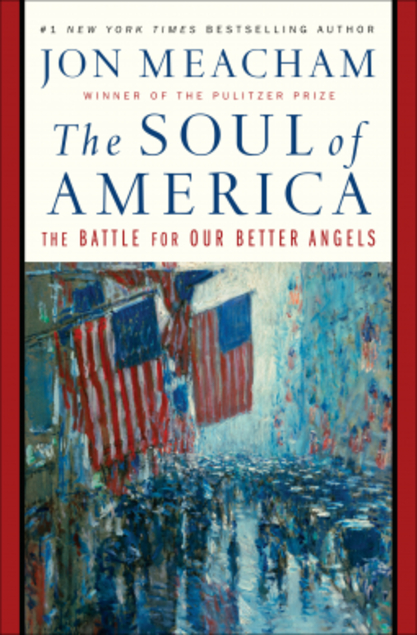
Since I wrote last year's post on Books of 2017, I have read 32 books. I finally took the time to read Sculpture: Processes and Principles [1977] by Rudolf Wittkower, with which I had familiarity but had not read in its entirety before now. It really is a fantastic overview about techniques in stone carving and modeling for anyone interested in knowing more about the great European sculptors of the past. Bridging the gap between art and biography, two of my favorites this year were Art for the Nation: The Eastlakes and the Victorian Art World [2011] by Susanna Avery-Quash and Julie Sheldon, and self-described "tranny potter" Grayson Perry's memoirs, co-written with Wendy Jones, Portrait of the Artist as a Young Girl [2006]. Another great biographical account was Richard Blanco's memoir For All of Us, One Today: An Inaugural Poet's Journey [2013], which I read after we visited the excellent exhibition of his poetry with photographs by Jacob Hessler in Ogunquit, Maine. In the realm of American history, I read Jon Meacham's new book The Soul of America: The Battle for Our Better Angels [2018], the cover of which you see here. This book was such a fascinating overview of highlights in American history from the colonial period through the 1960s, showing how so many of our great leaders, including Lincoln and FDR, enacted social change because of the influence of the people, social activists and civil rights leaders, the true "soul of America." The book is a great testament and response to the politics of today.

Right now, I'm currently reading two books. On the literary fiction side, I am finally reading Jane Austen's Persuasion, published posthumously two centuries ago. I am nearing the end and I am worried it won't have a happy ending! I'm also reading Richard Holmes's fantastic collective biography The Age of Wonder: The Romantic Generation and the Discovery of the Beauty and Terror of Science [2010], reminding us that science was not the separate discipline we perceive it to be today, but part of the exploration of the natural world along with art, literature, and music in the decades before and after 1800. This book has made for some relaxing bedtime reading, before turning in and dreaming each night...

Saturday, January 21, 2017

President Tyrant


Last night AA surprised me with dinner and tickets to see On Your Feet!: The Story of Emilio & Gloria Estefan at the Marquis Theatre on Broadway. The show was great fun. The music and dancing has you clapping, dancing, and singing along with the show. At a pivotal moment in the storyline, when Emilio’s character faces a form of discrimination as a Latino, he astutely points out that he is an American because he was an immigrant. The brief speech resounded in a round of applause. That level of happiness and satisfaction with that particular moment and with the overall show was exactly what I needed last night. I thanked AA on Facebook for the pleasant surprise, and also noted that I was taking the title of the show as a sign of upcoming positive protest and resistance, considering how it had been such a sobering, gray day in history.

I refused to watch the inauguration, joining hundreds of thousands, if not millions, of people who boycotted it as well. I did read his inauguration speech afterward, and I like how The New York Times annotated it, pointing out a few historical allusions and doing some fact-checking as well. This is, I believe, the first inauguration I have not watched since I was first able to vote in 1988. For the record, I think it’s only fair that I detail my own voting history because, as I’ve noted to friends and family over the years, although I lean Left, I’m not as ultra-left as most of these people close to me are. Case in point: in 1988, I voted for George Bush. In 1992, I did a handwritten ballot, voting for Barbara Bush as President and Hillary Clinton as Vice-President. I remember thinking at that time we needed more women in office, and that even though these two disagreed in policies, one was the severe but supportive grandmother who could take care of us, while the other was the energetic powerhouse who would get things done for us. In 1996, I voted for Bill Clinton, and in 2000 I voted for Al Gore. I voted for John Kerry in 2004, but I admit I wasn’t completely thrilled by his candidacy. Naturally I was enamored of Barack Obama and voted for him in 2008 and 2012, and this past November I voted for Populist President-Elect Hillary Clinton, which is how I shall always think of her, as if we are just waiting for her inauguration. Thinking back on those inaugurations, I remember listening enraptured to Maya Angelou reading her poem at Clinton’s inauguration (“A Rock, A River, A Tree…”), and during Obama’s first inauguration I cried with people around me as we collectively felt that storm clouds had finally started to dissipate over her heads. Not everyone I voted for over those years won the election. That is part of what happens in politics; we accept and we move on. But not this time. This time it is different.

Ever since early November 2016, my own personal form of protest has been an outright refusal to say his name, to give it any more power. His name is a ubiquitous brand that symbolizes an abuse of capitalism and power, which has infiltrated many aspects of our lives, from real estate and fashion to the entertainment industry and mass media. Since the election I refer to him only as the Tyrant, and for however long he will be in his new position, I will refer to him as President Tyrant. The word “tyrant” is appropriate in this sense. One of its definitions in the Oxford English Dictionary is “a king or ruler who exercises his power in an oppressive, unjust, or cruel manner; a despot.” Since he is in power for only about 24 hours at the time I’m writing this, it is too soon to say he already has exercised his political power despotically. However, his business practices, his history of degrading women, Muslims, and other social groups, and the despicable, vitriolic language that pours out of his mouth and on his Twitter account all demonstrate his oppressive, unjust, and cruel demonstration of authority as a human being, forget as a President. His position on women and rights for their body is particularly repulsive, and by “position” I do intentionally mean that in the most sexually aggressive way imaginable. (Jane Fonda reportedly will only refer to him now as Predator-in-Chief.) The Tyrant’s stance on these individuals and issues is about dominance against the underling, a hyperbolic, caveman-like aggression that, shockingly, reverberates with rather than repulses many people. Who are these people? The media calls them the disenfranchised white population of middle America. I see it as people who are experiencing “male panic” because the white man has been losing his identity and self-importance in our slowly-shrinking, globalized world. But are they really disenfranchised? I don’t think so. I believe these people are just terrified of change. They want to revert back to the trickle-down effect of white male wealth and power, because it makes them feel better about themselves.

It seems clear to me, from a socio-political perspective, that as GLBTQ and civil rights have increased and come to the fore as an accepted part of society at large, that as major cities have transformed into global populations of mixed races and religions, and that as women have risen in the professional work force and seek out education and rights such as equal pay, that there also has developed a “male panic” in this country and around the world in reaction to these changes. The fact is, masculinity as it has been entrenched in the human psyche for millennia has to change. White men alone can no longer and should no longer retain all the power to reinforce a trickle-down effect that leaves them exclusively in charge of the world. This is exactly what the Tyrant is doing; just look at the majority of his Cabinet nominees of older white men. I’ve been noting this issue of "male panic" verbally for years, and now I am putting in down in writing. I should note that I am not unaware of the irony of my stating this, meaning that I too am a white middle-class man. Not too long ago, my curatorial colleague and friend MA and I had lunch, and as we bantered on about the pluses and minuses of our jobs and projects she pointed out to me that at least I had a tacit choice about what it was I could or could not do because I was a white man. As a woman of Middle Eastern descent, she automatically was restricted to other opportunities in life. I was taken aback by this because, as a gay man, I have considered myself to be a minority as well. But of course look at what has happened. As I too have moved up the socio-economic strata of society and as I have aged, I am now part of this hierarchy reinforced for millennia by older white powerful men who have always held the power. This nightmare has to stop.

I’m currently reading Grayson Perry’s thought-provoking new book The Descent of Man (Allen Lane, 2016), in which he argues that society has to abandon masculinity as we have known it, because the warrior mentality is based on a structure where the top man’s successes trickle down to the least common denominator that is other people. He calls this figure/structure "Default Man." Perry proposes that this construct is anathema to the development of democracy, which is based on lateral equality for all, not a hierarchical, downward-looking, point-based reward system. What’s worse is that because this Default Man tyranny has dominated the human species for so long, society still judges itself based on this unquestioned system. Perry writes: “Our classic Default Man is rarely under existential threat; consequently, his identity has tended to remain unexamined. He ambles along blithely, never having to stand up for his rights. . . . What millennia of male power has done is to make a society where we all grow up accepting that a system grossly biased in favour of Default Man is natural, normal and common sense, when it is anything but. The problem is that a lot of men think they are being perfectly reasonable when in fact they are acting unconsciously on their own highly biased agenda. . . . The Department of Masculinity has an office staffed by Default Man in all our heads, constantly sending out unconscious memos. If Default Man approve of something it must be good, and if they disapprove it must be bad, so people end up hating themselves because their internalized Default Man is berating them for being female, gay, black, silly or wild.” (p.17)

President Tyrant is Default Man, and his followers—including the reported 53% of white women who voted for him—are blindly part of this masculinizing hierarchy that needs to end. Ultimately, I believe it comes down to higher education, where one learns not just book knowledge but the necessity and power of questioning one’s own existence so as to become a better global citizen. The Tyrant and all of his Cabinet nominees lack this education to a large extent; hence, they are so far removed from the ability to question themselves, that they can only rely on reinforcing an outdated, outmoded masculinizing system that essentially emasculates the rest of the human race. Why do it? To maintain the status quo: their power.

Another reason why I name him Tyrant is because of the lack of ethics behind his election. The OED also defines “tyrant” as: “One who seizes upon the sovereign power in a state without legal right; an absolute ruler; a usurper.” Millions of Americans—from Rep. John Lewis to the hundreds of thousands of women who marched today for their rights in Washington, D.C. and across this nation—all see the Tyrant’s election as invalid, illegitimate, immoral, and illegal. This is primarily because of email hacking and behind-the-scenes politicking by Russia to put the Tyrant in power as Putin’s puppet. But the Tyrant’s presidency is also unlawful because he has mastered the art of lying. He has used a reality-television persona to his advantage, somehow blindly convincing people across this nation that he understands the plight of the common man and woman. Yes, Working-Class and Middle-Class America: the billionaire capitalist who has done everything in his power to avoid paying federal taxes for decades and has ignored the basic human rights of his employees apparently understands your needs. This is the same man who called out Hillary Clinton for her associations with Wall Street, and then appoints as Secretary of State the CEO of Exxon/Mobil Corp., who has never held a political office before and who has business allies in Russia. The self-interest evident here is not only shocking but just repulsive. I call Bullshit on the Tyrant!


This is such a sharp contrast to the legacy of Barack and Michelle Obama that it literally hurts. The Obamas were a strong, solid family unit who brought to the White House and this country a feeling of love and respect for one another that has not happened in decades, certainly in my lifetime. Every time I would hear either of them speak, I was drawn to them anew for their intelligence and compassion, and for their consciousness of our global responsibility to the planet and to each other, no matter our race, ethnicity, religion, or sexual/gender identity. Conversely, it consistently shocked me how their critics—particularly so-called “Christians”—could judge this couple as not being American. They are one of the best examples of family values one could ever find in the United States! They are the family anyone would want to have living next door to you, that you couldn’t wait to have come over to your barbecue bringing their homemade potato salad. I remain convinced, and will always believe, that anyone who despised them did so because of racism. No one will ever convince me of anything different. Now, I’m not so blind as to think that Obama was perfect as a politician. I have said from the beginning that he is an ideologue and an academic, and perhaps in some ways he was too willing to allow his beliefs or stances on issues to be compromised in order to work with those who opposed him. He wasn’t able to resolve issues of gun violence, and perhaps the Affordable Care Act was not perfect financially or organizationally. But he did accomplish incredible things for this country, notably figuring out for the first time how all Americans could be entitled to healthcare, and rebuilding and stabilizing an economy that had fallen apart unlike any other time in history since the Great Depression. What stands out for me as the legacy of his presidency will be his humanity and his humanism. When asked what his last public statement as President to the people was, he replied, “Thank you.” He understood his role was that he worked for America. The Tyrant instead has convinced America that it's working for him. I take great comfort knowing that history will see Obama as one of the most admired and respected Presidents in our history, specifically as an individual if not politically. (Some links here here and here to my past posts about the Obamas and their two inaugurations)

My own particular grandstanding about the Obamas, then, perhaps also explains what happened to poor Hillary and why she didn’t win the election. It’s sad to write “poor Hillary.” Critics who detested her of course would be reviled by any form of sympathy toward her, considering her a criminal for her email-related treasonous actions, let alone whatever else she may have done in her deep dark past (because the Tyrant’s record is spotless, apparently). Hillary’s supporters likely would react against this phrase as well, pointing out that she won the popular vote by over 3 million, something no other presidential candidate has ever done in our history. All that may be true for both sides. However, I say “poor Hillary” because the Obama legacy was something Hillary simply could not live up to. We Democrats were blinded by our admiration for the Obamas, for their charisma and charm and humanist spirit. Poor Hillary was certainly qualified to be President, and she had an active demonstrated professional record of understanding what it would take to be President. But We Democrats just didn’t “feel” the same way about her as we did about Obama. And for that we should be ashamed of ourselves.


I voted for Populist President-Elect Hillary Clinton because I believed she was without a doubt a better candidate for President than the Tyrant. And after the coup of this election, I am even more in awe of her ability to maintain grace under pressure, to still come out to greet the people with a smile and let go of all the "nasty" energy he propagated about her. She was not kidding when she said we take the high road and not to succumb to the name-calling and rabble-rousing. I admire her more now than I ever did before. And, with all due respect to We Democrats, I think this is part of our mistake as to why she lost. We Democrats just got a little too lazy and comfortable for own good. With all the great reforms and civil liberties—gay marriage, women’s health rights, labor rights in the work force, and so on—the neo-liberal, bourgeois Left (myself included) got a little too comfortable with our universalizing sense of good will. We relaxed with our chai lattes and kale salads, our iPhones and tablets, and our easy-going, democratized, gender-neutral lives. The disenfranchised in rural America and elsewhere yanked the carpet out from beneath us, and we landed hard on our asses. We took for granted that all these things that we had struggled to attain were a done...wipe your hands clean...and we forgot that the ongoing battle for social reform and humanism never stops. How did we miss this?! The fight for women’s equality dates from over a century ago, when they were first given the right to vote, and it took until 2016 for a woman to become the first female candidate for President from a major political party. She didn’t win, which we can understand rationally, but now in 2017 under the Tyrant there is a backlash and genuine threat that the rights of these same women, and everyone else, can be overturned any day now. I have never been an actively political person, but I am mobilizing myself psychologically to begin to protest and fight for our human rights the minute the Tyrant and his Cabinet begin to remove these rights we have attained.

I may seem like a hypocrite in that I’ve made this statement but I did not join the women’s march. I am proud to know so many who trekked to DC and marched in the City today. But as I’ve told them all I’ve chosen not to do this myself because I feel as if I need to wait and see something start to happen before I protest. Perhaps that seems like an excuse, or I’m fooling myself. But I think one of the reasons why I am waiting is because I feel right now that I have had to learn to accept something over which I am not happy and over which I ultimately had no control. In addiction recovery and other forms of therapy, one learns that sometimes you have to accept things you cannot change. The results of the election have been a grieving process. I have been mourning for months, from the tears that streamed down my face at 2am after the election, through stages of anger and disbelief, and now heading toward acceptance. Regardless of how I feel about the results of this election, I do have to accept that the Tyrant is now President because this is how our democratic process works. And even though I refused to watch his inauguration and am personally miserable about this, I have to respect the peaceful transfer of power as established by our forefathers as a form of patriotism. I even have some tiny glimmer of hope that his actions may not be as detrimental or horrific as We Democrats fear. This doesn’t mean I’ve given up. It means I’m waiting and strategizing.

I want to end this tirade of a post by noting one final particular point. I’m not saying that poor Hillary should have won because we would have been better off. I’m not even saying that the Tyrant unconditionally will be the worst President we have ever had. What I am saying is that I am afraid of this Default Man, his mentality and his actions that have to change with an emphasis globalism and world peace, not insular America first. I am terrified by the Twitter wars, his agonizing defensiveness, the walls (concrete and imaginary), and the blind-fear these men are propagating as neo-McCarthyites, decrying the America as “carnage” and claiming they will make America great again. But by whose standards? By standards based on fear and isolationism and hatred and bigotry? That is not a great America; that is an America I want to change, immediately. Get On Your Feet indeed. Right now.

Saturday, July 30, 2016

MWA XL: Turner's Burning


Few would disagree that one of the greatest painters of the nineteenth century was Joseph Mallord William Turner (1775-1851). An artist who specialized in landscapes that ranged from the classical to the sublime, he so impressed his contemporaries with his work as a young man that he was elected an Associate of the Royal Academy in 1799 and a full member in 1802. He excelled both in oil paintings and watercolors, and could paint in the spirit of the Old Masters while also introducing something new for his own modern world. Later in life Turner was criticized for his eccentricities in subjects and painting techniques, and the recent biopic Mr. Turner reportedly makes him a bit of a bumbling idiot rather than an eccentric painter (I have not seen the movie yet). During the last twenty years of his life he failed to impress most viewers, and he was often derided for his paintings because of their seemingly slipshod compositions and abstractions of color. His one defender late in life was the conservative art critic John Ruskin, who saw in Turner (perhaps surprisingly) the epitome of the principle of "truth to nature." Today, Turner is recognized as a master, and retroactively appreciated as a key figure who influenced many of the modernist tendencies in painting from the Impressionists through Abstract Expressionism.

I've selected as this Monthly Work of Art Turner's painting The Burning of the Houses of Lords and Commons, October 16, 1834, which he painted from 1834-35 and now is in the collection of the Philadelphia Museum of Art. AA and I saw the painting once again on a visit there a few weeks ago, and it still continues to impress me every time. On the night of October 16, 1834, a tremendous conflagration burned down the Houses of Parliament in London. (The neo-Gothic building and Big Ben were the replacement buildings that stand today.) Hundreds, if not thousands, of spectators flocked to the shores of the Thames to watch the massive fire. Turner was among them, and he recorded on the spot a series of watercolor sketches that he later used to create two different oil paintings in his studio. This is one of them; the other is in the Cleveland Museum of Art. All of these works were cleverly brought together in 2007 when the National Gallery of Art in Washington, DC hosted the exhibition J.M.W. Turner. I remember to this day how much I loved this one particular room that demonstrated Turner's understanding of energy and light and color in his watercolors and the oil paintings recording this cataclysmic event.

Christopher Riopelle writes in the PMA's handbook about this painting that Turner watched the blaze from the south bank of the Thames: "Here he exaggerates the scale of Westminster Bridge, which rises like a massive iceberg at right and then on the opposite bank seems to plunge down and dissolve in the blaze. At the dazzling heart of the flames is Saint Stephen's Hall, the House of Commons, while beyond the towers of Westminster Abbey, which would be spared, are eerily illuminated. Turner was drawn to depictions of nature in cataclysmic eruption, and here in the middle of London he confronted a scene of terrifying force and drama that he recorded in several watercolor sketches and two paintings."

Turner's vibrant palette of color and the swirls of energy emanating from the fire make this a magnificent painting. Even the smoke takes on a life of its own as it rushes like a wave into the night sky. One can understand why people today often see Turner as a proto-abstract painter. I am reading at present Jonathan Crary's Techniques of the Observer: On Vision and Modernity in the Nineteenth Century, and a passage recently caught my eye (no pun intended) that made me think of this painting again from my visit to Philadelphia a few weeks ago. Crary's interest in this book is demonstrating how advances in physiology and socio-philosophical theory during the first half of the nineteenth century impacted the world of painting and the development of photography thereafter. Rather than reinforce the paradigmatic argument that modernist painters, from the Impressionists on, were so radical in how they saw the world as artists, he contends that their sense of the world was a natural development because of changes in the understanding of how people actually saw and perceived the world around them through scientific discoveries and hypotheses made earlier in the century. This led some to want to understand the essence of the "innocent" eye, what one sees before the brain interprets the imagery. Crary writes: "Ruskin was equally able to employ [this theory] in suggesting the possibility of a purified subjective vision, of an immediate and unfiltered access to the evidence of this privileged sense. But if the vision of Ruskin, Cezanne, Monet, and others has anything in common, it would be misleading to call it 'innocence.' Rather it is a question of a vision achieved at great cost that claimed for the eye a vantage point uncluttered by the weight of historical codes and conventions of seeing, a position from which vision can function without the imperative of composing its contents into a reified 'real' world." (pp.95-96)

What strikes me is that if we believe Crary's argument (and I confess I am doing a hack job summarizing it; read the book), then why do we have to leave it to the Impressionists in the 1870s to receive the credit for a new interpretation of this understanding of vision? Surely other artists experimented with these discoveries earlier? Indeed, Turner paints what his eye sees, not necessarily a photorealistic representation of what the viewer expects to see. He painted swirls of color as the eye sees them, but before the brain's interpretation of what they are. While this seems most apparent in the color and brushstroke of the background and upper left quadrant, other components of visual acuity are evident here too: the bridge, with its warped foreshortening and perspective. As the eye focuses on the rising flames of orange, yellow, and red, peripheral vision skews the natural alignment of the bridge. Similarly, the people in the foreground along the banks lack any physical features; they are shrouded in smoke and the night sky, and are only visible again in Turner's periphery. This painterly demonstration of what Turner "saw" relates well, then, to Ruskin, who praised Turner for his "truth to nature" approach in his art. It is not so much that his paintings capture a verisimilitude of the landscape; rather, his paintings convey an unadulterated understanding of what his eye saw. Such is the genius of Turner.

POSTSCRIPT 8/6/16: When I wrote this blog post, I was only just more than half-way through Crary's Techniques of the Observer. I should have glanced ahead. In his last chapter, Crary discusses Turner as exactly the prime example of artist who utilized new principles of vision in his art. He discusses briefly two of Turner's paintings from the 1840s that emphasize the vortex of light as their subjects. These paintings and Turner's late color/light-filled experiments are among those works most find inspiring today, largely because of their foreshadowing of abstraction yet to come. But for Crary it was the natural development of the understanding of a subjective sense of vision that made this possible. He writes: "Seemingly out of nowhere, [Turner's] painting of the late 1830s and 1840s signals the irrevocable loss of a fixed source of light, the dissolution of a cone of light rays, and the collapse of the distance separating an observer from the site of optical experience. ... Turner's direct confrontation with the sun ... dissolves the very possibility of representation that the camera obscura was meant to ensure. His solar preoccupations were 'visionary' in that he made central in his work the retinal processes of vision." (138-39) Crary thus utilizes Turner as the grande finale to his thesis. Fortunately, this coincides with my observation above: that one need not wait for the 1870s and the Impressionists to assume that scientific understandings in the subjectivity of vision manifested themselves in art. They were happening simultaneously.

Wednesday, September 16, 2015

Elizabethan II Period?

Last week, Queen Elizabeth II became the longest-reigning monarch in the history of the United Kingdom, beating the previous record-holder, her great-great-grandmother Queen Victoria. (Who holds the previous second, now third? Victoria's grandfather, King George III, who reigned from 1760-1820, although the last 10 years he was technically incapacitated and his son ruled as Regent.) After being on the throne now for 63 years and 224 days (as of today, but who's counting?), one wonder if someone should give her reign an official name. After all, cultural historians refer to the Victorian period and the Georgian period, so why not the Elizabethan? Partly because there already was an Elizabethan period when Queen Elizabeth I ruled from 1558-1603 (think Shakespeare). But, in truth, there is much more of a consciousness about the limitation of power and influence Elizabeth II has had on world culture when compared to her predecessors. Nevertheless, she is a stalwart to a sense of traditionalism and nationalism that has made her a historical icon. I think the picture seen here of the Duke of Edinburgh and her together, from when she came to the throne and most recently, was a charming image. (I thought it came from the Guardian newspaper, but now I can't find it again.) If you want to see more of how HRH has changed over time, then you must check out this online photo gallery showing her picture every year from her accession to the throne in 1953 up to now. You must admit, the woman really has the most amazing hats and she knows how to wear them. But that turban in 1975 is just fabulous!

Thursday, January 1, 2015

500 Posts and Happy 2015!


January 1, 2015...HAPPY NEW YEAR! I start off each year with the proper greeting. Sometimes I modify the layout of the blog, but I've decided to leave it as is for now. However, I have added a link to the bklynbiblio Instagram account, so check it out and follow me there, as well as on Twitter (where we now have reached 515 tweets). The big news, however, is that this New Year's Day post also coincides with the 500th post on this blog. The image above is from the Fortune 500 list from 2014; the bold, gold numbers seemed appropriate for a New Year's association. (It is strangely coincidental that two years ago we reached the 400th post on New Year's Day.)

When I first started this blog back in August 2008, I envisioned it as a space where I could write and see the results of my writing. I was still taking courses in my doctoral program, and I lamented that I could not spend more time writing my own work. A blog seemed to be the most logical way to do this. People claim that blogs today are dead, and arguably social media products like Facebook, Twitter, and Instagram are the preferred way of maintaining communication. But I still find this blog an effective place for me to write. It is a virtual zone where I can be creative or critical, analytical or entertaining. It is an aesthetic arena in which I can share images of works of art so they can be admired and contemplated as objects of beauty and constructs of social engagement. What I never imagined was, more than 6 years later, that I would still be writing this blog and that I would reach my 500th post. It is a milestone, and I am admittedly proud of this accomplishment.

As always, I find these centenary markers an opportunity to share some interesting statistics about bklynbiblio. Since August 2008, there have been 91,565 page views. That works out to be approximately 1189 page views per month. More than half of the traffic coming to the blog is from U.S. Internet addresses, but after that the traffic comes from, in order, the United Kingdom, France, Ukraine, and Germany. (This is an interesting contrast to the top countries when we had hit 400 posts: UK, Germany, Canada, and Russia.) About 40% of readers use Internet Explorer to read my blog posts, followed by 26% on Firefox and 19% on Chrome (note: I use Chrome for all my blogging). Most interesting, of course, are the blog posts that rank as the highest viewed. Amazingly, #s 1 and 2 have retained their top most popular posts, while #3 moves up one from its former position. The next two are new entries and I'm pleased to see at #5 one of my Monthly Works of Art. Here are the official ranks:
#1. Male Enhancement [Jul. 5, 2010; 2090 views]
#2. Review: Yinka Shonibare MBE [Sep. 6, 2009; 1038 views]
#3. Is It Baroque, and Do We Fix It? [Aug. 7, 2011; 513 views]
#4. Post-Queer Art History [Oct. 13, 2009; 445 views]
#5. MWA II: Vatican Shepherd [Apr. 7, 2012; 438 views]
Among the ranks for #6 through #10 are my obituary of art historian Lionel Lambourne and my post about the sale of Simeon Solomon's signed copy of his 1871 prose poem A Vision of Love Revealed in Sleep dedicated to Algernon Charles Swinburne.

Although this blog is a way for me to express myself, my writing only has perpetual value because there are readers out there who appreciate, agree, disagree, comment, "like," and respond to these words over time, if not on this blog directly, then in emails, on social media, and in person. Thank you, readers, for helping bklynbiblio reach its 500th post. Here's to reaching 600!

Thursday, April 17, 2014

Solomon's Arrest in Paris


Exactly 140 years ago in Paris, on Friday, April 18, 1874, the 33-year-old Anglo-Jewish artist Simeon Solomon was sentenced to 3 months in prison for "mutually indulging in obscene contact in public" with 17-year-old Henri Lefranc (aka Raphael-Maximillien Dumont), both having been arrested in a public urinal at the Place de la Bourse on March 4. One often doesn't think to commemorate an event such as this, particularly since it isn't as well-known as Solomon's previous arrest for the same crime in London the year beforehand. Both arrests attest to the secrecy and danger male lovers faced at a time when same-sex passion was a criminal act. Credit goes to historian William Peniston for first uncovering the documentation of this arrest, and my colleague Carolyn Conroy has expanded on Peniston's research. It's actually rather surprising that biographers and art history has chosen to forget about the Parisian arrest. His friend and collector Robbie Ross (himself later buried with Oscar Wilde) wrote about Solomon in his obituary that he: "used to boast that he had been in prison in every country in Europe; but besides London there is no evidence that he was arrested elsewhere than in Paris, where he was detained three months." Solomon's artistic productivity in 1874 was blunted by this time in prison; nevertheless, he produced that year this beautiful drawing you see above, Until the Day Break and the Shadows Flee Away, a quote from the Song of Solomon 2:17 (King James Version). The image you see here is a Frederick Hollyer platinum print photograph of the drawing from the collection of the Birmingham Museums & Art Gallery.

For more information:
Carolyn Conroy, "'He Hath Mingled with the Ungodly': The Life of Simeon Solomon after 1873 with a Survey of the Extant Work" (Ph.D. Diss., University of York, 2009).

William A. Peniston, Pederasts and Others: Urban Culture and Sexual Identity in Nineteenth-Century Paris (New York: Harrington Park Press, 2004).

Robert Ross, "A Note on Simeon Solomon," Westminster Gazette (August 24, 1905).

Thursday, July 11, 2013

MWA XVI: Rubens's Wife

Following up on the last MWA in honor of Rembrandt, it seems only fitting to turn to his famous Baroque contemporary from Flanders, Peter Paul Rubens (1577-1640). This large painting, Rubens, His Wife Helena Fourment (1614-1673), and Their Son Frans (1633-1678), is approximately 6 1/2 ft. x 5 ft., and was painted in oil on wood ca. 1635. It is one of the highly prized paintings at the Metropolitan Museum of Art. The curators note that it is a portrait of the artist with his second wife and their first-born son strolling in an allegorical Garden of Love: "The picture is not a family portrait but an homage to Helena as wife and mother, one of whose most important attributes was providing her husband with a son. The gestures and glances of both male figures and symbols of fecundity such as the fountain and caryatid pay tribute to Helena, who has the innocence and serenity of a female saint." The painting was a gift in 1981 from the well-known art collectors Mr. and Mrs. Charles Wrightsman, in honor of the famous art historian John Pope-Hennessey, who at the time was (I believe) retiring from the Met as a curator. Although this is scandalous to say, I've never been a big fan of Rubens's rather mellifluous work, but this picture is without a doubt an exquisite painting in its handling, color, and composition.

The main reason why I've chosen this work as July's MWA, however, is because of the painting's provenance, or the history of its ownership. The Met has been among those museums who, in putting their collections online, have attempted to make more publicly available the provenance of many of the works in their collection. If you click on the title above, it will take you to the webpage for the painting, and if you scroll down to click on the tab for "Provenance," you will discover that among the illustrious past owners of this picture were the Dukes of Marlborough, and that it hung for a time in Blenheim Palace. From 1884 through 1975, the painting was in Paris at the Hôtel du Duc de Nemours, the home of the Barons de Rothschild. Indeed, if you take a look to the right, this is an image of the painting as it hung in the dining room of this Paris mansion, just before it was sold by the Rothschild estate. This image was a discovery I made when I was working with the William Keighley Collection at the Met Museum (he had been given permission to photograph the Rothschild's home). You may recall I blogged about this when the last phase of the digitization of the Keighley Collection had been released by ARTstor in December 2012. This was a multi-year project that I had overseen while working at the Met, including curating Keighley's original slides to be digitized. Much the same way I recently wrote about exhibition installation views, images such as this offer us a fascinating perspective in how paintings such as this one by Rubens--which we now only envision hanging on a wall in a museum--originally were meant to be seen, hanging among decorative arts and other works paintings and sculptures collected by wealthy owners in the past. Visual provenance helps restore the past incarnations of works of art, and thus are vitally important tools in the history of these art objects. It makes one realize that art objects are not static; rather, they have rich histories that tell a new story for each passing generation.

Sunday, June 30, 2013

Avery Library


The Avery Architectural & Fine Arts Library at Columbia University recently released the official announcement about my appointment as Curator of Art Properties. You can read the announcement by clicking here. After having completed 3 weeks of work, I can say for sure that I truly am thrilled by this new position. There's an unbelievable amount of work involved in this job, but I'm up for the challenge. In the last few weeks alone, I've been involved in potential donor opportunities, a sculpture conservation project, the photographic reproduction of an 1890s portrait painting, meeting a few administrators for the loan program, rethinking some policies and procedures, and looking into some exhibition ideas for areas of the collection. My staff members have been great to work with; I'm learning a lot from their years of experience. All in all, it's been an incredibly busy but rewarding 3 weeks.

I also feel rather privileged to be back in a library community, and one of the most prestigious art and architecture libraries in the world at that. Avery Library has world-class general and special collections, including the recent acquisition of the Frank Lloyd Wright archive. Avery Library was established in 1890 when architect Henry Ogden Avery (1852-1890) died unexpectedly and his parents established his book collection as the foundation of what became Avery Library. In 1912 the library was the first to be established in its own Renaissance palazzo-style building on the campus of Columbia in a building designed by McKim, Mead, and White. You can read more about the history of Avery Library by clicking here.

Tuesday, May 14, 2013

DC in May


This past weekend, AA and I took a quick trip to Washington, D.C. (Thanks, amigo, for doing all that driving!). The main reason we went was to see the exhibition Pre-Raphaelites: Victorian Art and Design, 1848-1900 at the National Gallery (more on that in another post). I last was in DC back in December 2010 when RL and I went to the same museum to see the Pre-Raphaelite photography exhibition, as well as the Hide/Seek gay identity show at the National Portrait Gallery. On this trip, I wanted to see more of what I haven't seen in DC before, which is exactly what we got to do. We were concerned that it was going to rain all day Saturday, but we got lucky: the rain held off for most of the day, and the sun was shining brightly. After the exhibition we strolled along the National Mall, pigged out on ice cream, then queued up for the National Archive. Many of the exhibition areas there are targeted to children these days, but it was worth taking a few moments amid the crowds to peak at the Declaration of Independence and the Constitution, although I later jokingly commented on Facebook that I was more excited to have seen the Magna Carta on display.

Although we stayed at the Washington Hilton, we headed to the nearby Bar Dupont at the Dupont Circle Hotel for a late lunch and had wine with shrimp beignets and mussels mariniere. For dinner we went to Casa Oaxaca for a fantastic meal: pollo with mole negro for AA, pollo with mole poblano for me (that's the picture you see here; here's more information about delicious chili-chocolate mole sauce). There were also margaritas, guacamole and chips, and yummy churros with ice cream for dessert. Brunch the next morning included mimosas, coffee, basket of pastries, and omelets at Le Diplomate. All the neighborhoods we visited were adorable, with Victorian row houses and mini-mansions. It made me realize again that DC truly is a charming city and does have a great deal to offer someone--being politically active is probably a necessity though.


On Sunday we visited some of the monuments, and would you believe it was the first time I ever saw the Jefferson Memorial and the Lincoln Memorial? The large-scale inscription from the Gettysburg Address on the wall at the Lincoln Memorial made me stop and read it again, and I was struck by one line in particular: "The world will little note, nor long remember what we say here, but it can never forget what they did here." American history spends so much time emphasizing this short speech, but even at the time Lincoln himself recognized that it was not his words but the actions of the dead soldiers on the field that truly mattered. It really is a powerful speech. We also visited the Franklin Delano Roosevelt Memorial as well, which I liked a great deal, with its organic approach, sculpture, stone, and water features integrated into the park that surrounds it. The picture you see here is of me between the over-life-sized bronze statues of Roosevelt and his beloved Scottish terrier, Fala.

The Martin Luther King, Jr. Memorial was quite interesting from an artistic perspective. I took this picture showing how the larger-than-life statue of the civil rights leader is hewn from the "Stone of Hope," a reference to his famous I Have a Dream speech. The way King projects from the stone conjures the image of the non-finito, the unfinished (think Michelangelo), an appropriate visual statement about how his assassination cut him down before he could fulfill his life's work. The statue is surrounded by quotations from his many speeches, and I found this one from Georgia, 1967, to be poignant: "If we are to have peace on earth, our loyalties must become ecumenical rather than sectional. Our loyalties must transcend our race, our tribe, our class, and our nation; and this means we must develop a world perspective." (I wonder if any Congressmen have read and thought about this?) We also took in the National World War II Memorial, a picture of which you see at the top of this blog post. I really loved this memorial, with the outstretched colonnades reminding me of Bernini's architectural features surrounding Vatican Plaza. The fountain was lovely as well. Situated between the Washington Monument and the Lincoln Memorial, the memorial to those who died in World War II is a beautiful area for contemplation and respite amid all the other memorials on the Mall. (You can read more about the DC parks on the National Park Services website.) Soon afterwards we started our long drive north, amazed at how much we had done in 24 hours, and feeling truly satisfied with our little jaunt to the nation's capital.

Tuesday, January 1, 2013

400 Posts and Happy 2013!

bklynbiblio has reached its 400th post! We made it to 300 back in May 2011, so it has taken a while to get to this one, but I think you'll agree that this is still quite a milestone. It also conveniently times well with our annual New Year's Day post, so what better way to kick off 2013 and celebrate 400 posts then with a lovely champagne toast!

Each new year I modify the look of bklynbiblio, but I'm leaving it alone this time as I actually like the look. And now for some statistics. Blogger software has been keeping stats since our little blog was launched in August 2008, so here are a few I thought you might find of interest. We have had 42,301 page views, which works out to be about 830 page views per month. Almost half of those views have come from US Internet addresses, with the UK, Germany, Canada, and Russia (!) next on the list. 76% have been Windows users, with Mac users only at 14%. Here's my favorite part--the most frequently visited posts--and the top 2 and #5 remain the same! (#1 certainly isn't much of a surprise, but what is going on with #3?)
#1. Male Enhancement [July 5, 2010; 1391 views]
#2. Review: Yinka Shonibare MBE [Sep 6, 2009; 881 views]
#3. Happy 3rd Birthday! [Aug 29, 2011; 420 views]
#4. Is It Baroque, and Do We Fix It? [Aug 7, 2011; 368 views]
#5. 50 UK Days: Week 2.5 [Oct 28, 2010; 317 views]
Among #s 6-10 are my posts on Downton Abbey and my review of the Cindy Sherman exhibition.

My thanks as always to all of my readers for your continued support and encouragement. Here's to the next 100 posts!

Sunday, February 19, 2012

Downton Abbey


I first wrote about Downton Abbey, that magical 1910s-themed soap opera from Julian Fellows, back in September when I noted that it was then named as the most critically acclaimed show in television history. Those who know me on Facebook also have been following my occasional posts on all the grandeur and excitement of the show. I've even used Maggie Smith's picture as Violet, Dowager Countess of Grantham, as my profile image in honor of tonight's final episode of Season 2, which has been dubbed "Christmas at Downton Abbey." The show is fantastic and rightfully deserves all the awards it has earned. To me, the writing has been key to its success, but equally so have been the attempts at historical accuracy with the costumes, settings, social graces, etc. They cover lots of cultural issues, like women's rights and the challenges of the working classes, but then there are the love stories, and you cannot help but root for Anna (the head house maid) and the lame, married Mr. Bates (Lord Grantham's valet). It's all not perfect, of course, and the high drama that goes on with some of the characters (like finding a dead Turk in your bed) can be a bit over the top at times, but that's part of the charm. Season 2 has been a little more challenging in that the war has preoccupied much of the storyline, making character development suffer a little, but the show still had held on and has been excellent. Maggie Smith as the Dowager Countess, however, is simply divine. She has the best lines in the show ("Don't be defeatist, dear, it's very middle class."). Although her character becomes comic relief she also is an excellent representation of how older Victorian social mores were being forced to change with the onset of World War I and the gradual decimation of the "upstairs/downstairs" social class hierarchy. Best of all, however, she also represents the determination of family and protection of one's loved ones. No matter what happens, we take care of our own, servants included. (Now, who is going to pour the tea?) I won't go into all the details about the show, as you can learn all about the characters and storyline simply be visiting the official US website for the show. If you're interested in knowing more about the manor house, Highclere Castle, home of the Earl and Countess of Carnarvon, you can visit their website as well. (No doubt visitors to their estate will increase greatly and match those of Castle Howard after Brideshead Revisited was filmed there.) You can see episodes of Downton Abbey from Season 1 (which opened with the sinking of the Titanic and ended with the declaration of war) on DVD and streamed online, and the Season 2 DVD set (which covers WWI through 1919) is on sale now as well. I cannot wait until the final episode tonight airs, but I'm also devastated knowing I have to wait a year for Season 3, in which Shirley Maclaine will be joining the cast as Lady Grantham's American mother. Fortunately, New York magazine has provided us with Downton Abbey paper dolls so we can entertain ourselves until next season begins. Lady Sybil Crawley gets female empowerment symbols, but you'll notice the Dowager Countess comes with a variety of facial expressions.


UPDATE 11:08 PM: A most satisfactory season finale! And now that the two seasons have passed, one can sit back and enjoy all the Dowager's best lines and facial expressions.