The annual New York Times 100 Notable Books of 2018 came out a few weeks ago, and I was pleasantly surprised to discover that there were two books on the list this year that I already had an interest in: The Sparsholt Affair by Alan Hollinghurst (which I bought but haven't read yet) and Warlight by Michael Ondaatje (which I did actually read and found interesting, like a literary, Corot-like veiled-mist tale). Among the novels on this new list that intrigue me and are now on my Amazon wish list are The Witch Elm by Tana French, Asymmetry by Lisa Halliday, and The Overstory by Richard Powers. One major book not on their list because it came out afterward--and which, of course, is now on my "to read" list!--is Michelle Obama's Becoming. AA is reading it, as is my friend MT, and both are totally absorbed.
The book cover you see above reflects what I would say is the best novel I read this year, The Handmaid's Tale [1986]. Even though I have not seen the new series, I decided to step into the infamous dystopian world created by Margaret Atwood over 30 years ago, and I was enthralled. The book is fantastic and frightening; it feels so real and plausible, particularly in light of how things are going these days politically. Even better, it's beautifully written, slow even at times, the protagonist paying attention to details and inner feelings and memories in a way that is haunting to read. Atwood announced recently she is writing a long-awaited sequel, about which I'm uncertain how I feel. Part of me is curious like others to know where Offred actually went and what happened to her, but another part of me worries the sequel will be too influenced by popular culture today and won't live up to the author's own masterful exploration into this disturbing futuristic, misogynistic world. Speaking of misogyny, last year about this time I was reading Madame Bovary and I still think it was a beautifully written novel and highly recommend it to people all the time. It even topped my list of the the best novels I read between 2014 and 2017! Other great novels that I read this year included: Julian Barnes's existentially obsessive biographical novel Flaubert's Parrot [1984]; Penelope Fitzgerald's community of miserable, hateful people in The Bookshop [1978]; the sad Everything I Never Told You [2014] by Celeste Ng, which was on the NYT 2014 list; and Ruth Rendell's foray into racism and murder with Simisola [1994]. I also read this year the mid-century classic Lolita [1955] by Vladimir Nabakov, and I absolutely hated this book, not even so much for the nauseating storyline but because the writing itself drove me nuts.
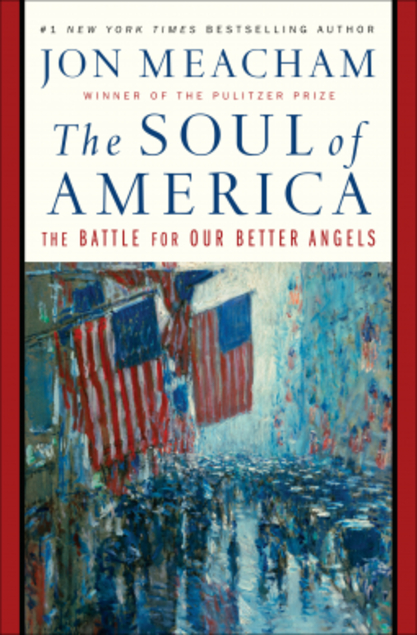
Since I wrote last year's post on Books of 2017, I have read 32 books. I finally took the time to read Sculpture: Processes and Principles [1977] by Rudolf Wittkower, with which I had familiarity but had not read in its entirety before now. It really is a fantastic overview about techniques in stone carving and modeling for anyone interested in knowing more about the great European sculptors of the past. Bridging the gap between art and biography, two of my favorites this year were Art for the Nation: The Eastlakes and the Victorian Art World [2011] by Susanna Avery-Quash and Julie Sheldon, and self-described "tranny potter" Grayson Perry's memoirs, co-written with Wendy Jones, Portrait of the Artist as a Young Girl [2006]. Another great biographical account was Richard Blanco's memoir For All of Us, One Today: An Inaugural Poet's Journey [2013], which I read after we visited the excellent exhibition of his poetry with photographs by Jacob Hessler in Ogunquit, Maine. In the realm of American history, I read Jon Meacham's new book The Soul of America: The Battle for Our Better Angels [2018], the cover of which you see here. This book was such a fascinating overview of highlights in American history from the colonial period through the 1960s, showing how so many of our great leaders, including Lincoln and FDR, enacted social change because of the influence of the people, social activists and civil rights leaders, the true "soul of America." The book is a great testament and response to the politics of today.
Right now, I'm currently reading two books. On the literary fiction side, I am finally reading Jane Austen's Persuasion, published posthumously two centuries ago. I am nearing the end and I am worried it won't have a happy ending! I'm also reading Richard Holmes's fantastic collective biography The Age of Wonder: The Romantic Generation and the Discovery of the Beauty and Terror of Science [2010], reminding us that science was not the separate discipline we perceive it to be today, but part of the exploration of the natural world along with art, literature, and music in the decades before and after 1800. This book has made for some relaxing bedtime reading, before turning in and dreaming each night...
thoughts, reviews, and random musings on art, books, movies, music, pets/nature, travel, the occasional television show, plus gay/queer culture, genealogy, libraries, New York City, my photography and writing...and basically whatever else comes into my head
Sunday, December 16, 2018
Saturday, December 15, 2018
The Passing of Caryl Ambrose
It's never easy to lose someone who is a close family member. About ten days before we celebrated Uncle Eddy's 90th birthday, our cousin Caryl M. Ambrose passed away at the age of 74 on Thanksgiving after suffering for many months with a terminal illness. I took the picture you see here a couple of years ago, with Caryl seated on the left with her sister Marilyn and Uncle Eddy, all of us taking in the sun after having lunch on the waterfront in Dunedin, FL. We all take some comfort knowing that Caryl is no longer in pain anymore, but because she always exuded an incredible strength of character, independent spirit, zest for what is right in the world, and an unending love for her family, her passing is challenging to process. Caryl was my second cousin. While her grandfather and my grandmother (Nana) were brother and sister, they were at opposite ends of a family timeline, almost twenty years apart in age, so that in fact my Nana and Caryl's father, Uncle Tommy, were close in age. Caryl was always interested in learning more about family history and loved when I would tell her about any new discoveries I had made in the Ambrose-and-Bagge English side of our family history. She was a Bronx-born girl, like so many in our family, and lived most of her life in NYC where she ran a travel consultant firm, then retired early and went to Florida with Marilyn, and had a whole new second life there as a nurse. Here is her obituary that her sister and brother wrote:
"Caryl's final safari was to heaven on 11/22/18 at the age of 74. Her life was a tale of two cities-New York and Tampa Bay. Her company, the African Transfer, specialized in safaris to Kenya, Tanzania and Botswana. She then went on to another career as a nurse where she lovingly rescued many needy folks and furry creatures. She leaves behind her sister Marilyn, brother Dennis (Laura) and his family in Illinois – Nephews TJ & Glenn. Niece Ashley, great nephews Aiden and Anthony … and her rescue cat Chris … as well as numerous, wonderful kissing cuzzins and many lifelong friends."Caryl never stopped wanting to know how everyone else around her was doing. She would write letters--actual handwritten letters, as recently as earlier this year to me--in which she remembered everything AA and I had going on, wanting to hear all about our travels (Marilyn would always add the funny side-bar comments and jokes in the letter!). Caryl was a caregiver, someone who instinctively wanted to help, to her own detriment in that she refused to let on about anything happening with her own health. Before she moved to Florida, I had always seen both Caryl and Marilyn as the savvy independent sisters, the first in NYC the second in Chicago. Caryl ran her own business, traveled worldwide, took care of some beautiful cats and dogs, and still managed to look after all of our great-uncles and other aging relatives. When my father and I planned a big trip to Italy and England back in 1991 (long before Internet search engines!), she coordinated our entire five-week trip, with flights and hotels and train tickets. I remember being completely amazed at how she was able to pull it all together so easily.
The one thing about Caryl that I will always cherish and keep close to my heart, though, was her encouragement and support of my writing. This is not something many people know. When I was a teenager, she heard that I was trying to write a novel, a family saga of sorts set in the 1800s (I was heavily influenced by John Jakes's Kent Family Chronicles at the time). Without any hesitation, she told me to give her a copy of the manuscript and she would "show it" to someone she knew "in the business." I was completely in awe that she "knew" someone and had connections like that, so I gave her a copy. The truth is, I have absolutely no idea if she actually showed it to anyone or not--even more truthfully, I hope she didn't because it was a horrible, early attempt at writing! The point is, she believed in me. She didn't assess my talents, she saw my drive and interest, and she was one of the first people in the family to encourage me to do this. That simple gesture on her part inspired me in ways that I still feel to this day in all of my efforts when I write something, whether it's an article, fiction, or even this blog. That gesture made me realize how a simple action can help support and encourage someone in ways no one can ever know. I will miss her energy, her laughter, her letters, and her love of family, but her spirit lives on in so many of us.
Saturday, December 8, 2018
90 Years Young
Last weekend AA & I went back to Florida to help celebrate with family & friends Uncle Eddy's 90th birthday. He's the last of the brothers & sisters from that branch of the family that produced all of us, and he's been so generous and good to all of us that he deserves this milestone marker of his life and times. What's the one favorite thing we all love about his life? That he worked at the Bronx Zoo! These days, he is settled in an assisted living facility, uses a wheelchair most of the time, and is rather thin, but he's still got his "marbles" moving around properly in his head and he hasn't lost his hearing or his sense of humor, so overall he's doing pretty well. Here's to Uncle Eddy...90 years young!
Friday, November 23, 2018
Hotel Archaeology
Quebec City has one of the most picturesque historic centers that I have ever visited in North America. There is something incredibly charming about all the flagstone facades, the cobblestone streets, the dated historic buildings, the division of upper and lower cities each with their own interesting sights, and the inherently French provincial vibe that the old town exudes. AA, his cousin GDA, and I just returned from a brief visit there (after a couple of days in Montreal). The temperature was unseasonably, frigidly cold, and there was about a foot of snow on the ground with flurries continuing our entire visit. You can see below the picture of AA and me outside the Chateau Frontenac (now a Fairmount Hotel) and witness our winter-like experience! But the overall icy-cold experience helped open up the holiday season for me, so it was all worth it.
Even more intriguing was the hotel where we stayed this time: Auberge Saint-Antoine. This was an incredibly relaxing, luxurious hotel/spa experience; when you leave for the evening for dinner, you come back to your room and discover turn-down service, herbal tea, subdued lighting, and a CD with Diana Krall singing soft jazz. What fascinated me about the hotel most, however, was how they incorporated archaeological artifacts as part of the decor and history of the site. The hotel was originally a fort and merchant house in the 17th century, and over time the grounds and buildings changed. When the hotel underwent renovations about 15 years ago, they excavated hundreds of cultural artifacts, like fragments of ceramic dishes, glassware, knives and forks, leather shoes, cannonballs, pipes, ... the list goes on and on. All of the artifacts have been beautifully displayed in vitrines embedded in the walls (as you in the above image). Even the rooms are themed and named around a particular ceramic fragment. Most of the artifacts date from the late 18th/early 19th centuries, but it is fascinating to discover some objects dating back to the late 1600s.
Thursday, November 15, 2018
First Snowfall: 2018-2019 Fall/Winter
The meteorologists had predicted some snow flurries for the NYC area today, with most of the actual snow heading further north and west. Well, imagine everyone's surprise when the snow actually starting sticking and didn't go away! Yes, today was our first snowfall of the 2018-2019 fall/winter season. I was stuck in my office working through most of it, so I didn't get to take pictures. AA, however, was working from home, so he took this picture you see here during the afternoon hours when the snow was coming down pretty heavily. It was a very wet snow, and by the end of the day had turned into slushy ice-like rain that was very slippery. Nothing too pretty about that kind of snowfall today!
It seemed rather ironic to me, then, that here we are freezing and getting iced by Mother Nature, when right in the heart of NYC at Rockefeller Center, Christie's auction house this evening broke the record for the most money a work of art by a living artist ever sold at auction: the hammer price went for $90m! The painting is the one you see here, Portrait of an Artist (Pool with Two Figures), 1972, by that grand dame of a British queen, David Hockney. According to The New York Times, "The painting was executed during a three-month period of intense creativity after the artist broke up with his American art student lover, Peter Schlesinger. Many viewers assume that the scene is set in California, where Mr. Hockney has lived for decades. But the canvas was painted in London, based on photographs taken at a pool in the South of France." I was fortunate to have seen this painting at the recent Hockney exhibition at The Met, and it was the star of the show, an exquisite composition with incredible color, without a doubt one of Hockney's best works. And now with the price tag to match. Oh, but to jump in that pool right now, instead of bundling up with the heater on beside me...
Wednesday, October 17, 2018
Statue of a Countess
I am pleased to share the news that my latest article, "Between Venus and Victoria: John Gibson's Portrait Statue of the Hon. Mrs. Murray, Later Countess Beauchamp," has just been published in Nineteenth-Century Art Worldwide (along with a number of other very interesting essays by some colleagues I know that I look forward to reading). My essay discusses for the first time the portrait statue you see here that Gibson made for the 3rd Baroness Braye of her widowed daughter Catherine, who later married Earl Beauchamp (pronounced "Beecham").
The statue was commissioned in 1842 when the Baroness and members of her family were on their grand tour in Rome, and it was completed in 1846. Gibson exhibited the marble statue at the Royal Academy that year, where it received mostly positive feedback, but one critic rather surprisingly compared it to the Hottentot Venus. (You'll have to read the article to learn why!) The Baroness and her daughter were friends with Gibson for many years, and he often visited them at their London home and at Stanford Hall, where the statue is on view as part of the family's art collection to this day. What makes the story of this statue even more remarkable is that Catherine made the bold decision to have Gibson tint it while it was still in the early days of his own experiments with polychrome sculpture (i.e. Tinted Venus). As I discuss in my essay, she received sharp criticism afterward for having done this, but Gibson urged her to "fight it out" and not give in to the critics. (Wise words I need to remember myself many days!)
I am incredibly grateful to the current Baroness Braye and her family for their generosity and hospitality in giving me access to unpublished family papers and their homes, and to the staff at Stanford Hall for responding to all my inquiries along the way. Without their encouragement and support, this article never could have come to fruition.
The statue was commissioned in 1842 when the Baroness and members of her family were on their grand tour in Rome, and it was completed in 1846. Gibson exhibited the marble statue at the Royal Academy that year, where it received mostly positive feedback, but one critic rather surprisingly compared it to the Hottentot Venus. (You'll have to read the article to learn why!) The Baroness and her daughter were friends with Gibson for many years, and he often visited them at their London home and at Stanford Hall, where the statue is on view as part of the family's art collection to this day. What makes the story of this statue even more remarkable is that Catherine made the bold decision to have Gibson tint it while it was still in the early days of his own experiments with polychrome sculpture (i.e. Tinted Venus). As I discuss in my essay, she received sharp criticism afterward for having done this, but Gibson urged her to "fight it out" and not give in to the critics. (Wise words I need to remember myself many days!)
I am incredibly grateful to the current Baroness Braye and her family for their generosity and hospitality in giving me access to unpublished family papers and their homes, and to the staff at Stanford Hall for responding to all my inquiries along the way. Without their encouragement and support, this article never could have come to fruition.
Sunday, October 7, 2018
Art Libraries at the Rijksmuseum
My co-presenter (Melanie Wacker, also at Columbia; photo at left of us taken by Ann Lindell) and I gave a talk entitled "From Curatorial Files to Linked Open Data: Cataloging the Art Collection at Columbia University," discussing background on the art collection my department oversees and how our management of metadata and cataloging moved from traditional paper files to a metadata schema that we were then able to convert to MARC so as to be published in the Columbia Libraries online catalog, to convert for use in the soon-to-be-launched Digital Art Properties collection, and then used as the basis for a linked open data project that was a grant to test art for use in BIBFRAME, the future XML-based form of cataloging established by the Library of Congress that eventually will replace MARC. I realize much of what I just wrote there may seem like gibberish to anyone but IT specialists and librarians, but the point is that up until recently no one could search anything in the Columbia art collection, whereas now the art collection is now not just discoverable but available in digital format (highlights anyway) and is being used to establish new models of excellence for ways of cataloging art by libraries in the future. It's been a team effort that we are all proud of.
It was quite humbling to be presenting at the Rijksmuseum, one of the grandest collections of art in the world. This was my second visit there, the first time two years ago when AA and I traveled to Amsterdam. On this trip we also made a visit to The Hague where we visited the Maurithuis and I truly fell in love with Vermeer's Girl with a Pearl Earring, one of those examples of art where you have to see it in person to truly admire its majesty in terms of lighting, brushstroke, and overall composition. She is more modern in her appearance than I ever realized. We also visited Delft, Vermeer's home, which was an absolutely charming city. I also had an opportunity to visit the Hermitage Amsterdam and see the Neoclassicism exhibition with works from St. Petersburg; the Canova sculptures were just exquisite. I'm in London right now writing this, with a few other things to do here before heading home in a couple of days.
Wednesday, August 29, 2018
Happy 10th Birthday!
When I think about being 10 years old, the greatest memory I have was moving from our smaller ranch-style house to a larger split-level house in the same town. At the time it felt like we were moving to another part of the state, but of course it was only about 6 blocks away (admittedly, these were long, curvy blocks, which made it seem further). Riding our bicycles from the new house back to the old neighborhood seemed so far; I remember thinking at first how amazing it was Mom and Dad were letting us ride our bikes so far away! My brother CC hadn't been to the new house yet, so on moving day he wrote his bicycle and had to ask neighbors along the way where the moving truck had gone, which was how he eventually found the house. As for the house...it was olive green on the upper portion and brick on the lower portion (later Mom and Dad painted the top portion white with deep-red shutters and trim). The house was remarkable to CC and me because we had stairs for the first time, and not just 1 set of stairs but 3 sets, including stairs that went down to a basement. We moved right before Halloween that year, and so that holiday was a strange one with all new territory to scout out for candy. Uncle Eddy is the one who took CC and me around, I remember. My costume alternated from being a scarecrow to being a ghost that year; CC went as "Pedro," with a floppy sombrero, cigar, and painted-on mustache (admittedly racist in retrospect, but what did we know?). We lived in our old house for 7 years and in that new house for over 9 years before we moved on again...lots of memories there...
I have other vivid memories from being 10 years old, but all that is the first thing that jumps out at me today. And here we are on bklynbiblio, now celebrating 10 years of this blog. I started this blog after my trip to Provincetown with JM. I've been back there 3 or 4 times since then, and traveled to many other places. So much happens in a decade...yet the spirit of this blog has remained the same. Today's post is #588, and very little has changed in the topics written about, based on the tags for each post: New York still comes in at #1 (163 posts), followed by 19th-century art (114), England (99), photography (98), with art exhibitions (84) and sculpture (83) neck-and-neck for 5th place.
As I've expressed in recent posts, I hope I will have time to write more. I'm winding down 2 big essays, one of which will be published later this fall, and a few conference/symposium projects are in the works, all of which I hope to blog about soon. Sometimes I contemplate whether I should "close" the blog and call it a day, but then I hear from a few of you who enjoy reading what I write, and I realize this blog--even though posts are intermittent--helps me keep in touch with some people, and for that reason we'll keep it going. My thanks to everyone who reads this blog and has helped sustain bklynbiblio for the past 10 years. On to more future memories...
I have other vivid memories from being 10 years old, but all that is the first thing that jumps out at me today. And here we are on bklynbiblio, now celebrating 10 years of this blog. I started this blog after my trip to Provincetown with JM. I've been back there 3 or 4 times since then, and traveled to many other places. So much happens in a decade...yet the spirit of this blog has remained the same. Today's post is #588, and very little has changed in the topics written about, based on the tags for each post: New York still comes in at #1 (163 posts), followed by 19th-century art (114), England (99), photography (98), with art exhibitions (84) and sculpture (83) neck-and-neck for 5th place.
As I've expressed in recent posts, I hope I will have time to write more. I'm winding down 2 big essays, one of which will be published later this fall, and a few conference/symposium projects are in the works, all of which I hope to blog about soon. Sometimes I contemplate whether I should "close" the blog and call it a day, but then I hear from a few of you who enjoy reading what I write, and I realize this blog--even though posts are intermittent--helps me keep in touch with some people, and for that reason we'll keep it going. My thanks to everyone who reads this blog and has helped sustain bklynbiblio for the past 10 years. On to more future memories...
Thursday, July 12, 2018
New Solomon Records
This painting has often been considered his best work, not so much by reviewers at the time, but by his colleagues and friends like William Michael Rossetti and Algernon Charles Swinburne, and subsequent art historians. Painted and then exhibited at the Royal Academy in 1865, the picture depicts a group of ancient Roman women having different reactions to a gladiator fight in the arena. The painting's first owner was Charles P. Matthews, a brewer who had homes in London and Essex, England, and it was sold at the auction of his estate after his death at Christie's London on June 6, 1891. It was sold then for 21 guineas. Around a century ago, it was purchased by the grandparents of the owner who sold it today, and surprisingly was actually "lost" for most of the 20th century, having only been "found" in the mid-1990s. Today that same family sold the painting, and it earned £370,000 including premium. As I've mentioned in the past, as compared to his fellow Pre-Raphaelite and Victorian painters, this is still relatively low (some major paintings by Edward Burne-Jones and Dante Gabriel Rossetti go for over £1m these days). Nevertheless, this was a satisfactory acknowledgment of his work and has helped reaffirm his importance in this canon of Victorian painters.
Also by Solomon up for sale today was this picture, the 1867 watercolor version of Bacchus, that he painted when he was in Rome, finishing it in London once he was home. In some ways this painting best epitomizes Solomon's style and subject matter, showing the god of wine as a sensual youth half-dressed, basking in the sun. The homoerotics of this painting are self-evident, and in many ways has become an important subject in discussing Solomon's own homosexual identity and how he frequently depicted youthful males as objects of beauty at this time. The picture was estimated to sell for £50,000-£70,000, but I knew it would sell for much more. It set the record for the second-highest work by Solomon sold at auction, coming in at £237,500 including premium. Two works on paper did not sell at today's auction, because they didn't meet their minimum estimate, but I think between these two big-ticket items and all the works sold yesterday at Christie's there was a sense of exhaustion. I don't think there's ever been this many Solomons up for sale at the same time, so this certainly made for an interesting two days of sales. To read more posts on this blog about the Solomon family painters, click here.
Monday, July 9, 2018
Call for Papers: Transnationalism and Sculpture
Transnationalism and Sculpture in the Long Nineteenth-Century (ca. 1785–1915)
Session Organizers:
Roberto C. Ferrari (Columbia University)
Tomas Macsotay (Universitat Pompeu Fabra, Barcelona)
The history of nineteenth-century art is frequently presented as the product of revolutions and socio-political changes. The Zeitgeist for nationalism and imperial expansion generated by these historic events inevitably fostered interest in national schools of art criticism and artistic practice. But rising interest in global studies has led to more and more evidence of the transnational as a major impact on artistic practice of the nineteenth century, specifically in association with the creation and dissemination of narratives of national identity, and the interests of economic and colonial expansion. The transnational is defined as crossing national boundaries, but for this session transnationalism also refers to culturally blended nexuses of artistic creativity and engagement during the century.
Sunday, June 24, 2018
Wisdom of the East Exhibition
Wednesday, June 20, 2018
Gibson and Portraiture Essay
Back in 2016 I had blogged about the new exhibition at the Royal Academy on the sculptures and drawings of John Gibson (1790-1866). Toward the end of the exhibition's run, there was a study day held at Tate Britain, and I was honored to be invited as one of the speakers for this event. We also did a local London version of the Gibson Trail and examined closely a selection of his figures and busts in the UK capital. About two months afterward, our host for that day, M. G. Sullivan, announced that some of us had been invited to submit articles associated with that study day in Tate Papers, the peer-reviewed, free online journal published by the museum. Sullivan and I decided to collaborate and co-author an article on Gibson's portraits, basing a portion of the essay on the bust of William Bewick that is in the Tate's collection. Our essay--and three others--have now been released (click here), and I must say that I am pleased to see this one in print.
Our essay is the first to focus on his portraits, and I think we managed to convey well how, despite Gibson's general distaste for portraits, he still made quite a number. We tapped into his extant account books to record prices and heretofore unknown commissions, and examined a number of these works chronologically and culturally. The image you see above is a detail from the back of the bust of an unidentified woman, dated to the 1820s, by Gibson; the work is in the collection of the Yale Center for British Art and is a rather magnificent bust, particularly in the carving of the sweeping hairdo. The title of our essay is "'Men thinking, and women tranquil': John Gibson's Portraiture Practice." I'm looking forward to reading the other essays on Gibson's studio practice by Anna Frasca-Rath and his association with the Duke of Devonshire by Alison Yarrington (a subject I've written about as well, from a queer context, but Yarrington is the world expert on Devonshire's sculpture gallery). I read the other day Susanna Avery-Quash's essay on Gibson's friendship with Sir Charles Eastlake, which was excellent. So take a look, and if you feel inclined, enjoy the reading!
DC Heading to the Bronx
My friend and colleague Deborah Cullen, who for the past 6 years has been Director and Chief Curator of the Wallach Art Gallery at Columbia University, has just been named the Executive Director of the Bronx Museum of the Arts. ARTNEWS has written up a great piece on her new role, as has The New York Times. I've never actually been to this museum, I'm sorry to say, but over the past few years it has raised its profile and I am eager to visit because of some of the exhibitions on at present and opening soon. (My family, on my mother's side, is all of Bronx extraction, but I wonder if any of them had ever been to this museum before?) She lives in the Bronx with her husband, sculptor Arnaldo Morales, so it likely means a lot to the museum that she has been a resident in that NYC borough for quite some time now.
Monday, June 18, 2018
The Video: E-Journals in Art History
No one ever likes to hear him/herself on tape or video, but everyone on my panel session from February agreed to the request to be filmed, and that online video is now available for viewing for free here: https://www.pathlms.com/arlisna/events/1063/video_presentations/100716
This was in association with the panel session I chaired at the ARLIS/NA conference held in NYC, "Born-digital and Other E-journals in Art History: Crossing Boundaries among Art Historians, Editors, and Librarians," about which I first blogged here. The response to the session by some audience members and the panelists themselves was very positive, so we are glad that it went so well (even if we are embarrassed to hear ourselves on video afterward!).
Skanda in Georgia
I'm writing this post from Athens, Georgia, where today we de-installed a few works of art that we loaned from the Columbia University art collection. The exhibition at the Georgia Museum of Art, which closed yesterday, was "Images of Awakening: Buddhist Sculpture from Afghanistan and Pakistan." It revolved around an amazing new acquisition they have received: a 5th-century Buddhist head from Hadda (their image online currently is pre-conservation; trust me, it's gorgeous). The exhibition included loans from a few collections to narrate more fully the story of art, mostly Buddhist in nature, from the region once known as Gandhara, a crossroads for Western and Eastern cultures from the time after Alexander the Great to nearly the 7th century. Today, of course, this region is a political quagmire because of the Taliban and Isis, which is partly why a show like this in Georgia (traditionally, a more-conservative state) becomes so important. In my role as Curator of Art Properties at Columbia, I can say that we were very pleased to be able to participate in this exhibition and loan four small schist stone sculptures to this. Three of them were Buddhist in nature, but the work you see here actually has origins in Hinduism. This is somewhat surprising as Hinduism was not yet fully developed as we know it today, although its earlier origins as Vedism were culturally entrenched throughout the Indian sub-continent. A sculpture of a Hindu deity from this region, during a time when Greek-inspired art was influencing Buddhism, arguably demonstrates how globalism has always impacted art and is not a 21st-century phenomenon.
The figure represents Skanda, the god of war and son of Shiva and Parvati. It dates from the 4th to 5th century. His mythological origin is rather fascinating, and a bit provocative--curiously, it seems to bear some relationship to the Greek story of the birth of Aphrodite, goddess of love (both born from water, seed thrown into the water, etc.). Despite its fragmented state today, this work has held up well (it had some minor conservation in order to be shown, so thank you Jones Abbe Art Conservation). The sculpture shows the god not with multiple heads but rather in a warrior stance holding what once was a spear and, in his other hand, a peacock, the animal with which he is associated. That makes for another interesting analogy, as peacocks in Greek mythology are associated with Hera, queen of the heavens, and seen as a symbol of marriage. Is another love/war cultural emblem at work here? Perhaps. Peacocks are beautiful birds, particularly when they display their shimmering iridescent feathers, but they are also notoriously loud and vicious. I guess all is fair in love and war.
Friday, June 15, 2018
Time and Experience
Whenever my dear friend JAM emails me wondering how I am, because she hasn't seen any updated posts on bklynbiblio, I know it's been a while since I've blogged and I've overdue a post or two! A few new posts will be coming over the next week or so, but for now I thought I would make a return by commenting on the passage of time (hence the pocket watch), but also the importance of life experiences. This past Christmas Eve, I included in a post that in general my blogging had dropped overall largely because of a general lack of time due to the numerous projects I have going on both related to work and of my own professional interest. But I also noted that I had recognized a shift in my own life over the past few years, where the recording of events is no longer as important to me as actually "living in the moment" has become instead. I'm certainly not the first person, nor will I be the last, to ever come to this rather individualized existential realization. However, I recently came across someone from the past actually acknowledging this very idea in their own writing. I came across the following in a travel journal I was reviewing related to a current project.
Those words were written on November 5, 1892 in Japan by James Graham Phelps Stokes (1872-1960) in his travel journal that he kept while touring Asia. (This journal is part of the Stokes papers in the Rare Book and Manuscript Library at Columbia.) His brother and he had only just arrived in Japan a few weeks earlier, their first stop on what would be a year-long trip from there to China, Hong Kong, Indonesia, Malaysia, and India. His previous travel entries had been incredibly detailed, but there is a marked difference in tone--more phrases and personal asides then documented historical facts--than the earlier portion.
When I read his words, I couldn't help but smile and find it reassuring that even in 1892--without technology, just a notebook and pen--someone could still feel as overwhelmed attempting to record life in detail, rather than actually living it. It was a subtle reminder for me that, regardless of the passage of time, we humans are not much different from the people of the past.
Greatly to my regret, I find it impossible for me to continue my journal in the foregoing way. My desire had always been that my journal should record not only facts, but also, to a certain extent, impressions and descriptions. As writing matter it would in that way afford me much more temporal enjoyment, and as reading matter would, I believe, be much more interesting in the future. But lack of time forbids such continuance. I have so much to see, and so much to do in order to see it, that it is wholly impracticable at even the present length, to keep the writing up to date. And so for the present at all events, my "journal" must consist of little more than more or less disconnected notes.
Those words were written on November 5, 1892 in Japan by James Graham Phelps Stokes (1872-1960) in his travel journal that he kept while touring Asia. (This journal is part of the Stokes papers in the Rare Book and Manuscript Library at Columbia.) His brother and he had only just arrived in Japan a few weeks earlier, their first stop on what would be a year-long trip from there to China, Hong Kong, Indonesia, Malaysia, and India. His previous travel entries had been incredibly detailed, but there is a marked difference in tone--more phrases and personal asides then documented historical facts--than the earlier portion.
When I read his words, I couldn't help but smile and find it reassuring that even in 1892--without technology, just a notebook and pen--someone could still feel as overwhelmed attempting to record life in detail, rather than actually living it. It was a subtle reminder for me that, regardless of the passage of time, we humans are not much different from the people of the past.
Subscribe to:
Posts (Atom)