Showing posts with label books. Show all posts

Tuesday, December 31, 2019

Books of 2019

This morning, AA said to me by text, "Aren't you going to blog about your Books of 2019?" And so here I am doing it, while he's on an airplane heading back home so we can celebrate New Year's Eve just in time with a glass of prosecco. Normally I write this post soon after the annual 100 Notable Books from The New York Times comes out, but we were away at that time and . . . well, that thing called daily life just kept delaying things. Over the last few years, though, I've discovered that not all of the books on the list are among my favorites once I actually read them. Case in point: last year, Tana French's The Witch Elm and Lisa Halliday's Asymmetry were on their list, and I was eager to read them, but to be frank I didn't find either book to be "best" reads. In my opinion, French's book was too dense with excessive details for that type of book (mystery/thriller), so by the time you started getting into the actual mystery, the suspense wasn't there for me. Halliday's book, in turn, was creative as a writing experiment (two novellas that seem to have nothing to do with one another, then somehow become linked in a coda-story), so it wasn't as if I didn't like the book, but it just wasn't what I would consider to be a favorite. All that said, I had commented last year about looking forward to reading Michelle Obama's autobiography, and that was great--inspiring even! I guess I'm biased, but what made it such an enjoyable read was that it felt like she was talking to you the entire time, telling you not just about her life but the lessons she learned from her experiences.

The image you see above is undoubtedly my favorite novel that I read this year. Colson Whitehead's new book was published in 2019 and I bought and read it immediately. I loved The Underground Railroad, as painful as that book was to read, so while The Nickel Boys wasn't "magically realistic" as components of his previous book was, the pain and anguish, and the lessons we have to learn still about America's history of racism and abuse of power, were remarkably strong with completely different types of stories. Whitehead has this uncanny ability in these two books to create a narrative voice that allows you to feel the pain of his characters, but still keep yourself at a distance so you can process it objectively. I see him as an heir to Toni Morrison in some ways. I have no doubt that these two books will be models of a new American literature for generations to come, much the same way Harper Lee's To Kill a Mockingbird has been. That was a book I also finally read earlier this year for the first time. I discovered the Icelandic author Sjón this year with his fairy-tale-with-a-twist The Blue Fox, and I thoroughly enjoyed, both as a mystery and a meta-novel, Anthony Horowitz's clever The Word Is Murder. I should add that a year ago when I did my last books post, I was worried that Persuasion wasn't going to end well, but I'm pleased to say that it was in fact probably my favorite Jane Austen novel of them all. I read somewhere that if you loved Pride and Prejudice as a young person, Persuasion is the book you read as a mature adult to find satisfaction in her writing. It is so true.

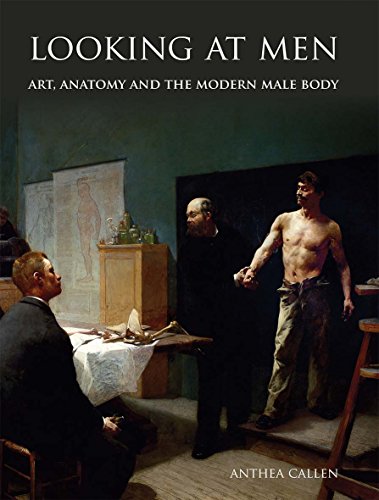
In the world of non-fiction, I enjoyed and learned a lot from Richard Holmes's group biography The Age of Wonder, on the history of science and Romanticism around the years 1800. I read the collection of essays Beyond the Face, providing new interpretations on portraiture in the history of art of the United States and beyond, and published a book review of it which you can read here as well as my blog post here where I add more about the artist Carrie Mae Weems. I also read Anthea Callen's new art history/anatomy book Looking at Men, and published an extended book review essay in Nineteenth-Century Art Worldwide, which you can read here. Right now, my bedtime read is Robert K. Massie's biography of Catherine the Great, and my subway reading is Joseph Conrad's Heart of Darkness, which I read back in college (almost 30 years ago!), but decided to revisit all these years later.

It seemed like a good idea to actually share the full list of the 30 books I've read this year. This is the order in which I finished them, and I've included the publication year in brackets, and my star rankings (5-stars is highest!) to help anyone along if they decide they want to read these. Here's to 2020 and more books to read!


  • Persuasion by Jane Austen [1818] (*****)
  • To Kill a Mockingbird by Harper Lee [1960] (*****)
  • The Age of Wonder: How the Romantic Generation Discovered the Beauty and Terror of Science by Richard Holmes [2008] (*****)
  • Beyond the Face: New Perspectives on Portraiture by Wendy Wick Reaves, ed. [2018] (****)
  • Arctic Chill by Arnaldur Indridason, trans. B. Scudder & V. Cribb [2005] (****)
  • The Blue Fox by Sjón, trans. V. Cribb [2004] (*****)
  • Rogues’ Gallery: The Rise (and Occasional Fall) of Art Dealers, the Hidden Players in the History of Art by Philip Hook [2017] (***)
  • The Assassination of Margaret Thatcher: Stories by Hilary Mantel [2014] (***)
  • The Body in Three Dimensions by Tom Flynn [1998] (***)
  • Troubling Love by Elena Ferrante, trans. Ann Goldstein [1999] (****)
  • Looking at Men: Art, Anatomy and the Modern Male Body [2018] (***)
  • Becoming by Michelle Obama [2018] (*****)
  • The Death of Mrs. Westaway by Ruth Ware [2018] (***)
  • The Body in Pieces: The Fragment as a Metaphor of Modernity by Linda Nochlin [1994] (****)
  • Serpents in Eden: Countryside Crimes by Martin Edwards, ed. [2016] (****)
  • Model and Supermodel: The Artist's Model in British Art and Culture by J. Desmarais, M. Postle & W. Vaughan, eds. [2006] (****)
  • Bloomsbury at Home by Pamela Todd [1999] (****)
  • Asymmetry by Lisa Halliday [2018] (****)
  • Duncan Grant and the Bloomsbury Group by Douglas Blair Turnbaugh [1987] (***)
  • The Child’s Child by Barbara Vine [2012] (***)
  • The Nickel Boys by Colson Whitehead [2019] (*****)
  • The Sparsholt Affair by Alan Hollinghurst [2017] (****)
  • Harm Done by Ruth Rendell [1999] (****)
  • Bacchante and Infant Faun: Tradition, Controversy, and Legacy by Thayer Tolles [2019] (****)
  • 30 Favorites Celebrating 30 Years by Stacia Lewandowski & Zaplin Lampert Gallery [2017] (***)
  • The Stonewall Reader by Jason Baumann, ed. [2019] (***)
  • Teaching in the Art Museum: Interpretation as Experience by Rika Burnham & Elliott Kai-Kee [2011] (****)
  • Losing Helen: An Essay by Carol Becker [2016] (*****)
  • The Witch Elm by Tana French [2018] (***)
  • The Word Is Murder by Anthony Horowitz [2018] (*****) 

Saturday, March 16, 2019

Review: Beyond the Face (and Carrie Mae Weems)

Earlier this month, ARLIS/NA Reviews published my short review on the new book Beyond the Face: New Perspectives on Portraiture, which was published in 2018 by the Smithsonian Institution, National Portrait Gallery, as part of its 50th anniversary celebration. Edited by curator emerita Wendy Wick Reaves, the book includes her introduction and sixteen essays by junior and established scholars on aspects of American portraiture. You can read my review here. The book truly does offer new insights into thinking about American portraiture, historical and modern/contemporary, with a particular emphasis on non-white artists and representations thereof. The essays on photography were among the most interesting, and I mentioned in the review that one scholar's take on a photograph by Carrie Mae Weems was brilliant. I thought I would engage with that a little more here.

Nikki A. Greene's essay, "Habla LAMADRE: Maria Magdalena Campos-Pons, Carrie Mae Weems, and Black Feminist Performance," focused on these two women artists, but more importantly engaged with the way that women of color have been excluded historically as makers of art from the great museum collections and exhibition programs. Weems's 2014 exhibition at the Guggenheim Museum was unprecedented, as she was the first African-American woman to have a show there. I remember the exhibition well; it was incredibly moving and powerful. Weems's photographs from her Museums series position the artist as a Ruckenfigur, displaying her body shrouded in black to the viewer as she stands outside the great cultural institutions and museums worldwide as an outsider. In her essay, Greene writes of the image you see here, Guggenheim Bilbao, 2006, as follows:
Weems journeyed to northern Spain ... to encounter the seduction of the sweeping, undulating, titanium walls of the Guggenheim Museum Bilbao, designed by Frank Gehry and completed in 1997. In the photograph Guggenheim Bilbao, Weems stands as a dark silhouette in her black, long-sleeved dress with her back to the viewer .... Weems stretches her arms outward to rest her hands on a white railing that heightens the chasm between her and the museum as water gently ripples below her. The framing of this photograph plays on the building's ship-like forms, with stern-like triangular peaks making Weems appear as if she is viewing the museum across a body of water from her own ship. Weems's serenity in the face of the immensity of the museum's presence grounds the viewer, encouraging a pause as the two ships purportedly confront each other. This moment of recognition of each other's position in space acknowledges their unreachability. (pp. 294-95)
What Greene also intimates with this ship-like allusion is the history of the transatlantic slave trade and the ongoing legacy of slavery as a hindrance to people of color, in this instance in an art world dominated by white privilege and the 1%. Greene's reading of this image is wonderfully intuitive.

The next book I'm scheduled to review for a publication is this: Looking at Men: Art, Anatomy and the Modern Male Body by Anthea Callen (2018). The book focuses on the nineteenth century. It should prove an interesting read, incorporating issues of science and medicine along with artistic practice, framed by the development of heterosexual, homosocial, and homosexual identities over the course of the century. Or so I hope!

Sunday, December 16, 2018

Books of 2018

The annual New York Times 100 Notable Books of 2018 came out a few weeks ago, and I was pleasantly surprised to discover that there were two books on the list this year that I already had an interest in: The Sparsholt Affair by Alan Hollinghurst (which I bought but haven't read yet) and Warlight by Michael Ondaatje (which I did actually read and found interesting, like a literary, Corot-like veiled-mist tale). Among the novels on this new list that intrigue me and are now on my Amazon wish list are The Witch Elm by Tana French, Asymmetry by Lisa Halliday, and The Overstory by Richard Powers. One major book not on their list because it came out afterward--and which, of course, is now on my "to read" list!--is Michelle Obama's Becoming. AA is reading it, as is my friend MT, and both are totally absorbed.

The book cover you see above reflects what I would say is the best novel I read this year, The Handmaid's Tale [1986]. Even though I have not seen the new series, I decided to step into the infamous dystopian world created by Margaret Atwood over 30 years ago, and I was enthralled. The book is fantastic and frightening; it feels so real and plausible, particularly in light of how things are going these days politically. Even better, it's beautifully written, slow even at times, the protagonist paying attention to details and inner feelings and memories in a way that is haunting to read. Atwood announced recently she is writing a long-awaited sequel, about which I'm uncertain how I feel. Part of me is curious like others to know where Offred actually went and what happened to her, but another part of me worries the sequel will be too influenced by popular culture today and won't live up to the author's own masterful exploration into this disturbing futuristic, misogynistic world. Speaking of misogyny, last year about this time I was reading Madame Bovary and I still think it was a beautifully written novel and highly recommend it to people all the time. It even topped my list of the the best novels I read between 2014 and 2017! Other great novels that I read this year included: Julian Barnes's existentially obsessive biographical novel Flaubert's Parrot [1984]; Penelope Fitzgerald's community of miserable, hateful people in The Bookshop [1978]; the sad Everything I Never Told You [2014] by Celeste Ng, which was on the NYT 2014 list; and Ruth Rendell's foray into racism and murder with Simisola [1994]. I also read this year the mid-century classic Lolita [1955] by Vladimir Nabakov, and I absolutely hated this book, not even so much for the nauseating storyline but because the writing itself drove me nuts.

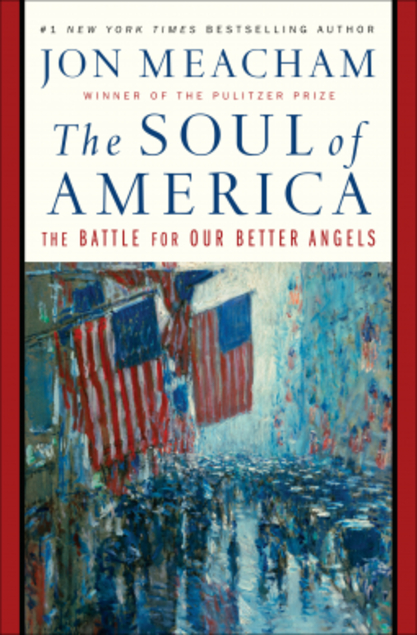
Since I wrote last year's post on Books of 2017, I have read 32 books. I finally took the time to read Sculpture: Processes and Principles [1977] by Rudolf Wittkower, with which I had familiarity but had not read in its entirety before now. It really is a fantastic overview about techniques in stone carving and modeling for anyone interested in knowing more about the great European sculptors of the past. Bridging the gap between art and biography, two of my favorites this year were Art for the Nation: The Eastlakes and the Victorian Art World [2011] by Susanna Avery-Quash and Julie Sheldon, and self-described "tranny potter" Grayson Perry's memoirs, co-written with Wendy Jones, Portrait of the Artist as a Young Girl [2006]. Another great biographical account was Richard Blanco's memoir For All of Us, One Today: An Inaugural Poet's Journey [2013], which I read after we visited the excellent exhibition of his poetry with photographs by Jacob Hessler in Ogunquit, Maine. In the realm of American history, I read Jon Meacham's new book The Soul of America: The Battle for Our Better Angels [2018], the cover of which you see here. This book was such a fascinating overview of highlights in American history from the colonial period through the 1960s, showing how so many of our great leaders, including Lincoln and FDR, enacted social change because of the influence of the people, social activists and civil rights leaders, the true "soul of America." The book is a great testament and response to the politics of today.

Right now, I'm currently reading two books. On the literary fiction side, I am finally reading Jane Austen's Persuasion, published posthumously two centuries ago. I am nearing the end and I am worried it won't have a happy ending! I'm also reading Richard Holmes's fantastic collective biography The Age of Wonder: The Romantic Generation and the Discovery of the Beauty and Terror of Science [2010], reminding us that science was not the separate discipline we perceive it to be today, but part of the exploration of the natural world along with art, literature, and music in the decades before and after 1800. This book has made for some relaxing bedtime reading, before turning in and dreaming each night...

Saturday, March 10, 2018

Top 10 Read Novels: 2014-2017

Back in September 2014, I posted highlights on the best novels I had read between the years 2010-2013. This was a “sequel” of sorts to the post I had done previously on the same topic from2005-2009. Here it is 3 1/2 years later, and I’m posting a follow-up, highlighting my favorite works of fiction that I read over the past 4 years. I’ve been meaning to write this for a few months now, but my dear friend SVH contacted me the other day about a program her library is doing, identifying favorite novels as written about by bloggers, so I’ve been inspired to catch-up on my list-making. As I noted on my previous posts, these are just the self-rated 5-star novels I read between 2014 and 2017, not that they were necessarily published during that time, although a few actually were. (And don't forget about my annual round-up of reading such as this latest post in 2017.) Here’s my 2014-2017 countdown, from 10 to 1…

10. The Girl on the Train by Paula Hawkins (2015). Anyone who commutes on trains and subways—myself included-—knows all about the experience of subtly observing other people. Others prefer the experience of looking outside the window. I do both. This book took that quotidian practice and added a twist: an affair and a murder, as witnessed by a self-professed alcoholic tragedian named Rachel. The plot clearly is indebted to Agatha Christie’s 1957 novel 4:50 from Paddington in which Mrs. McGillicuddy witnesses a murder on a train from the window of her own compartment as it passes the other one (a brilliant set-up, I might add), but Hawkins then turns this novel into a story about what it means to be a woman in a world still dominated by masculine power.
9. Emma by Jane Austen (1816). Written just over 200 years ago, Austen’s literary classic still can entertain. Emma is considered to be one of Austen’s best developed novels, and certainly the character of Emma Woodhouse is someone worth recognized as one of literature’s greatest heroines: a dedicated, kind, intelligent woman who also has ambitions, faults, and makes grave mistakes, but through these experiences finds the love she’s been unaware of having looked for all along. That said, I confess I do prefer Pride and Prejudice (1813), which I’ve read twice, and the character of Elizabeth Bennett, over Emma.
8. The Book Thief by Markus Zusak (2005). This book is supposed to be a young adult novel, but I struggle with that classification because the subject matter is a bit emotionally intense at times. When Death is your narrator, you know the story is going to be dark. Young orphaned Liesel Meminger grows up in Nazi-occupied Germany. Fascinated by books she steals them in order to learn how to read, but she also discovers through her daily actions some important, hard lessons about survival and life itself. I challenge your heart not to break near the end.
7. Life after Life by Kate Atkinson (2013). Over the past 4 years I discovered Atkinson, and I’ve since read and loved her novels Behind the Scenes at the Museum (1995), Case Histories (2004), and A God in Ruins (2015), but the first book I read by her, Life after Life, gets on this list as my favorite so far. Her writing style can seem abrupt at times, but this adds to the flow of the storyline and the quick-wittedness of some of her characters. In 1910 Ursula Todd is born and then dies; in 1910 Ursula Todd is born and survives. This is not a story about reincarnation, but simultaneous incarnations, and how the decisions we make, or are made for us, determine the lives we live.
6. The Underground Railroad by Colson Whitehead (2016). This book won the Pulitzer Prize and the National Book Award, and justifiably deserves it for its unapologetic story of American slavery and its poetic tone throughout. Whitehead’s book is a story of survival, mostly seen through the eyes of Cora, a runaway slave, but the author also adds magical realism with the creation of an actual underground railroad whose road to freedom is fraught with new experiences along the way.
5. The Mayor of Casterbridge by Thomas Hardy (1886). This is the first time I’ve ever read Hardy, and at first I wasn’t completely sure I liked it. People say he's dark, and it's true. But about halfway through the novel I realized I was reading the story of my working-class ancestors in England—not their actual lives, of course, but the essence of what their stark daily lives must have been like. No other Victorian novelist had given me that before. The story of alcoholic Michael Henchard, who in the first chapter sells his family off to the highest bidder in a drunken rage, still has the power to shock. The aftermath of that action reverberates through the novel through plot twists to the very end.
4. 1984 by George Orwell (1949). This book was so much more painful to read than I expected, not just because of what happens to protagonist Winston Smith, who dares to have independent thought, but because of the controlling life that he and others around him are forced to adopt in this dystopic classic. What has struck me about the book ever since I read it, is how the potential of what happens in the novel could actually happen today: not from socialism, however, but from capitalist corruption. Concepts like “newspeak” and “doublethink” are practically oozing out of Washington, D.C. these days, and although I would never have considered Pres. Tyrant to be Big Brother, if this level of corruption and totalitarian power that he propagates continues unchecked, that tyrannical party will eventually make our lives unlivable.
3. The Portrait of a Lady by Henry James (1881). I never thought I would say this about a novel by James, but this is actually a page-turner, but as you would imagine. Isabel Archer is another one of those great literary heroines, but I found it a struggle early on to sympathize with her because of some of her choices in life which seem immature and foolish. The first half of the book you spend the entire time getting to know her and the people around her; the second half, you can’t put it down because of how those decisions impact everyone, and how Isabel has to come to terms with the ramifications of her own choices, good or bad. 
2. Anna Karenina by Leo Tolstoy (1878), translated by Richard Pevear & Larissa Volokhonsky. “All happy families are alike; each unhappy family is unhappy in its own way.” This is one of the greatest opening lines in literature and says much about how this lengthy, but incredibly well-written, novel will play out. The mistake most have about this book is thinking the title character’s story of her illicit affair with Count Vronsky is the main storyline. In fact, there is much more going on in this book. I was found myself identifying more with the story of Levin, who tries despierately to figure out his place in life, and almost sacrifices his greatest love in the process. This book deserves to be near the top of this list, and it's only because of how the next book was written that I suspect it isn't my number 1. It took me 4 months to read and it was worth it.
1. Madame Bovary by Gustave Flaubert (1857), translated by Lydia Davis. It seems strange to me that at the top of my list are 2 infamous 19th-century novels about women having extramarital affairs. I think what drives me to rank them both so high are the stories of their passions for life and love, rather than their immorality. (I guess I am a Romantic at heart.) Earlier last year AA and I spent a few days in Rouen and Upper Normandy, France, which I think also helped me in deciding to finally turn to Flaubert for the first time and read his infamous story of Emma Bovary. This is another book where I thought I knew the storyline; I had even heard it was a boring read. Imagine my surprise when I discovered this book is one of the most beautifully lyrical I’ve ever read. The descriptions are so lush at times you feel like you’re with the characters smelling what they smell and feeling what they touch. Both Anna Karenina and Emma Bovary come to tragic ends, and the (male) authors of these novels could be accused of misogyny and taking a moral high ground in judgment of them. But it is exactly for those reasons that these books should still be read. One needs to appreciates these novels in the context of their day, but one also should discuss their messages in light of current social politics, most notably the #MeToo movement today.

Tuesday, November 28, 2017

Books of 2017

The 100 Notable Books of 2017 from the New York Times came out just before Thanksgiving...rather early this year actually, especially since Thanksgiving itself was early. I usually find a couple of books on their list that pique my interest, but I have to confess that nothing really stands out for me this year. George Saunders's Lincoln in the Bardo won the Man Booker Prize, and as his first novel it has been received well, so perhaps that will go on the list. I'm not a big fan of modern sequels to literary classics, so even though Mrs. Osmond by John Banville made it on the list, I really don't want to read someone continuing the story of Isabel Archer. Last year when I blogged about the Books of 2016, I was reading Portrait of a Lady [1881]. The first half of the book moved slowly, but was interesting; the second half, however, turned into a page-turner in a way that startled me. It's a classic, just as it is, so I think I'll skip Banville's "sequel." I should add that I've discovered two new books published this year that are not on the 100 list, but have already gone on my Amazon Wish List. They are The Sparsholt Affair by Alan Hollinghurst and Amy Tan's Where the Past Begins: A Writer's Memoir.

On last year's post, I noted some of the new books I was hoping to read. and indeed I did immerse myself in three of them. Lucy Barton's My Name Is Lucy was interesting, but I've been told her novel Olive Kitteridge is better, so I'll give that a go before passing further judgement. Julia Baird's biography of Queen Victoria was well-written and a good read, but I can't say it captured me as other biographies have in the past. I did find myself questioning Victoria and Albert's relationship in a new way, which is a testament to Baird's writing though. The third book on last year's "to read" list was Colson Whitehead's The Underground Railroad. This book was fantastic. It's painful to read at times, but it creatively weaves an imaginary actual underground railroad as a metaphor for the journey of a slave on the run, trying to find her freedom. I highly recommend it, and it certainly deserved both the Pulitzer Prize and National Book Award.

In 2017 I read 33 books. Among the more noteworthy art history books I read were the following: Florine Stettheimer: Painting Poetry [2017], the catalog to accompany the exhibition at The Jewish Museum and, currently, at the Art Gallery of Ontario; The British School of Sculpture, c.1760-1832, edited by Jason Edwards and Sarah Burnage [2017], an excellent collection of essays that explore aspects of British nationalism in sculpture (and, as an aside, includes an essay by me entitled "Before Rome: John Gibson and the British School of Art"); How to Read Chinese Ceramics by Denise Leidy [2015], partly to help my curatorial eye better understand some of the Chinese art we have in the collection at Columbia University; and A Worldly Art: The Dutch Republic 1585-1718 by Mariët Westermann [1996], an easy-to-read introduction to art and material culture during the Golden Age of Dutch painting. All that said, my favorite art book read of the year was the book cover you see here: Art as Therapy by Alain de Botton & John Armstrong [2013]. This book did a great job making me--as a trained art historian and curator--rethink what art is all about, and how art by its very nature can be used as a form of psychological and emotional therapy, and conversely how examining art can teach us about the human spirit and mind. I've recommended this book to a number of people already.


Among my favorite fiction reads this year--aside from Whitehead and James, mentioned above--was the classic 1984 by George Orwell [1949], which shocked me with its frightening poignancy even today under the current Pres. Tyrant; The Sense of an Ending by Julian Barnes [2011], which I find myself still a bit unsettled by, perhaps because I'm not pleased with how the book ended; and My Cousin Rachel by Daphne Du Maurier [1951], just so I could become familiar with the book before seeing the movie (I like Rachel Weisz, but the book was better). I also read The Mayor of Casterbridge by Thomas Hardy [1886] this year, which was my first foray into Hardy. What has struck me most about this novel has been how, of all the Victorian books I have read, this one captured best how I imagine my working-class, English, Victorian ancestors actually lived their everyday lives. I look forward to reading more of Hardy, even if he is a bit dark. Right now, however, I'm reading the book you see here: Lydia Davis's 2015 translation of Gustave Flaubert's French classic Madame Bovary [1857]. So far, I'm rather enthralled by the lush, lyrical descriptions, and it helps greatly that AA and I went to Rouen and Dieppe this past Spring, so I have a sense of the region Flaubert describes. Even though this is another one of those tragedies where you know how it ends, I look forward to continuing reading this on the subway and before bed over the next week or two...

Saturday, January 21, 2017

President Tyrant


Last night AA surprised me with dinner and tickets to see On Your Feet!: The Story of Emilio & Gloria Estefan at the Marquis Theatre on Broadway. The show was great fun. The music and dancing has you clapping, dancing, and singing along with the show. At a pivotal moment in the storyline, when Emilio’s character faces a form of discrimination as a Latino, he astutely points out that he is an American because he was an immigrant. The brief speech resounded in a round of applause. That level of happiness and satisfaction with that particular moment and with the overall show was exactly what I needed last night. I thanked AA on Facebook for the pleasant surprise, and also noted that I was taking the title of the show as a sign of upcoming positive protest and resistance, considering how it had been such a sobering, gray day in history.

I refused to watch the inauguration, joining hundreds of thousands, if not millions, of people who boycotted it as well. I did read his inauguration speech afterward, and I like how The New York Times annotated it, pointing out a few historical allusions and doing some fact-checking as well. This is, I believe, the first inauguration I have not watched since I was first able to vote in 1988. For the record, I think it’s only fair that I detail my own voting history because, as I’ve noted to friends and family over the years, although I lean Left, I’m not as ultra-left as most of these people close to me are. Case in point: in 1988, I voted for George Bush. In 1992, I did a handwritten ballot, voting for Barbara Bush as President and Hillary Clinton as Vice-President. I remember thinking at that time we needed more women in office, and that even though these two disagreed in policies, one was the severe but supportive grandmother who could take care of us, while the other was the energetic powerhouse who would get things done for us. In 1996, I voted for Bill Clinton, and in 2000 I voted for Al Gore. I voted for John Kerry in 2004, but I admit I wasn’t completely thrilled by his candidacy. Naturally I was enamored of Barack Obama and voted for him in 2008 and 2012, and this past November I voted for Populist President-Elect Hillary Clinton, which is how I shall always think of her, as if we are just waiting for her inauguration. Thinking back on those inaugurations, I remember listening enraptured to Maya Angelou reading her poem at Clinton’s inauguration (“A Rock, A River, A Tree…”), and during Obama’s first inauguration I cried with people around me as we collectively felt that storm clouds had finally started to dissipate over her heads. Not everyone I voted for over those years won the election. That is part of what happens in politics; we accept and we move on. But not this time. This time it is different.

Ever since early November 2016, my own personal form of protest has been an outright refusal to say his name, to give it any more power. His name is a ubiquitous brand that symbolizes an abuse of capitalism and power, which has infiltrated many aspects of our lives, from real estate and fashion to the entertainment industry and mass media. Since the election I refer to him only as the Tyrant, and for however long he will be in his new position, I will refer to him as President Tyrant. The word “tyrant” is appropriate in this sense. One of its definitions in the Oxford English Dictionary is “a king or ruler who exercises his power in an oppressive, unjust, or cruel manner; a despot.” Since he is in power for only about 24 hours at the time I’m writing this, it is too soon to say he already has exercised his political power despotically. However, his business practices, his history of degrading women, Muslims, and other social groups, and the despicable, vitriolic language that pours out of his mouth and on his Twitter account all demonstrate his oppressive, unjust, and cruel demonstration of authority as a human being, forget as a President. His position on women and rights for their body is particularly repulsive, and by “position” I do intentionally mean that in the most sexually aggressive way imaginable. (Jane Fonda reportedly will only refer to him now as Predator-in-Chief.) The Tyrant’s stance on these individuals and issues is about dominance against the underling, a hyperbolic, caveman-like aggression that, shockingly, reverberates with rather than repulses many people. Who are these people? The media calls them the disenfranchised white population of middle America. I see it as people who are experiencing “male panic” because the white man has been losing his identity and self-importance in our slowly-shrinking, globalized world. But are they really disenfranchised? I don’t think so. I believe these people are just terrified of change. They want to revert back to the trickle-down effect of white male wealth and power, because it makes them feel better about themselves.

It seems clear to me, from a socio-political perspective, that as GLBTQ and civil rights have increased and come to the fore as an accepted part of society at large, that as major cities have transformed into global populations of mixed races and religions, and that as women have risen in the professional work force and seek out education and rights such as equal pay, that there also has developed a “male panic” in this country and around the world in reaction to these changes. The fact is, masculinity as it has been entrenched in the human psyche for millennia has to change. White men alone can no longer and should no longer retain all the power to reinforce a trickle-down effect that leaves them exclusively in charge of the world. This is exactly what the Tyrant is doing; just look at the majority of his Cabinet nominees of older white men. I’ve been noting this issue of "male panic" verbally for years, and now I am putting in down in writing. I should note that I am not unaware of the irony of my stating this, meaning that I too am a white middle-class man. Not too long ago, my curatorial colleague and friend MA and I had lunch, and as we bantered on about the pluses and minuses of our jobs and projects she pointed out to me that at least I had a tacit choice about what it was I could or could not do because I was a white man. As a woman of Middle Eastern descent, she automatically was restricted to other opportunities in life. I was taken aback by this because, as a gay man, I have considered myself to be a minority as well. But of course look at what has happened. As I too have moved up the socio-economic strata of society and as I have aged, I am now part of this hierarchy reinforced for millennia by older white powerful men who have always held the power. This nightmare has to stop.

I’m currently reading Grayson Perry’s thought-provoking new book The Descent of Man (Allen Lane, 2016), in which he argues that society has to abandon masculinity as we have known it, because the warrior mentality is based on a structure where the top man’s successes trickle down to the least common denominator that is other people. He calls this figure/structure "Default Man." Perry proposes that this construct is anathema to the development of democracy, which is based on lateral equality for all, not a hierarchical, downward-looking, point-based reward system. What’s worse is that because this Default Man tyranny has dominated the human species for so long, society still judges itself based on this unquestioned system. Perry writes: “Our classic Default Man is rarely under existential threat; consequently, his identity has tended to remain unexamined. He ambles along blithely, never having to stand up for his rights. . . . What millennia of male power has done is to make a society where we all grow up accepting that a system grossly biased in favour of Default Man is natural, normal and common sense, when it is anything but. The problem is that a lot of men think they are being perfectly reasonable when in fact they are acting unconsciously on their own highly biased agenda. . . . The Department of Masculinity has an office staffed by Default Man in all our heads, constantly sending out unconscious memos. If Default Man approve of something it must be good, and if they disapprove it must be bad, so people end up hating themselves because their internalized Default Man is berating them for being female, gay, black, silly or wild.” (p.17)

President Tyrant is Default Man, and his followers—including the reported 53% of white women who voted for him—are blindly part of this masculinizing hierarchy that needs to end. Ultimately, I believe it comes down to higher education, where one learns not just book knowledge but the necessity and power of questioning one’s own existence so as to become a better global citizen. The Tyrant and all of his Cabinet nominees lack this education to a large extent; hence, they are so far removed from the ability to question themselves, that they can only rely on reinforcing an outdated, outmoded masculinizing system that essentially emasculates the rest of the human race. Why do it? To maintain the status quo: their power.

Another reason why I name him Tyrant is because of the lack of ethics behind his election. The OED also defines “tyrant” as: “One who seizes upon the sovereign power in a state without legal right; an absolute ruler; a usurper.” Millions of Americans—from Rep. John Lewis to the hundreds of thousands of women who marched today for their rights in Washington, D.C. and across this nation—all see the Tyrant’s election as invalid, illegitimate, immoral, and illegal. This is primarily because of email hacking and behind-the-scenes politicking by Russia to put the Tyrant in power as Putin’s puppet. But the Tyrant’s presidency is also unlawful because he has mastered the art of lying. He has used a reality-television persona to his advantage, somehow blindly convincing people across this nation that he understands the plight of the common man and woman. Yes, Working-Class and Middle-Class America: the billionaire capitalist who has done everything in his power to avoid paying federal taxes for decades and has ignored the basic human rights of his employees apparently understands your needs. This is the same man who called out Hillary Clinton for her associations with Wall Street, and then appoints as Secretary of State the CEO of Exxon/Mobil Corp., who has never held a political office before and who has business allies in Russia. The self-interest evident here is not only shocking but just repulsive. I call Bullshit on the Tyrant!


This is such a sharp contrast to the legacy of Barack and Michelle Obama that it literally hurts. The Obamas were a strong, solid family unit who brought to the White House and this country a feeling of love and respect for one another that has not happened in decades, certainly in my lifetime. Every time I would hear either of them speak, I was drawn to them anew for their intelligence and compassion, and for their consciousness of our global responsibility to the planet and to each other, no matter our race, ethnicity, religion, or sexual/gender identity. Conversely, it consistently shocked me how their critics—particularly so-called “Christians”—could judge this couple as not being American. They are one of the best examples of family values one could ever find in the United States! They are the family anyone would want to have living next door to you, that you couldn’t wait to have come over to your barbecue bringing their homemade potato salad. I remain convinced, and will always believe, that anyone who despised them did so because of racism. No one will ever convince me of anything different. Now, I’m not so blind as to think that Obama was perfect as a politician. I have said from the beginning that he is an ideologue and an academic, and perhaps in some ways he was too willing to allow his beliefs or stances on issues to be compromised in order to work with those who opposed him. He wasn’t able to resolve issues of gun violence, and perhaps the Affordable Care Act was not perfect financially or organizationally. But he did accomplish incredible things for this country, notably figuring out for the first time how all Americans could be entitled to healthcare, and rebuilding and stabilizing an economy that had fallen apart unlike any other time in history since the Great Depression. What stands out for me as the legacy of his presidency will be his humanity and his humanism. When asked what his last public statement as President to the people was, he replied, “Thank you.” He understood his role was that he worked for America. The Tyrant instead has convinced America that it's working for him. I take great comfort knowing that history will see Obama as one of the most admired and respected Presidents in our history, specifically as an individual if not politically. (Some links here here and here to my past posts about the Obamas and their two inaugurations)

My own particular grandstanding about the Obamas, then, perhaps also explains what happened to poor Hillary and why she didn’t win the election. It’s sad to write “poor Hillary.” Critics who detested her of course would be reviled by any form of sympathy toward her, considering her a criminal for her email-related treasonous actions, let alone whatever else she may have done in her deep dark past (because the Tyrant’s record is spotless, apparently). Hillary’s supporters likely would react against this phrase as well, pointing out that she won the popular vote by over 3 million, something no other presidential candidate has ever done in our history. All that may be true for both sides. However, I say “poor Hillary” because the Obama legacy was something Hillary simply could not live up to. We Democrats were blinded by our admiration for the Obamas, for their charisma and charm and humanist spirit. Poor Hillary was certainly qualified to be President, and she had an active demonstrated professional record of understanding what it would take to be President. But We Democrats just didn’t “feel” the same way about her as we did about Obama. And for that we should be ashamed of ourselves.


I voted for Populist President-Elect Hillary Clinton because I believed she was without a doubt a better candidate for President than the Tyrant. And after the coup of this election, I am even more in awe of her ability to maintain grace under pressure, to still come out to greet the people with a smile and let go of all the "nasty" energy he propagated about her. She was not kidding when she said we take the high road and not to succumb to the name-calling and rabble-rousing. I admire her more now than I ever did before. And, with all due respect to We Democrats, I think this is part of our mistake as to why she lost. We Democrats just got a little too lazy and comfortable for own good. With all the great reforms and civil liberties—gay marriage, women’s health rights, labor rights in the work force, and so on—the neo-liberal, bourgeois Left (myself included) got a little too comfortable with our universalizing sense of good will. We relaxed with our chai lattes and kale salads, our iPhones and tablets, and our easy-going, democratized, gender-neutral lives. The disenfranchised in rural America and elsewhere yanked the carpet out from beneath us, and we landed hard on our asses. We took for granted that all these things that we had struggled to attain were a done...wipe your hands clean...and we forgot that the ongoing battle for social reform and humanism never stops. How did we miss this?! The fight for women’s equality dates from over a century ago, when they were first given the right to vote, and it took until 2016 for a woman to become the first female candidate for President from a major political party. She didn’t win, which we can understand rationally, but now in 2017 under the Tyrant there is a backlash and genuine threat that the rights of these same women, and everyone else, can be overturned any day now. I have never been an actively political person, but I am mobilizing myself psychologically to begin to protest and fight for our human rights the minute the Tyrant and his Cabinet begin to remove these rights we have attained.

I may seem like a hypocrite in that I’ve made this statement but I did not join the women’s march. I am proud to know so many who trekked to DC and marched in the City today. But as I’ve told them all I’ve chosen not to do this myself because I feel as if I need to wait and see something start to happen before I protest. Perhaps that seems like an excuse, or I’m fooling myself. But I think one of the reasons why I am waiting is because I feel right now that I have had to learn to accept something over which I am not happy and over which I ultimately had no control. In addiction recovery and other forms of therapy, one learns that sometimes you have to accept things you cannot change. The results of the election have been a grieving process. I have been mourning for months, from the tears that streamed down my face at 2am after the election, through stages of anger and disbelief, and now heading toward acceptance. Regardless of how I feel about the results of this election, I do have to accept that the Tyrant is now President because this is how our democratic process works. And even though I refused to watch his inauguration and am personally miserable about this, I have to respect the peaceful transfer of power as established by our forefathers as a form of patriotism. I even have some tiny glimmer of hope that his actions may not be as detrimental or horrific as We Democrats fear. This doesn’t mean I’ve given up. It means I’m waiting and strategizing.

I want to end this tirade of a post by noting one final particular point. I’m not saying that poor Hillary should have won because we would have been better off. I’m not even saying that the Tyrant unconditionally will be the worst President we have ever had. What I am saying is that I am afraid of this Default Man, his mentality and his actions that have to change with an emphasis globalism and world peace, not insular America first. I am terrified by the Twitter wars, his agonizing defensiveness, the walls (concrete and imaginary), and the blind-fear these men are propagating as neo-McCarthyites, decrying the America as “carnage” and claiming they will make America great again. But by whose standards? By standards based on fear and isolationism and hatred and bigotry? That is not a great America; that is an America I want to change, immediately. Get On Your Feet indeed. Right now.

Sunday, January 1, 2017

Happy 2017!

Happy New Year! Is it really 2017 already?!?! Last year, AA and I had a quiet NYE in and spent NYD at the movies and roaming through the City. This year, we went to a nice dinner party with AG+GH at AR's new condo in Hell's Kitchen. Watching the festivities on TV, we talked about how fortunate we were to live in a City where all the Times Square festivities were just a few blocks away from us...the center of a Universe at a particular moment in time year after year!...and how we had the luxury of deciding to avoid all of that insanity in order to toast in the new year with our own bottle of bubbly! It was a relaxing, laid-back evening; AA and I even crashed there. As a result, we have been having a very lazy day today. The highlight of the morning was starting off the new year with a delicious cinnamon-raisin bagel with cream cheese. It was so delectable after all the imbibing the evening beforehand. I hope that bagel sets the tone for the year ahead. Knowing the upcoming inauguration is the next major news event in all our lives, we will definitely need lots of tasty bagels to make us feel better.

If you read this blog on the Web at bklynbiblio.blogspot.com, rather than via email or reader software, you will notice I've modified the look with new fonts and colors, and some fun wallpaper of books on shelves. I think it plays well with the "biblio" part of this blog. In that spirit, the picture above is a snapshot I took of some of my recent book acquisitions that I hope to start reading as 2017 unfolds. (One of them was my Christmas present from the godchildren AEOB!)

To all the bklynbiblio readers out there...Happy 2017!

Monday, December 26, 2016

Books of 2016

I'm a little late writing this annual post. Although the 100 Notable Books of 2016 came out from in New York Times a few weeks ago, I've been incredibly busy (including a London trip), so I've only now had a chance to catch up on my blogging about this and other things. Running through their annual list, there are a few novels that definitely caught my eye. I've heard a number of positive things about The Underground Railroad by Colson Whitehead and it has also made it onto the NYT top 5 books of the year list, so that is going onto my Amazon Wish List. From the 100 list I've also added the 2016 novels The Life-Writer by David Constantine, Nutshell by Ian McEwan, and Elizabeth Strout's My Name Is Lucy Barton. I have never read anything by these authors before, so I'm not sure if these will be good "firsts" for me to read or not, but these all seem like things I would want to read. In non-fiction I've added Simon Schama's The Face of Britain: A History of the Nation Through Its Portraits (which was associated with a 2015-16 exhibition at the National Portrait Gallery, London, which unfortunately I missed), and Richard Tomb's The English and Their History. As if my Anglophilia weren't obvious enough, I should mention at this point that after the 100 list came out, there was a review for Julia Baird's new biography of Queen Victoria, which I immediately put on my list. Imagine my pleasant surprise with I received it as a Christmas gift from my godchildren, the AEOBs (THANK YOU!!!).

Every year around Thanksgiving I read a major work of literature. Last year, as I was writing about the Books of 2015, I was reading Anna Karenina, which was an incredible book. I think what surprised me most about that novel was that the story of Levin and Kitty actually felt more engaging than that of Anna and Vronsky, not just because of their love story but also because of the social reforms and anxieties Levin goes through to understand his purpose in life. This year I'm reading the book you see above: Henry James's Portrait of a Lady [1881]. So far it's interesting, but it's no Anna Karenina or Middlemarch.

This past year I read 37 books. My longer commute to & from work each day since I moved to Jersey City has definitely given me more time to read on the subway (assuming I actually can get the book out of my bag and read, as sometimes the trains are just too crowded). Among the noteworthy art history books that I read this year, the following stand out: Landscape and Western Art by Malcolm Andrews [1999], a good introductory survey to the history and stylistic developments of landscape painting; Susan Sontag's On Photography [1977], which admittedly now seems a bit dated but still has some interesting ideas; and a few of the short, focused-topic art books published by the National Gallery in London, such as A Closer Look: Techniques of Painting by Jo Kirby [2011], which are excellent overviews with great detail images. In the art-biography realm, I read a few noteworthy things this year, including the book you see here on Romaine Brooks by Cassandra Langer [2015], an excellent story of the lesbian modernist painter, and a journalistic-style biography of Anthony Blunt by Miranda Carter [2001], a man who was Head of the Courtauld Institute and Keeper of the Royal Collection, had tea with the Queen Mother one day, then was exchanging government secrets as a Soviet spy another day, and later in the evening having sex with a tradesman lover, all while writing his latest book on Poussin--quite a life story!

Wrapping up highlights of fiction reads this year, in addition to Anna Karenina my favorite novels included: Kate Atkinson's A God in Ruins [2015], her sequel to Life After Life which I loved, although this time the story is about Teddy and not his sister Ursula, and it takes some interesting turns as the story(ies) unfold; The Girl on the Train by Paula Hawkins [2015], which was a great page-turner (note: I have not yet seen the movie); and the autistic-mystery story The Curious Incident of the Dog in the Night-Time by Mark Haddon [2003], that was admittedly tedious after a while but captured so well the mindset of the boy's state of mind--I even made AA read it, and he agreed with me. I also did read this year All the Light We Cannot See by Anthony Doerr [2014], which was on the 2014 list; while the story and writing were quite good, I really could not stand the two-page chapters, which I felt broke up the overarching storyline too much and felt choppy then overall.

Finally, I cannot close this post without mentioning that I read (for the third time) Virginia Woolf's A Room of One's Own [1929]. This is a great, classic essay not just about being a woman in history and literature, but about how a writer, any writer, needs a room of one's own to read, to think...to write.  I am fortunate that I do have a room of my own to do this very thing, but ironically this evening I am writing this post at the dining room table, where a candle is lit beside my laptop, illuminating my peripheral vision with its tall flame and infiltrating my nostrils with its sweet scent of winter spice. On the other side of me is the dishwasher running, the sound of the rushing water soothing me as I write this post. Perhaps the Room of One's Own sometimes can just be the space which you make for yourself, in which to find the peace of mind you need in order to write.

Tuesday, September 27, 2016

Gibson Exhibition and Essays

bklynbiblio readers may recall that my doctoral dissertation was on the British sculptor John Gibson (1790-1866), about whom I have blogged a few times over the years. (The image you see here is a ca. 1850 portrait of Gibson by Edwin Landseer, from the collection of the Royal Academy of Arts in London.) My dissertation was the first in the United States--and, I believe, in the United Kingdom--on the artist. Since I finished and defended, I've been working on spin-off essays. One of these was published last December, focusing on Gibson's interest in reproductive media such as prints, statuettes, and cameos as a way to disseminate the classicism for modern audiences.

Last week another essay of mine, entitled "The Sculptor, the Duke, and Queer Art Patronage: John Gibson's Mars Restrained by Cupid and Winckelmannian Aesthetics," was released in the new book Rome, Travel and the Sculpture Capital, c.1770-1825. The book was edited by my colleague Tomas Macsotay, whom I met years ago when we were both in Leeds on different fellowships. This latest essay may seem familiar to some as I have presented different versions of the subject at conferences in Montreal and Storrs, Connecticut. This is standard practice, as it allows for opportunities to "test the waters," so to speak, and see how arguments are received by peers before publishing them. I reread my essay on the subway today and, while I think it still holds up, I confess my chronic (obsessive?) need to re-edit my own work makes me wish I had changed a few things. For instance, I think that in a revised version I would likely not be so "all"-encompassing in certain parts, and qualify matters by saying things like "selective" and "most" instead. Nevertheless, I am hopeful that the essay is a valuable contribution to the literature on the homoerotics of neoclassical sculpture, and that it will add to an increased appreciation on Gibson himself.

Later this year I have another Gibson essay coming out in the book The British School of Sculpture, c.1760-1832. This forthcoming essay relies more on biography and art-historical interpretation to consider the origins of Gibson's training and career before he moved to Rome in 1817 and set up a studio where he lived the rest of his life. That essay should be released around the time I go to a planned study day on Gibson in mid-December. This meeting (details are still under wraps) will be held in association with the new exhibition John Gibson RA: A British Sculptor in Rome, which opened a few weeks ago at the Royal Academy in London. Among the works on display is this one: The Meeting of Hero and Leander, ca. 1842, plaster (Collection: Royal Academy). This exhibition commemorates the 150th anniversary of Gibson's death, but surprisingly it is also the first monographic exhibition of Gibson's work since he died in 1866. Because he had bequeathed a substantial sum of money and numerous plaster casts and drawings to the RA, perhaps there never was a need to hold an exhibition in his memory as his bequest led to the opening of the Gibson Gallery to allow visitors and students to learn directly from his classical figures from the nineteenth century. But of course no one from his day foresaw the decline of classicism and the rise of abstraction, so that by the 1960s it is not surprising to know that the Gibson Gallery was taken down and the works scattered about and kept in storage.

This new exhibition has been curated by my colleagues Annette Wickham and Anna Frasca-Rath. There is a small publication, but to date I have not seen it, or the show, so I cannot comment on them. Anna (who completed her dissertation on Gibson in Vienna about a year or so after me) also has spear-headed the beautifully-designed online digital project The Gibson Trail, which provides images of his works with short essays, as well as a map outlining a 6-mile circle in London where one can view examples of his sculptures at places such as Westminster Abbey, the Tate, Buckingham Palace, and of course the RA. It's all quite impressive. In fact, I admit I'm a little envious of what they've accomplished. When one works so hard on a project, particularly a monographic project, one often becomes possessive over their individual. As a result it is difficult to acknowledge that one doesn't "own" that artist and that others are allowed to do work on him/her as well. In fact, they likely are doing equal (or even better!) work than oneself. So, inevitably, there can be a feeling of competition among us. (Some academics relish in this competition; these same academics also need serious therapy.) That said, one hopes that we still celebrate our collective achievements, because we are all working on the belief and spirit that this artist's masterpieces deserve reexamination and his career reevaluated and triumphed for what he accomplished at a particular moment in time. I am looking forward to seeing this exhibition and participating in the upcoming programs later this year. It will be a great opportunity for all the "Gibsonites" to come together and have a collegial meeting of the classical minds.

Wednesday, June 22, 2016

And we're back...


It was comforting and reassuring to have had a few people reach out to me over the past couple of months asking, rather exuberantly, "Why aren't you blogging?!" I guess I did leave people hanging with London, implying more was coming. Admittedly, when I was in London that week, I had every intention of sharing more about that trip. But then the proverbial you-know-what hit the fan at work and it knocked some of my plans out of whack. Some of you will understand right away what I'm talking about, but for others who don't, you can read about it here ... or here ... or ... you get the picture. (No update on the whole thing, I'm afraid. I imagine I'm still unofficially-officially unable to comment.)

But since then, life has continued rather well. I turned 46 (egads!). We had a very fun house re-warming party (because since my arrival in AA's abode, I have re-warmed it!). We went to Florida to visit family, then we had an amazing vacation to Mexico City, and I recently went to Portland (Maine) for work. The job itself, of course, has continued with numerous things taking place, aside from the above-mentioned drama. And I've been writing.

I admit I contemplated whether I should blog anymore. With over 500 posts covering almost 7 years, what more could bklynbiblio possibly say? (Please...you KNOW I always have something to say!) It is true that the "old" days of blogging in general have dissipated. The first "weblog" dates from 1997, so it's now 19 years in. But do people actively read blogs anymore? I actually do still read a few, and you can see the links on this blog, but in general I have a tendency to binge-read them, not read their posts regularly. I don't think, however, that most people active read blogs as they used to. What seems to have happened is that as a plethora of information on the Internet has exploded over the past few years, no one can process anything more than a simple paragraph of "facts" (quotation marks intentional) in one quick read. Reading, let alone writing, an essay online is simply beyond what most people can process or even want to process anymore.

All this made me question if writing new blog posts merited anything. As I said in the beginning, it was absolutely delightful to know that some people missed the posts. (Thank you, AA, PR, JAM, PC, and others.) But does blogging on its own provide the same important outlet for news and general information as it once did? Social media has exploded in creating a multiple-platform means in which to convey "facts" (quotation marks still intentional). In other words, if we have YouTube, apps, notifications, and so on, do we actually need full-text information at all? Curiously, this isn't a situation faced only by bloggers. Newspapers are facing it too, as demonstrated by the fact that they continue to lay off full-time reporters because no one wants to read, or has the time to read, actual reporting anymore.

But this blog isn't really about news like our conflicts with the Islamic State, Zika, terrorists, or the Presidential campaign. This blog has been about the arts in its broadest context, filled with personal reviews and original works of art, interviews and travelogues, and "best of" annual recaps. So it does still serve a purpose. What has changed, however, is me in that I now utilize social media more than this blog to disseminate information. My Instagram and Twitter accounts are both bklynbiblio, for instance. Therefore, if one really wants to keep up with bklynbiblio, apparently one has to follow not just this blog but all my social media outlets!! And if the very idea of doing that infuriates, upsets, or even disheartens you, then you're not alone. I feel the same way! It is, quite frankly, exhausting. Seriously.

Perhaps part of the problem is that we are inundated by the insane drama of Trump-Clinton-Sanders-Rubio-Cruz-whothehellcaresanymore...non-stop, 24/7. Perhaps it is because innocent people are being slaughtered by unbalanced individuals who, instead of being encouraged to get mental health therapy, are allowed to buy assault rifles and take our their anger by shooting whomever they like, and we also hear about it 24/7. Perhaps it is something simpler, that I'm now post-45 and my eyes tire more easily from staring at computer screens, but I can't help checking Facebook one more time. My new, longer commute from NJ means I read many more print books each day, which is great, as I'm reminded how much more enjoyable that active form of reading is for me than ever reading online (even if I have to prop a book on someone's head in the subway to read it!). Worth mentioning at this precise juncture, then, is one of those books I have read on the subway: Jonathan Crary's 24/7: Late Capitalism and the Ends of Sleep. This erudite, short text outright warns us that we need to stop letting corporations control our lives through these online gadgets and media. Their ever-growing capitalist intent fools us into thinking we need the latest technology in order to stay in touch, and that if we aren't online all the time we will miss something important. Hence, the end of sleep, and the utter exhaustion that we are all feeling more and more every single day. (Read the book. It's worth it.)

What I have discovered about myself (and I'm sure others feel this way) is that I struggle between my constant use of various media platforms (as both a browser and a poster), and my desire to pull away from all of them because I can tell how much these various media outlets are exhausting me. And I hope that the latter part of that struggle is winning out. I consciously now try to live "in the moment." I realize that is incredibly cliche, and the quotation marks here are also intentional, but this time not for a negative reason. I really do mean "in the moment." I find myself more and more actually looking at people, admiring who they are and wondering about the lives they live. I look around at buildings and bushes and bodies of water and try to notice what makes each element in life unique or the same. I touch textiles and woods and metals to try to understand what they feel like. I listen for birds singing in trees. I gaze at paintings and walk around sculptures, simply to take in the beauty of what artistic creation. And I actually have grinned when I realize that I have stopped to smell lilacs, jasmine, and, yes, roses. And they smell divine.

Of course writing this blog post right now may seem contradictory to everything I've just written. But not really, because ultimately I've always perceived myself as a writer, and for me this is how I communicate my thoughts and feelings about all these things. So, yes, we are back on the blog! I can't promise how often I will be posting, or whether I will be posting things like I have in the past. But you can be sure: "writing" in some format or another is taking place, simply because living is happening off-line.

Saturday, January 23, 2016

First Snowstorm: 2015-2016 Winter

Unwarmed by any sunset light
The gray day darkened into night,
A night made hoary with the swarm
And whirl-dance of the blinding storm,
As zigzag wavering to and fro
Crossed and recrossed the winged snow:
And ere the early bedtime came
The white drift piled the window-frame,
And through the glass the clothes-line posts
Looked in like tall and sheeted ghosts.
-- John Greenleaf Whittier, Snow-Bound: A Winter Idyl (1866), lines 31-40.

Last Sunday was our first snowfall, and today we most definitely have been hit with our first snowstorm of the season. As of yesterday they were saying possibly 8-10 inches. The latest estimate is now 24-28 inches, but it is slowing down now. I went out for a walk a few hours ago and it was blizzard-like; I was walking in snow drifts up to my knees. I actually found it exhilarating and couldn't stop laughing, although after walking around for a few blocks I was super cold and wet, and headed back inside. The picture you see here I took this afternoon from AA's loft window in Jersey City, where we have been hunkered down and he has been dealing with a cold.

The quotation of poetry above, however, has been a personal touch to my day. I recently rediscovered on my bookshelf an 1898 edition of the poetry of Whittier, a book I long have treasured because it belonged to my Nana when she was in elementary school in 1915. Her name is written in her hand on the inside cover. Ages ago, I had read Whittier's poem when I was in school, and it has remained one of my favorite American poems. Having grown up in NY/NJ, snow has always been part of my life, and I find the descriptions of the snowstorm to be so beautifully written. But even more rewarding are Whittier's poetic memories of his family members, each of whom he describes recounting their own past lives, all while a snowstorm brews outside. The literary layering of Whittier in the 1860s writing a poem to his niece that recounts his own memories of his family (and visiting guests), who entertain one another with stories of their own lives, makes this poem a heart-warming paean to history, family, narrativity, and how nature has the power to remind us of our connection to the earth and the seasons. If you haven't read this poem before, I highly recommend it. To learn more about Whittier and the history of the poem, click here.