Showing posts with label art. Show all posts

Tuesday, December 31, 2019

Books of 2019

This morning, AA said to me by text, "Aren't you going to blog about your Books of 2019?" And so here I am doing it, while he's on an airplane heading back home so we can celebrate New Year's Eve just in time with a glass of prosecco. Normally I write this post soon after the annual 100 Notable Books from The New York Times comes out, but we were away at that time and . . . well, that thing called daily life just kept delaying things. Over the last few years, though, I've discovered that not all of the books on the list are among my favorites once I actually read them. Case in point: last year, Tana French's The Witch Elm and Lisa Halliday's Asymmetry were on their list, and I was eager to read them, but to be frank I didn't find either book to be "best" reads. In my opinion, French's book was too dense with excessive details for that type of book (mystery/thriller), so by the time you started getting into the actual mystery, the suspense wasn't there for me. Halliday's book, in turn, was creative as a writing experiment (two novellas that seem to have nothing to do with one another, then somehow become linked in a coda-story), so it wasn't as if I didn't like the book, but it just wasn't what I would consider to be a favorite. All that said, I had commented last year about looking forward to reading Michelle Obama's autobiography, and that was great--inspiring even! I guess I'm biased, but what made it such an enjoyable read was that it felt like she was talking to you the entire time, telling you not just about her life but the lessons she learned from her experiences.

The image you see above is undoubtedly my favorite novel that I read this year. Colson Whitehead's new book was published in 2019 and I bought and read it immediately. I loved The Underground Railroad, as painful as that book was to read, so while The Nickel Boys wasn't "magically realistic" as components of his previous book was, the pain and anguish, and the lessons we have to learn still about America's history of racism and abuse of power, were remarkably strong with completely different types of stories. Whitehead has this uncanny ability in these two books to create a narrative voice that allows you to feel the pain of his characters, but still keep yourself at a distance so you can process it objectively. I see him as an heir to Toni Morrison in some ways. I have no doubt that these two books will be models of a new American literature for generations to come, much the same way Harper Lee's To Kill a Mockingbird has been. That was a book I also finally read earlier this year for the first time. I discovered the Icelandic author Sjón this year with his fairy-tale-with-a-twist The Blue Fox, and I thoroughly enjoyed, both as a mystery and a meta-novel, Anthony Horowitz's clever The Word Is Murder. I should add that a year ago when I did my last books post, I was worried that Persuasion wasn't going to end well, but I'm pleased to say that it was in fact probably my favorite Jane Austen novel of them all. I read somewhere that if you loved Pride and Prejudice as a young person, Persuasion is the book you read as a mature adult to find satisfaction in her writing. It is so true.

In the world of non-fiction, I enjoyed and learned a lot from Richard Holmes's group biography The Age of Wonder, on the history of science and Romanticism around the years 1800. I read the collection of essays Beyond the Face, providing new interpretations on portraiture in the history of art of the United States and beyond, and published a book review of it which you can read here as well as my blog post here where I add more about the artist Carrie Mae Weems. I also read Anthea Callen's new art history/anatomy book Looking at Men, and published an extended book review essay in Nineteenth-Century Art Worldwide, which you can read here. Right now, my bedtime read is Robert K. Massie's biography of Catherine the Great, and my subway reading is Joseph Conrad's Heart of Darkness, which I read back in college (almost 30 years ago!), but decided to revisit all these years later.

It seemed like a good idea to actually share the full list of the 30 books I've read this year. This is the order in which I finished them, and I've included the publication year in brackets, and my star rankings (5-stars is highest!) to help anyone along if they decide they want to read these. Here's to 2020 and more books to read!


  • Persuasion by Jane Austen [1818] (*****)
  • To Kill a Mockingbird by Harper Lee [1960] (*****)
  • The Age of Wonder: How the Romantic Generation Discovered the Beauty and Terror of Science by Richard Holmes [2008] (*****)
  • Beyond the Face: New Perspectives on Portraiture by Wendy Wick Reaves, ed. [2018] (****)
  • Arctic Chill by Arnaldur Indridason, trans. B. Scudder & V. Cribb [2005] (****)
  • The Blue Fox by Sjón, trans. V. Cribb [2004] (*****)
  • Rogues’ Gallery: The Rise (and Occasional Fall) of Art Dealers, the Hidden Players in the History of Art by Philip Hook [2017] (***)
  • The Assassination of Margaret Thatcher: Stories by Hilary Mantel [2014] (***)
  • The Body in Three Dimensions by Tom Flynn [1998] (***)
  • Troubling Love by Elena Ferrante, trans. Ann Goldstein [1999] (****)
  • Looking at Men: Art, Anatomy and the Modern Male Body [2018] (***)
  • Becoming by Michelle Obama [2018] (*****)
  • The Death of Mrs. Westaway by Ruth Ware [2018] (***)
  • The Body in Pieces: The Fragment as a Metaphor of Modernity by Linda Nochlin [1994] (****)
  • Serpents in Eden: Countryside Crimes by Martin Edwards, ed. [2016] (****)
  • Model and Supermodel: The Artist's Model in British Art and Culture by J. Desmarais, M. Postle & W. Vaughan, eds. [2006] (****)
  • Bloomsbury at Home by Pamela Todd [1999] (****)
  • Asymmetry by Lisa Halliday [2018] (****)
  • Duncan Grant and the Bloomsbury Group by Douglas Blair Turnbaugh [1987] (***)
  • The Child’s Child by Barbara Vine [2012] (***)
  • The Nickel Boys by Colson Whitehead [2019] (*****)
  • The Sparsholt Affair by Alan Hollinghurst [2017] (****)
  • Harm Done by Ruth Rendell [1999] (****)
  • Bacchante and Infant Faun: Tradition, Controversy, and Legacy by Thayer Tolles [2019] (****)
  • 30 Favorites Celebrating 30 Years by Stacia Lewandowski & Zaplin Lampert Gallery [2017] (***)
  • The Stonewall Reader by Jason Baumann, ed. [2019] (***)
  • Teaching in the Art Museum: Interpretation as Experience by Rika Burnham & Elliott Kai-Kee [2011] (****)
  • Losing Helen: An Essay by Carol Becker [2016] (*****)
  • The Witch Elm by Tana French [2018] (***)
  • The Word Is Murder by Anthony Horowitz [2018] (*****) 

Sunday, December 16, 2018

Books of 2018

The annual New York Times 100 Notable Books of 2018 came out a few weeks ago, and I was pleasantly surprised to discover that there were two books on the list this year that I already had an interest in: The Sparsholt Affair by Alan Hollinghurst (which I bought but haven't read yet) and Warlight by Michael Ondaatje (which I did actually read and found interesting, like a literary, Corot-like veiled-mist tale). Among the novels on this new list that intrigue me and are now on my Amazon wish list are The Witch Elm by Tana French, Asymmetry by Lisa Halliday, and The Overstory by Richard Powers. One major book not on their list because it came out afterward--and which, of course, is now on my "to read" list!--is Michelle Obama's Becoming. AA is reading it, as is my friend MT, and both are totally absorbed.

The book cover you see above reflects what I would say is the best novel I read this year, The Handmaid's Tale [1986]. Even though I have not seen the new series, I decided to step into the infamous dystopian world created by Margaret Atwood over 30 years ago, and I was enthralled. The book is fantastic and frightening; it feels so real and plausible, particularly in light of how things are going these days politically. Even better, it's beautifully written, slow even at times, the protagonist paying attention to details and inner feelings and memories in a way that is haunting to read. Atwood announced recently she is writing a long-awaited sequel, about which I'm uncertain how I feel. Part of me is curious like others to know where Offred actually went and what happened to her, but another part of me worries the sequel will be too influenced by popular culture today and won't live up to the author's own masterful exploration into this disturbing futuristic, misogynistic world. Speaking of misogyny, last year about this time I was reading Madame Bovary and I still think it was a beautifully written novel and highly recommend it to people all the time. It even topped my list of the the best novels I read between 2014 and 2017! Other great novels that I read this year included: Julian Barnes's existentially obsessive biographical novel Flaubert's Parrot [1984]; Penelope Fitzgerald's community of miserable, hateful people in The Bookshop [1978]; the sad Everything I Never Told You [2014] by Celeste Ng, which was on the NYT 2014 list; and Ruth Rendell's foray into racism and murder with Simisola [1994]. I also read this year the mid-century classic Lolita [1955] by Vladimir Nabakov, and I absolutely hated this book, not even so much for the nauseating storyline but because the writing itself drove me nuts.

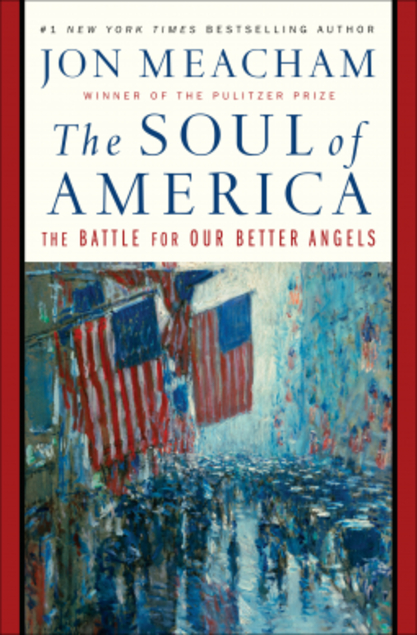
Since I wrote last year's post on Books of 2017, I have read 32 books. I finally took the time to read Sculpture: Processes and Principles [1977] by Rudolf Wittkower, with which I had familiarity but had not read in its entirety before now. It really is a fantastic overview about techniques in stone carving and modeling for anyone interested in knowing more about the great European sculptors of the past. Bridging the gap between art and biography, two of my favorites this year were Art for the Nation: The Eastlakes and the Victorian Art World [2011] by Susanna Avery-Quash and Julie Sheldon, and self-described "tranny potter" Grayson Perry's memoirs, co-written with Wendy Jones, Portrait of the Artist as a Young Girl [2006]. Another great biographical account was Richard Blanco's memoir For All of Us, One Today: An Inaugural Poet's Journey [2013], which I read after we visited the excellent exhibition of his poetry with photographs by Jacob Hessler in Ogunquit, Maine. In the realm of American history, I read Jon Meacham's new book The Soul of America: The Battle for Our Better Angels [2018], the cover of which you see here. This book was such a fascinating overview of highlights in American history from the colonial period through the 1960s, showing how so many of our great leaders, including Lincoln and FDR, enacted social change because of the influence of the people, social activists and civil rights leaders, the true "soul of America." The book is a great testament and response to the politics of today.

Right now, I'm currently reading two books. On the literary fiction side, I am finally reading Jane Austen's Persuasion, published posthumously two centuries ago. I am nearing the end and I am worried it won't have a happy ending! I'm also reading Richard Holmes's fantastic collective biography The Age of Wonder: The Romantic Generation and the Discovery of the Beauty and Terror of Science [2010], reminding us that science was not the separate discipline we perceive it to be today, but part of the exploration of the natural world along with art, literature, and music in the decades before and after 1800. This book has made for some relaxing bedtime reading, before turning in and dreaming each night...

Sunday, October 7, 2018

Art Libraries at the Rijksmuseum


I was quite honored to be among the guest speakers for the recent 8th International Conference of Art Libraries, held at the Rijksemuseum in Amsterdam (facade of the building seen here). The conference itself had some very interesting papers and it helped inspire a few ideas in my head, which is always a good thing. I was surprised that so many people from the U.S. were presenting, but most of the audience members came from throughout Europe. Two speakers even presented about art libraries in Japan, which quickly reminded me that we need to stop thinking so Euro-centrically about all these things. 

My co-presenter (Melanie Wacker, also at Columbia; photo at left of us taken by Ann Lindell) and I gave a talk entitled "From Curatorial Files to Linked Open Data: Cataloging the Art Collection at Columbia University," discussing background on the art collection my department oversees and how our management of metadata and cataloging moved from traditional paper files to a metadata schema that we were then able to convert to MARC so as to be published in the Columbia Libraries online catalog, to convert for use in the soon-to-be-launched Digital Art Properties collection, and then used as the basis for a linked open data project that was a grant to test art for use in BIBFRAME, the future XML-based form of cataloging established by the Library of Congress that eventually will replace MARC. I realize much of what I just wrote there may seem like gibberish to anyone but IT specialists and librarians, but the point is that up until recently no one could search anything in the Columbia art collection, whereas now the art collection is now not just discoverable but available in digital format (highlights anyway) and is being used to establish new models of excellence for ways of cataloging art by libraries in the future. It's been a team effort that we are all proud of.

It was quite humbling to be presenting at the Rijksmuseum, one of the grandest collections of art in the world. This was my second visit there, the first time two years ago when AA and I traveled to Amsterdam. On this trip we also made a visit to The Hague where we visited the Maurithuis and I truly fell in love with Vermeer's Girl with a Pearl Earring, one of those examples of art where you have to see it in person to truly admire its majesty in terms of lighting, brushstroke, and overall composition. She is more modern in her appearance than I ever realized. We also visited Delft, Vermeer's home, which was an absolutely charming city. I also had an opportunity to visit the Hermitage Amsterdam and see the Neoclassicism exhibition with works from St. Petersburg; the Canova sculptures were just exquisite. I'm in London right now writing this, with a few other things to do here before heading home in a couple of days.

Tuesday, November 28, 2017

Books of 2017

The 100 Notable Books of 2017 from the New York Times came out just before Thanksgiving...rather early this year actually, especially since Thanksgiving itself was early. I usually find a couple of books on their list that pique my interest, but I have to confess that nothing really stands out for me this year. George Saunders's Lincoln in the Bardo won the Man Booker Prize, and as his first novel it has been received well, so perhaps that will go on the list. I'm not a big fan of modern sequels to literary classics, so even though Mrs. Osmond by John Banville made it on the list, I really don't want to read someone continuing the story of Isabel Archer. Last year when I blogged about the Books of 2016, I was reading Portrait of a Lady [1881]. The first half of the book moved slowly, but was interesting; the second half, however, turned into a page-turner in a way that startled me. It's a classic, just as it is, so I think I'll skip Banville's "sequel." I should add that I've discovered two new books published this year that are not on the 100 list, but have already gone on my Amazon Wish List. They are The Sparsholt Affair by Alan Hollinghurst and Amy Tan's Where the Past Begins: A Writer's Memoir.

On last year's post, I noted some of the new books I was hoping to read. and indeed I did immerse myself in three of them. Lucy Barton's My Name Is Lucy was interesting, but I've been told her novel Olive Kitteridge is better, so I'll give that a go before passing further judgement. Julia Baird's biography of Queen Victoria was well-written and a good read, but I can't say it captured me as other biographies have in the past. I did find myself questioning Victoria and Albert's relationship in a new way, which is a testament to Baird's writing though. The third book on last year's "to read" list was Colson Whitehead's The Underground Railroad. This book was fantastic. It's painful to read at times, but it creatively weaves an imaginary actual underground railroad as a metaphor for the journey of a slave on the run, trying to find her freedom. I highly recommend it, and it certainly deserved both the Pulitzer Prize and National Book Award.

In 2017 I read 33 books. Among the more noteworthy art history books I read were the following: Florine Stettheimer: Painting Poetry [2017], the catalog to accompany the exhibition at The Jewish Museum and, currently, at the Art Gallery of Ontario; The British School of Sculpture, c.1760-1832, edited by Jason Edwards and Sarah Burnage [2017], an excellent collection of essays that explore aspects of British nationalism in sculpture (and, as an aside, includes an essay by me entitled "Before Rome: John Gibson and the British School of Art"); How to Read Chinese Ceramics by Denise Leidy [2015], partly to help my curatorial eye better understand some of the Chinese art we have in the collection at Columbia University; and A Worldly Art: The Dutch Republic 1585-1718 by Mariët Westermann [1996], an easy-to-read introduction to art and material culture during the Golden Age of Dutch painting. All that said, my favorite art book read of the year was the book cover you see here: Art as Therapy by Alain de Botton & John Armstrong [2013]. This book did a great job making me--as a trained art historian and curator--rethink what art is all about, and how art by its very nature can be used as a form of psychological and emotional therapy, and conversely how examining art can teach us about the human spirit and mind. I've recommended this book to a number of people already.


Among my favorite fiction reads this year--aside from Whitehead and James, mentioned above--was the classic 1984 by George Orwell [1949], which shocked me with its frightening poignancy even today under the current Pres. Tyrant; The Sense of an Ending by Julian Barnes [2011], which I find myself still a bit unsettled by, perhaps because I'm not pleased with how the book ended; and My Cousin Rachel by Daphne Du Maurier [1951], just so I could become familiar with the book before seeing the movie (I like Rachel Weisz, but the book was better). I also read The Mayor of Casterbridge by Thomas Hardy [1886] this year, which was my first foray into Hardy. What has struck me most about this novel has been how, of all the Victorian books I have read, this one captured best how I imagine my working-class, English, Victorian ancestors actually lived their everyday lives. I look forward to reading more of Hardy, even if he is a bit dark. Right now, however, I'm reading the book you see here: Lydia Davis's 2015 translation of Gustave Flaubert's French classic Madame Bovary [1857]. So far, I'm rather enthralled by the lush, lyrical descriptions, and it helps greatly that AA and I went to Rouen and Dieppe this past Spring, so I have a sense of the region Flaubert describes. Even though this is another one of those tragedies where you know how it ends, I look forward to continuing reading this on the subway and before bed over the next week or two...

Wednesday, January 18, 2017

MWA: 31-40

I find it fascinating to go back through bklynbiblio at times and see some of what I had posted in the past. Back in March 2012, I wrote the first Monthly Work of Art post (Paul Cézanne's Tulips), and while I've been unable maintain this project every month as I had hoped (life sometimes gets in the way!), the response from people has motivated me to keep it going. It also often turns into a wonderful educational opportunity--for me! After all, as they say, what better way to learn something than to teach others about it!

Last time I posted a summary of MWAs 21-30, I wrote a preamble about the importance of the project as a form of beauty, how I believe art can be a panacea for the ills and tragedies we experience in life. I still feel that way, and I hope I never lose that. It's been a pleasure to share these works of art with readers, because each has touched me personally, whether it is from a personal encounter or a cultural phenomenon, a seasonal change or an intellectual endeavor. Even more rewarding is that they have impacted others as well.

The Good Shepherd sculpture, late 3rd century, from the Vatican still remains the most popular of the MWAs, currently with 792 views. Friedrich Overbeck's Italia and Germania, 1828, has taken over as second-most-popular with 415 views. The third & fourth are almost a tie: Florine Stettheimer, A Model (Nude Self-Portrait), ca.1915 (362 views) and Edouard Manet, Repose, ca.1870-71 (361 views). Here is a run-down of the works I selected for MWAs 31-40 with links to the posts and their number of views. As you can see from the image above, Houdon's Winter is the most popular of this group.

XXXI. Duccio, Madonna and Child, ca.1290-1300 (81 views)
XXXII. Jean-Antoine Houdon, Winter, 1787 (133 views)
XXXIII. John Everett Millais, Spring (Apple Blossoms), 1856-59 (84 views)
XXXIV. Charles-François Daubigny, The Sandpits near Valmondois, 1870 (98 views)
XXXV. Anthony van Dyck, Portrait of James Stuart (1612-1655), Duke of Richmond and Lennox, 1633-34 (104 views; image left)
XXXVI. Botticelli, Mystic Nativity, ca.1500 (26 views)
XXXVII. Frederick Childe Hassam, Late Afternoon, New York, Winter, 1900 (60 views)
XXXVIII. Thomas Gainsborough, The Blue Boy, 1770 (45 views)
XXXIX. Edward Steichen, Gloria Swanson, 1924 (77 views)
XL. J.M.W. Turner, The Burning of the Houses of Lords and Commons, October 16, 1834, 1834-35 (83 views)

Monday, December 26, 2016

Books of 2016

I'm a little late writing this annual post. Although the 100 Notable Books of 2016 came out from in New York Times a few weeks ago, I've been incredibly busy (including a London trip), so I've only now had a chance to catch up on my blogging about this and other things. Running through their annual list, there are a few novels that definitely caught my eye. I've heard a number of positive things about The Underground Railroad by Colson Whitehead and it has also made it onto the NYT top 5 books of the year list, so that is going onto my Amazon Wish List. From the 100 list I've also added the 2016 novels The Life-Writer by David Constantine, Nutshell by Ian McEwan, and Elizabeth Strout's My Name Is Lucy Barton. I have never read anything by these authors before, so I'm not sure if these will be good "firsts" for me to read or not, but these all seem like things I would want to read. In non-fiction I've added Simon Schama's The Face of Britain: A History of the Nation Through Its Portraits (which was associated with a 2015-16 exhibition at the National Portrait Gallery, London, which unfortunately I missed), and Richard Tomb's The English and Their History. As if my Anglophilia weren't obvious enough, I should mention at this point that after the 100 list came out, there was a review for Julia Baird's new biography of Queen Victoria, which I immediately put on my list. Imagine my pleasant surprise with I received it as a Christmas gift from my godchildren, the AEOBs (THANK YOU!!!).

Every year around Thanksgiving I read a major work of literature. Last year, as I was writing about the Books of 2015, I was reading Anna Karenina, which was an incredible book. I think what surprised me most about that novel was that the story of Levin and Kitty actually felt more engaging than that of Anna and Vronsky, not just because of their love story but also because of the social reforms and anxieties Levin goes through to understand his purpose in life. This year I'm reading the book you see above: Henry James's Portrait of a Lady [1881]. So far it's interesting, but it's no Anna Karenina or Middlemarch.

This past year I read 37 books. My longer commute to & from work each day since I moved to Jersey City has definitely given me more time to read on the subway (assuming I actually can get the book out of my bag and read, as sometimes the trains are just too crowded). Among the noteworthy art history books that I read this year, the following stand out: Landscape and Western Art by Malcolm Andrews [1999], a good introductory survey to the history and stylistic developments of landscape painting; Susan Sontag's On Photography [1977], which admittedly now seems a bit dated but still has some interesting ideas; and a few of the short, focused-topic art books published by the National Gallery in London, such as A Closer Look: Techniques of Painting by Jo Kirby [2011], which are excellent overviews with great detail images. In the art-biography realm, I read a few noteworthy things this year, including the book you see here on Romaine Brooks by Cassandra Langer [2015], an excellent story of the lesbian modernist painter, and a journalistic-style biography of Anthony Blunt by Miranda Carter [2001], a man who was Head of the Courtauld Institute and Keeper of the Royal Collection, had tea with the Queen Mother one day, then was exchanging government secrets as a Soviet spy another day, and later in the evening having sex with a tradesman lover, all while writing his latest book on Poussin--quite a life story!

Wrapping up highlights of fiction reads this year, in addition to Anna Karenina my favorite novels included: Kate Atkinson's A God in Ruins [2015], her sequel to Life After Life which I loved, although this time the story is about Teddy and not his sister Ursula, and it takes some interesting turns as the story(ies) unfold; The Girl on the Train by Paula Hawkins [2015], which was a great page-turner (note: I have not yet seen the movie); and the autistic-mystery story The Curious Incident of the Dog in the Night-Time by Mark Haddon [2003], that was admittedly tedious after a while but captured so well the mindset of the boy's state of mind--I even made AA read it, and he agreed with me. I also did read this year All the Light We Cannot See by Anthony Doerr [2014], which was on the 2014 list; while the story and writing were quite good, I really could not stand the two-page chapters, which I felt broke up the overarching storyline too much and felt choppy then overall.

Finally, I cannot close this post without mentioning that I read (for the third time) Virginia Woolf's A Room of One's Own [1929]. This is a great, classic essay not just about being a woman in history and literature, but about how a writer, any writer, needs a room of one's own to read, to think...to write.  I am fortunate that I do have a room of my own to do this very thing, but ironically this evening I am writing this post at the dining room table, where a candle is lit beside my laptop, illuminating my peripheral vision with its tall flame and infiltrating my nostrils with its sweet scent of winter spice. On the other side of me is the dishwasher running, the sound of the rushing water soothing me as I write this post. Perhaps the Room of One's Own sometimes can just be the space which you make for yourself, in which to find the peace of mind you need in order to write.

Sunday, October 30, 2016

MWA XLIII: Carpeaux's Ugolino

Previous Monthly Work of Art posts around Halloween have included dark works by Goya and Caravaggio. In 19th-century sculpture it is often difficult to find what one can call a "Romantic" work, i.e. a figure who conveys more emotion in its representation, rather than an example of austere beauty or naturalism. One exception is the disturbing and arguably frightening group statue crafted by the French sculptor Jean-Baptiste Carpeaux (1827-1875) entitled Ugolino. Designed to be his 4th-year work while a student at the French Academy in Rome, the large-scale figural group took longer than anticipated. He began in 1857 and completed the large-scale plaster cast in 1861. He himself was uncertain whether the subject would be better appreciated in bronze or marble, and both were eventually made. A bronze cast is in the Musée d'Orsay, but personally I prefer the marble version made in 1865-67 and now at The Met.

The marble sculpture measures almost 2 meters (78 inches) in height and weighs almost 5,000 pounds. The subject comes from Dante's Inferno, Book XXXIII, recounting the story of Ugolino (ca. 1200-1289), the tyrant of Pisa whom Dante and Virgil meet in the Underworld:

... When I beheld
My sons, and in four faces saw my own
Despair reflected, either hand I gnawed
For anguish, which they construed hunger. Straight
Arising all they cried, "Far less shall be
Our sufferings, sir, if you resume your gift;
These miserable limbs with flesh you clothed;
Take back what once was yours."

Ugolino had been imprisoned by his enemies, along with his 2 sons and 2 grandsons, all of whom died while in prison. Ugolino reportedly ate the flesh of his sons and grandsons in order to survive. Here, though, Dante has Ugolino claim that these men pleaded with him to eat them out of filial piety. Dante is not read by most people today, so at first seeing this sculpture in person one may not understand its context. However, once the viewer discovers the subject, there is an immediate sense of horror, but also sympathy. Carpeaux convinces the viewer of Ugolino's anguish as he contemplates survival in a desperate situation, while these men and boys around him die. This work is one of the most haunting sculptures of the 19th century.

The work was inspired by the ancient sculpture of the Laocoön and owes a great deal to the influence of Michelangelo. In the recent exhibition catalogue on Carpeaux, Edouard Papet writes: "Carpeaux's Ugolino remains a work of profoundly Romantic and pictorial inspiration. ... Like all of Carpeaux's monumental works, Ugolino was the product of a complex integration of disparate sources, both literary and visual, the latter absorbed on-site or in reproductions. This synthesis was combined with a nervous curiosity and irrepressible desire for formal renewal, which, in the days of eclecticism, in no way meant starting from a tabula rasa. ... Ugolino presented all the necessary features: structural complexity, narrative, terribilità, and a variety of expressions. ... Carpeaux's composition closes in upon themselves the open forms of the antique drama of Laocoön and turns it in on itself, while retaining its fundamental elements: nudity, a central paternal figure, conspicuous muscularity, the dying adolescent on the right, and the contrast between a body in its prime and youthful anatomies."

(Translation from Dante and quote: Edouard Papet, "Ugolino," in The Passions of Jean-Baptiste Carpeaux [New York: Metropolitan Museum of Art, 2014], 66-69.)

Tuesday, September 27, 2016

Gibson Exhibition and Essays

bklynbiblio readers may recall that my doctoral dissertation was on the British sculptor John Gibson (1790-1866), about whom I have blogged a few times over the years. (The image you see here is a ca. 1850 portrait of Gibson by Edwin Landseer, from the collection of the Royal Academy of Arts in London.) My dissertation was the first in the United States--and, I believe, in the United Kingdom--on the artist. Since I finished and defended, I've been working on spin-off essays. One of these was published last December, focusing on Gibson's interest in reproductive media such as prints, statuettes, and cameos as a way to disseminate the classicism for modern audiences.

Last week another essay of mine, entitled "The Sculptor, the Duke, and Queer Art Patronage: John Gibson's Mars Restrained by Cupid and Winckelmannian Aesthetics," was released in the new book Rome, Travel and the Sculpture Capital, c.1770-1825. The book was edited by my colleague Tomas Macsotay, whom I met years ago when we were both in Leeds on different fellowships. This latest essay may seem familiar to some as I have presented different versions of the subject at conferences in Montreal and Storrs, Connecticut. This is standard practice, as it allows for opportunities to "test the waters," so to speak, and see how arguments are received by peers before publishing them. I reread my essay on the subway today and, while I think it still holds up, I confess my chronic (obsessive?) need to re-edit my own work makes me wish I had changed a few things. For instance, I think that in a revised version I would likely not be so "all"-encompassing in certain parts, and qualify matters by saying things like "selective" and "most" instead. Nevertheless, I am hopeful that the essay is a valuable contribution to the literature on the homoerotics of neoclassical sculpture, and that it will add to an increased appreciation on Gibson himself.

Later this year I have another Gibson essay coming out in the book The British School of Sculpture, c.1760-1832. This forthcoming essay relies more on biography and art-historical interpretation to consider the origins of Gibson's training and career before he moved to Rome in 1817 and set up a studio where he lived the rest of his life. That essay should be released around the time I go to a planned study day on Gibson in mid-December. This meeting (details are still under wraps) will be held in association with the new exhibition John Gibson RA: A British Sculptor in Rome, which opened a few weeks ago at the Royal Academy in London. Among the works on display is this one: The Meeting of Hero and Leander, ca. 1842, plaster (Collection: Royal Academy). This exhibition commemorates the 150th anniversary of Gibson's death, but surprisingly it is also the first monographic exhibition of Gibson's work since he died in 1866. Because he had bequeathed a substantial sum of money and numerous plaster casts and drawings to the RA, perhaps there never was a need to hold an exhibition in his memory as his bequest led to the opening of the Gibson Gallery to allow visitors and students to learn directly from his classical figures from the nineteenth century. But of course no one from his day foresaw the decline of classicism and the rise of abstraction, so that by the 1960s it is not surprising to know that the Gibson Gallery was taken down and the works scattered about and kept in storage.

This new exhibition has been curated by my colleagues Annette Wickham and Anna Frasca-Rath. There is a small publication, but to date I have not seen it, or the show, so I cannot comment on them. Anna (who completed her dissertation on Gibson in Vienna about a year or so after me) also has spear-headed the beautifully-designed online digital project The Gibson Trail, which provides images of his works with short essays, as well as a map outlining a 6-mile circle in London where one can view examples of his sculptures at places such as Westminster Abbey, the Tate, Buckingham Palace, and of course the RA. It's all quite impressive. In fact, I admit I'm a little envious of what they've accomplished. When one works so hard on a project, particularly a monographic project, one often becomes possessive over their individual. As a result it is difficult to acknowledge that one doesn't "own" that artist and that others are allowed to do work on him/her as well. In fact, they likely are doing equal (or even better!) work than oneself. So, inevitably, there can be a feeling of competition among us. (Some academics relish in this competition; these same academics also need serious therapy.) That said, one hopes that we still celebrate our collective achievements, because we are all working on the belief and spirit that this artist's masterpieces deserve reexamination and his career reevaluated and triumphed for what he accomplished at a particular moment in time. I am looking forward to seeing this exhibition and participating in the upcoming programs later this year. It will be a great opportunity for all the "Gibsonites" to come together and have a collegial meeting of the classical minds.

Monday, September 5, 2016

MWA XLII: Tremblay's Raven

AA and I are back from Provincetown; as always, it was a lovely, relaxing week. The two great summer getaway spots for most NYC gays and lesbians are either Fire Island (Cherry Grove/Pines) or Provincetown. I've been to both, and I definitely prefer the latter. Even though Fire Island has the beach literally at your door, its own unique charms, and it takes less travel time (in theory) to get there, I find it too remote and too much of a pretentious scene. I prefer the quietude of the New England coast, but also the option of doing various things if desired, from shopping to tea dance. More importantly, I've always enjoyed Provincetown's local art scene. Admittedly, there are a number of galleries along Commercial Street targeted to the tourist market, with idyllic paintings and photographs of boats, the harbor, and the local streets, all of which of course attracts any visitor's attention, and they do make for lovely souvenirs. But Provincetown has a rich history for more than a century as an artist's colony, and as local artist Thomas Antonelli (who has been there for over 40 years) mentioned to JM and me a few days ago, there used to be a ferry that ran from NYC to Provincetown, which helped to create a logical and strong connection between these two art centers. Whenever I am there, I find myself regularly visiting places like the Rice Polak Gallery, where one can still find neo-realist paintings by Nick Patten, an artist about whom I wrote eight years ago and whose work I still admire for their fascinating viewpoints. Simie Maryles Gallery had an excellent group of realist artists on display, intermingling, for instance, academic studies by Brendan Johnston with luminist landscapes by John Brandon Sills. Blue Gallery showcases pottery by Paul Wisotzky; last year I purchased a bottle-neck vase by him. And the Portland Art Association and Museum organizes interesting exhibitions that focus on artists from the Cape. You can read more about this thriving art scene in Provincetown and its centenary in Brett Sokol's article from August in the New York Times.

This year a work that captured my attention every time I walked down Commercial Street was the image you see above, what I've chosen for the latest Monthly Work of Art: Raven, 2015, by Julie Tremblay. (Coincidentally my friend Shermania blogged last week about this black duck painting by Marsden Hartley that he saw at the MFA Boston and thereafter dubbed "Madam X".) I purchased a photographic print of Raven and will be hanging it in our den not far from the computer where I am writing this post right now. Tremblay runs her own gallery (and full production center, from what it seemed) right at the center of town (I can't even begin to imagine what she must be paying in rent for that space). Much of her work on display is geared toward the tourist market, with lovely scenes of solitary boats in Provincetown Harbor at sunrise and whales emerging from the Atlantic Ocean. I don't meant to suggest anything negative by this remark. The images are charming and perfectly suited for those who want this type of imagery for their homes as souvenirs. Clearly she understands her market, as she makes available reduced-cost prints of some of her works to draw customers in and will even mat and frame them (hence the production center). That said, I'm sure die-hard artists might consider her to be selling out.

Raven, however, goes beyond tourist imagery, and that is what captured my eye. bklynbiblio readers know I love animals and nature, and so of course I am a fan of animal art (e.g. my post on Landseer). Tremblay's website showcases a number of examples of animal pictures that she has captured digitally and on film, and many of these are wonderful depictions of animals in their habitats. But this particular composition profiles this particular black bird as a psychological portrait. This is different from photos of dogs or wildlife animals, presented anthropomorphically posed or in-their-habitat. This image of a bird with its head bowed down, its eyes invisible to the viewer, suggests a form of blindness, not just for the bird unaware of us, but for us as well, our inability to meet its gaze and understand what this creature is. The less one can see, the more one desires to see. Tremblay has a comparably powerful photograph called Sun Screen, 1988, of an elderly woman blocking her eyes from the sun with intertwined fingers, masking her vision and thus our own, making it impossible for us to truly see her, making us realize how much we rely on vision and our need to look into someone's eyes in order to understand who they are. Vision is a form of control and it makes us, as viewers, feel more comfortable with the lives around us. The same holds true for this bird. The less I can see into the eyes of this bird, the more I appreciate everything else I can see, and the more I lament for those who cannot see at all, physically because of blindness, or perhaps worse, psychologically because they wear blinders in support of their own prejudices and agendas.

This photograph also works as an abstract composition, a solid black entity that could just as easily be a human in a black shroud and hood as much as a bird in black feathers. In the center of all that black is a sharp linear V, the bird's beak, accentuated by white hatch-marks that are the scars of its own existence. This is an image of a life well-worn, experienced, exhausted, but not yet a figure of death, despite the association with mourning in the black-so-black you can almost feel the soft downy feathers on your fingertips. Tremblay told me that she doesn't know if the bird was a crow or a raven (I think it's likely a crow), but her titling of it as Raven inevitably conjures up images of Edgar Allan Poe, the Tower of London, and the Gothic imagination. But, contained as it is, with a blurred red-white nature background and a white rectangular photographic edge, the bird's identity and association with darkness is called into question, and one realizes this is more a depiction of solitude, a single moment in this bird's raucous life. It is a black beauty all its own.

Sunday, September 20, 2015

The Art of Frames


Last Wednesday I had the opportunity to attend a unique workshop on frames, sponsored by the Appraisers Association. The morning session was held at the studio of Eli Wilner & Co., a company that specializes in restoration work on historical frames and reproduction historical frames. In this first picture I took, one of the studio workers showed us a frame made by American architect and designer Stanford White (1853-1906), and he explained the difference between the sections that were carved in wood and the other parts that were made from compo (or composition), a plaster-like substance that uses molds to make decorative components. You can see the sample molds as blue strips in the lower right. The second picture below is a detail of a frame being hand-carved by one of the skilled wood carvers. These days they use computers to generate the patterns on paper, which are then applied to the wood, enabling the carver to understand what sections are carved out and what is left behind. We also learned more about the process of gilding frames, and I participated in the opportunity to apply gold leaf to a wooden frame. You use a special application brush that lifts the gold leaf almost magnetically and then you gently apply it to the water-brushed surface of the frame. After it dries it is buffed to make it shine. I'm actually abbreviating the process. Technically, there is wood, then gesso, then liquid clay or bole, on top of which the gold leaf is applied. Needless to say, I was amazed at how much more complex the making of a frame actually is. During the afternoon session we had a fascinating "frame history lesson" with Suzanne Smeaton, a specialist in the history and valuation of American frames.

Because of this workshop, I have to say I think I can now look for some general signs of carving or compo, what the color of bole coming through the gilding may mean, and what the difference between a miter joint and a miter joint with a spline is. Before I went to this workshop, I knew zilch about frames, except what I liked, and it has so inspired me to learn more that I'm actually reading Timothy Newbery's Frames and Framings in the Ashmolean Museum (2002). Although the whole day was geared toward appraisers, as the market for historical frames has increased, it was very interesting to go as a curator because I feel it is important for me to consider at times the frames along with the historical paintings in the collection at Columbia University. Without proper documentation and provenance, it is very difficult to know if a particular frame is the genuine one for a painting, but at least I think I can now do a basic survey to determine if a frame is at least historically close to the time period of the work of art itself. Putting this new skill into practice is going to take a lot of time, of course, so I am not making any claims to be an expert, but I do hope I can at least now do some quick, general assessments over time.

Taking this further into aesthetics, I am now also finding myself interested in actually looking closer at frames in museums. For instance, if you look at the glorious frame above, which is from the Robert Lehman Collection at The Metropolitan Museum of Art, you can see that it is gilded and carved wood. The tombstone information for this frame also states that it is made of oak, from France, and dates from ca. 1690. During the reign of Louis XIV, French frames reached an apogee in design and style, as did all fine and decorative arts under the influence of the "Sun King." The gilding on this frame would have enhanced the presentation of the art work, particularly in candlelight, giving the work a beautiful glow. This is an ogee frame, meaning that, seen from a cross-section, it has an S-curve that rises from the outer portion and slopes inward toward the picture. The effect of this would have been to draw one's attention into the picture plane, enhancing the intended three-dimensional effect of whatever painting would have been in there at the time. The detail you see here of the lower left corner shows well the remarkable skill in the wood carving, although obviously there is some noteworthy wear and tear considering its age.

Aside from the materiality and history of frames, it did occur to me, over the course of the day, how frames are both painterly and sculptural objects. Because they are so closely attached (literally) to paintings (or photographs, drawings, etc.), we perceive them as part of the two-dimensional art world. But, in fact, the way they are carved or molded follows very closely the methods that are followed in a sculptor's studio. Frames thus are related to fine art, but they are also decorative objects. Their intent is to harmonize a painting with an interior space. These days we are accustomed to seeing framed painting on museum walls, but the long history of easel paintings reminds us that these works were intended for the home, and thus the frame was needed to enhance or decorate the interior space. Frames also change over time based on the taste of an owner. Hence, more modern-looking frames occasionally have been added to historical pictures to make them more appropriate to styles like mid-century modernism. The trend these days, of course, is to return paintings to period frames whenever possible, and places like Eli Wilner keep in stock thousands of actual historical frames from the past for exactly that purpose. But frames are complex creations. They have an in-between status, being two-dimensional and three-dimensional, painterly and sculptural, fine and decorative, all at the same time. Indeed, thinking about them from this perspective makes us realize they are fascinating artistic objects worthy of their own further study and examination. Consider that the next time you walk into a museum and look at your favorite painting by Rembrandt or Van Gogh. You be surprised to discover how its frame impacts the work you see before you.

UPDATE 10/4/15: No sooner had I published this blog post, when Hyperallergic published this article/review by Allison Meier about French frames from the 17th and 18th centuries. Warning readers/viewers to "prepare to be blinded by the gilding that encircles each work like an overwrought halo," Meier reviews the free exhibition currently being held on this topic at the Getty Villa in Los Angeles. It looks like an interesting exhibition, but alas I won't be able to get to it before it closes in January.

Thursday, September 3, 2015

MWA XXXIV: Daubigny's Sandpits


Returning to our Monthly Work of Art posts, I thought I would share this beautiful landscape painting that is part of the Columbia University art collection stewarded by my department of Art Properties. Measuring approximately 31 x 57 inches, the painting is entitled The Sandpits near Valmondois (Les Sablières près de Valmondois) and is by the French artist Charles-François Daubigny (1817-1878). Signed and dated 1870, the painting depicts a bend in the River Oise near the village of Valmondois, located about 23 miles north-northeast of Paris. These were areas where Daubigny spent parts of his childhood and adulthood. The artist is loosely associated with the Barbizon school, which included other famous painters such as Corot and Rousseau. These men introduced a new aesthetic for naturalistic landscapes that depicted the forests around Fontainebleau, frequently painting outdoors and capturing nature as it appeared. Prior to the 1830s, landscape painting exhibited at the Salon always was historical or narrative, and frequently represented a classical scene. These artists were considered radicals in their day for challenging this tradition, but gradually taste turned in their favor and naturalistic landscape paintings came to dominate not just the exhibitions but also the homes of the rising middle classes on both sides of the Atlantic. Daubigny favored depictions of river banks rather than forests, and his paintings are often seen today as precursors to the Impressionists with their sketch-like depictions of nature and beautiful sun-lit scenes.

The focal point of this work at first appears to be the fisherman in the center foreground of the painting. His fishing pole points diagonally across the river toward a boat colored with a dab of red paint. Further up the riverbank one sees the eponymous sandpit and sand barge, and to the left of those a village which likely is Valmondois. Together the sandpit and barge create a triangle with the fisherman and the boat, suggesting that at the heart of this tranquil scene is the juxtaposition of labor and leisure. It has been noted by scholars that, at the time Daubigny would have painted this work, the Oise River valley was growing industrially and thus losing its bucolic charm. In response to this, the artist frequently removed these signs of labor so as to present instead a peaceful landscape. Here, however, he has not so much as removed the elements of industry but minimized them so that the viewer focuses on the fisherman and a life of leisure in the countryside in spite of this change.


I have an article on this painting and two other works from the Columbia art collection coming out soon in Nineteenth-Century Art Worldwide, a free, peer-reviewed e-journal. When it is released I will put a link to the article where you can read more about this important work in the collection.

Monday, February 9, 2015

Object-Centered Learning Symposium

Next Tuesday, February 17th, my department at work, Art Properties, is hosting a morning symposium at Columbia University entitled Object-Centered Learning: Experiencing the Authentic in a Digital Age. The symposium is free and open to the public. We have an excellent group of speakers. The symposium promises to be an engaging discussion of how close interactions with art works and cultural artifacts enhance classroom teaching across the disciplines, where digital presentation is now the norm. We've intentionally scheduled the symposium to come just after the College Art Association conference (which meets here in NYC this week), hoping to draw people from that. To attend, RSVP by emailing cul-events@columbia.edu.

OBJECT-CENTERED LEARNING:
EXPERIENCING THE AUTHENTIC IN A DIGITAL AGE

A morning symposium, free and open to the public, sponsored by

ART PROPERTIES
AVERY ARCHITECTURAL & FINE ARTS LIBRARY
COLUMBIA UNIVERSITY

Tuesday, February 17, 2015
Butler Library, Room 523

9:00 a.m. Refreshments
9:30 a.m. – 12:30 p.m. Symposium

SPEAKERS

Deborah Cullen, Director and Chief Curator
Wallach Art Gallery, Columbia University
The Object in the Gallery: Teachable Moments in and along the Way

Roberto C. Ferrari, Curator of Art Properties
Avery Library, Columbia University
Buddhas, Bronzes, Ceramics, and a Cradle Board: Columbia’s Art Collections in the Classroom

Senta German, Andrew M. Mellon Foundation Teaching Curator
Ashmolean Museum of Art and Archaeology, University of Oxford
Teaching and Learning at the First University Museum: The University Engagement Programme of the Ashmolean Museum of Art and Archaeology at the University of Oxford

Michele D. Marincola, Sherman Fairchild Distinguished Professor of Conservation
Institute of Fine Arts Conservation Center, New York University
Partnering with Conservators for Object-Based Study and Learning

Avinoam Shalem, Riggio Professor of the History of the Arts of Islam
Department of Art History and Archaeology, Columbia University
What Do Objects Want?

(Image credit: Suzuki Harunobu, The Brine Maidens Matsukaze and Murasame on Suma Beach, from Japan, Edo period, 1769-70, woodblock print, Art Properties, Avery Architectural & Fine Arts Library, Columbia University in the City of New York, Gift of Mrs. Horace Stebbins, 1948)

Saturday, January 31, 2015

MWA: 21 to 30

It was a year ago in February that I revisited the latest round of Monthly Works of Art from 11 to 20. Another ten have passed by, so here is the recap of #s 21 through 30. This MWA feature, which I've been doing for a while now, truly has been an attempt to bring a little beauty, and thoughts about that beauty, to readers out there. In this world in which we live, we are exposed every day--too much and in graphic detail--to news about horrific terrorist attacks and executions, natural disasters and health epidemics that destroy innocent lives, and too much lying and insulting and then false apologizing in politics, sports, entertainment, and the media. It may seem naive, but I hope that these posts about art help bring some beauty into the lives of those who read them, even if just for a few moments. We need more beauty in our lives, and there are so many exquisite examples of visual creativity out there that have demonstrated how unique and ingenious some men and women from all cultures around the world have been over time. Academically speaking, it is often considered a terrible thing these days to emphasize and discuss the aesthetics of art over its social politics, philosophical construct, and/or economic origins and reception. To speak about art's beauty first and foremost is seen to conjure the outdated writings of scholars such as Johann Joachim Winckelmann (1717-1768), whose History of the Art of Antiquity and other writings raised personal aesthetic value on par with an understanding of the making, interpretation, and criticism of the work of art itself. Today Winckelmann is usually disregarded as outdated and historically inaccurate, and while some of this may be true factually, reading the writings of Winckelmann at least helps the viewer understand how important it is to trust one's feelings about art and beauty. Is not beauty really why people are drawn to art? It is the visual component, the way a work of art captures the eye of a viewer, makes him or her stop and look more closely, and wonder how and why the artist did what he or she did. I went into art history because I believe the appreciation of beauty in works of art is important, and I contend that we need to keep that in mind no matter how or what methodologies we use to interpret artists and their works. This does not mean to say that every work of art is always beautiful to all people. Indeed, everyone has opinions as to what is or is not beautiful. One person may love a Rubens, another a Rossetti, a third a Rothko, and each might criticize the other as being ugly or incomparable to their own source of beauty. Thus, difference in the interpretation of beauty is as equally important when it comes to appreciating art. A work of art has the power to appeal to individuals on many levels: physically, mentally, emotionally, spiritually, and frequently in a way that combines these levels. Art can do all that, and even more importantly, it can make you forget. For I hope this brief narrative about the power of art appealed to you, dear reader, and made you forget, for just a moment, all of the horrible things in our lives that I described in the opening of this paragraph.

In reviewing the past MWAs, I am amazed to see that the Good Shepherd sculpture from the Vatican still ranks as among the most popular with 568 page views. Following it is Edouard Manet's Repose with 244 views, and Isamu Noguchi's Core with 180 views. Here is the list of the MWAs from 21 to 30, and I'm pleased to see a few high numbers here as well, specifically works by the 19th-century German artist Overbeck (image above) and the 20th-century American woman artist Stettheimer (image below). You can click on the title of each to see the work and read more about it.

XXI. Pieter Bruegel the Elder, The Hunters in the Snow, 1565 (48 views)
XXII. Sandro Botticelli, Primavera (Spring), ca. 1482 (45 views)
XXIII. John William Waterhouse, Hylas and the Nymphs, 1896 (32 views)
XXIV. Bronzino, Portrait of a Young Man, 1530s (43 views)
XXV. GianLorenzo Bernini, The Ecstasy of Saint Teresa, 1647-52 (21 views)
XXVI. Leonardo da Vinci, Last Supper (Il Cenacolo), 1494-98 (28 views) [This was a tribute to my father.]
XXVII. Sir Edwin Landseer, The Old Shepherd's Chief Mourner, 1837 (31 views)
XXVIII. Florine Stettheimer, A Model (Nude Self-Portrait), ca. 1915-16 (88 views)
XXIX. Lucas Cranach the Elder, Salome, ca. 1530 (25 views)
XXX. Friedrich Overbeck, Italia and Germania, 1828 (95 views)